MyCypto

vip
Age 0 Year
Peak Tier 0
No content yet
#StablecoinReserveDrops 📉 Liquidity Shift, Not Liquidity Loss (2026 Market Structure Update)
The recent decline in stablecoin reserves on centralized exchanges is not a collapse of liquidity — it is a structural migration of capital across the crypto financial system. In the last month alone, exchange balances have dropped by more than 8%, representing nearly $3 billion in repositioned capital, while on-chain stablecoin activity surged to a record $1.5 trillion monthly volume.
This divergence highlights a key truth: liquidity has not exited the system, it has evolved inside it.
📊 MARKET STRU
CryptoSuperMan
#StablecoinReserveDrops 📉 Liquidity Shift, Not Liquidity Loss (2026 Market Structure Update)
The recent decline in stablecoin reserves on centralized exchanges is not a collapse of liquidity — it is a structural migration of capital across the crypto financial system. In the last month alone, exchange balances have dropped by more than 8%, representing nearly $3 billion in repositioned capital, while on-chain stablecoin activity surged to a record $1.5 trillion monthly volume.
This divergence highlights a key truth: liquidity has not exited the system, it has evolved inside it.
📊 MARKET STRUCTURE SIGNALS
Total stablecoin supply remains strong at over $268B, but distribution has shifted:
Exchange reserves declining
Wallet holdings increasing
DeFi protocol liquidity expanding
Payment rail usage accelerating
Meanwhile, issuers like Tether continue expanding balance sheets, reinforcing systemic stability rather than contraction.
🧠 WHY CAPITAL IS MOVING
Three dominant forces are reshaping flows:
🔹 Stablecoins are now active capital (DeFi, yield, payments)
🔹 Regulatory clarity is pushing funds into compliant instruments
🔹 Regional FX pressure is triggering capital rotation (notably Asia)
⚡ MARKET IMPACT
This shift creates a selective liquidity environment:
Strong projects attract capital
Weak altcoins struggle to sustain rallies
Price moves become faster but shorter
📈 FINAL INSIGHT
is not a bearish signal — it is a transition from passive reserves to active financial infrastructure. Liquidity is no longer sitting idle; it is circulating, compounding, and fragmenting across chains.
#GateSquareMayTradingShare #CreatorCarnival #ContentMining
  • Reward
  • Comment
  • Repost
  • Share
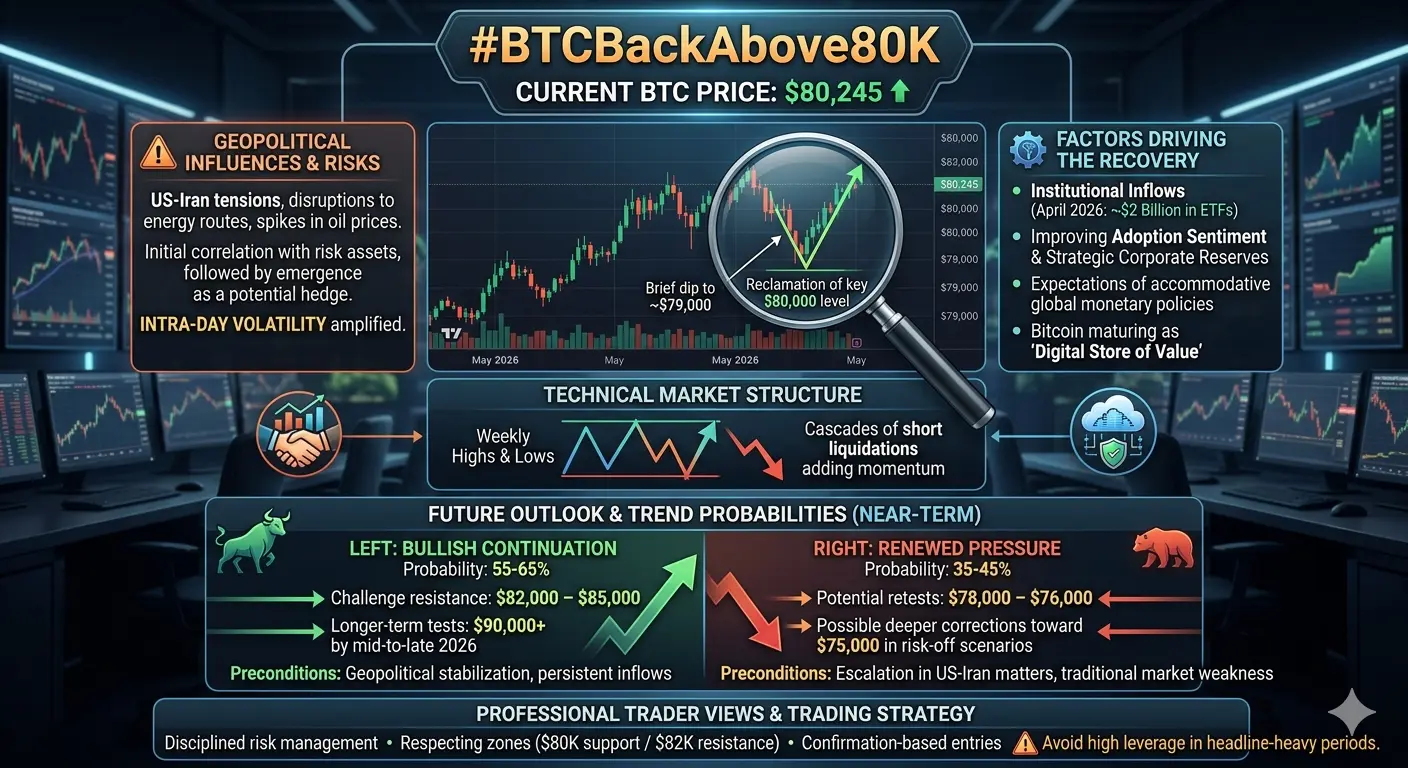
#BTCBackAbove80K
The hashtag #BTCBackAbove80K symbolizes a significant market moment where Bitcoin has once again pushed past the crucial $80,000 psychological barrier after experiencing a short-term decline toward the $79,000 region. In simple terms, it highlights the asset’s ability to recover from temporary weakness and reclaim a key level that many traders and investors watch closely for signs of strength or potential reversal. With Bitcoin currently trading near $80,245, this recovery reflects ongoing battles between buying pressure, external uncertainties, and internal market dynamics t
HighAmbition
#BTCBackAbove80K
The hashtag #BTCBackAbove80K symbolizes a significant market moment where Bitcoin has once again pushed past the crucial $80,000 psychological barrier after experiencing a short-term decline toward the $79,000 region. In simple terms, it highlights the asset’s ability to recover from temporary weakness and reclaim a key level that many traders and investors watch closely for signs of strength or potential reversal. With Bitcoin currently trading near $80,245, this recovery reflects ongoing battles between buying pressure, external uncertainties, and internal market dynamics that continue to shape the cryptocurrency’s path in a complex global environment.
Bitcoin’s recent movement saw it dip toward the $79,000–$79,500 zone amid heightened volatility before buyers stepped in to drive it back above $80,000. This brief decline stemmed primarily from short-term panic reactions, profit-taking by traders who had entered at lower levels, and liquidation of leveraged positions as uncertainty grew in traditional markets. The drop represented roughly a 3-5% pullback from local highs near $82,000–$82,850, a move that tested the resolve of short-term holders but ultimately found solid absorption from larger participants who viewed the dip as a buying opportunity rather than the start of a major downturn. The quick rebound demonstrated that underlying demand remained intact, preventing a deeper slide into lower support areas and reinforcing the importance of the $80,000 level as both psychological support and resistance in recent trading sessions.
The broader climb from the $70,000 region toward and above $80,000 did not occur in isolation but resulted from a combination of several reinforcing factors. Institutional capital continued flowing into Bitcoin through spot exchange-traded funds, with April 2026 recording nearly $2 billion in net inflows — one of the strongest monthly performances of the year. This institutional interest, led by major players and wealth allocators, provided consistent buying support that absorbed selling pressure during uncertain periods. Additionally, improving sentiment around long-term adoption played a vital role, as more corporations and funds integrated Bitcoin into their strategic reserves, viewing it as a hedge against traditional financial risks rather than purely a speculative play. Global monetary expectations also contributed, with markets beginning to anticipate potential shifts toward more accommodative policies from central banks if economic pressures mounted, historically a positive environment for growth-oriented assets like Bitcoin.
Technical market structure further supported this advance. Bitcoin maintained higher lows on weekly and daily charts since earlier cycle supports in the $60,000–$70,000 range, creating a foundation of accumulating strength. Breakouts above interim resistance levels triggered cascades of short liquidations, which added momentum as algorithms and breakout-focused traders joined the move. This created self-reinforcing upward legs, often spanning 5-8% in relatively short periods, fueled by expanding volume during key recovery phases. Market psychology has also evolved significantly, with many participants now treating Bitcoin with greater maturity as a digital store of value, reducing the severity of panic reactions compared to previous market cycles.
Geopolitical developments, particularly the escalated tensions and ongoing conflict dynamics between the United States and Iran, have exerted considerable influence on Bitcoin’s short-term price action. The situation in the Middle East, including disruptions around key energy routes and retaliatory measures, has contributed to spikes in oil prices, broader risk aversion in equities, and fluctuating investor sentiment. During periods of intensified headlines, Bitcoin initially moved in tandem with other risk assets, experiencing selling pressure as traders sought liquidity or rotated to perceived safer positions. However, its recovery above $80,000 also underscores its emerging role as a potential hedge in certain scenarios, where capital seeks alternatives amid traditional market instability driven by energy volatility and global supply concerns. These events have amplified daily volatility, with intraday swings often reaching 3-5% as news flows rapidly influence positioning.
Current Bitcoin market trend pressure remains evident in the short term, characterized by elevated volatility and sensitivity to external headlines. On lower timeframes, the price action appears mixed, with rapid reactions to liquidity sweeps, geopolitical updates, and macroeconomic data releases. Yet on higher timeframes, the structure holds constructive characteristics as long as major support zones in the mid-$70,000s continue to hold. The overall environment features a tug-of-war between persistent institutional demand on one side and unresolved global uncertainties on the other, keeping traders alert to both upside potential and corrective risks.
Looking ahead, the question of whether Bitcoin will move higher or face additional downside from current levels near $80,245 depends on several interconnected developments. Bullish continuation appears more probable in the near term if geopolitical tensions stabilize or de-escalate and institutional inflows persist, potentially allowing Bitcoin to challenge resistance zones between $82,000 and $85,000. A successful consolidation above $80,000 with increasing volume and positive momentum indicators could open the door for gradual advances toward $85,000–$88,000 in the coming weeks, representing roughly 6-10% upside from present levels under favorable conditions. Longer-term forecasts in optimistic scenarios point to tests of $90,000 or higher by mid-to-late 2026 if the broader cycle momentum remains intact and adoption metrics continue improving.
Conversely, renewed escalation in US-Iran related matters or sharper weakness in traditional markets could pressure Bitcoin lower again, with potential retests of $78,000–$76,000 support areas equating to 3-6% declines. Deeper corrections toward $75,000 or the upper $70,000s remain possible in more severe risk-off scenarios but would likely attract strong buying interest based on recent history of absorption at those levels. Overall, the trend leans mildly bullish on the balance of current factors, with approximate probabilities estimated around 55-65% for continued upside or consolidation with net gains in the short-to-medium term, versus 35-45% for a more meaningful corrective phase. These are not certainties but reflect the prevailing weight of institutional support against macro headwinds.
Professional traders and market participants hold a range of views in this environment. Many bullish traders emphasize the resilience shown in repeated recoveries, strong ETF inflows exceeding $1-2 billion in strong months, ongoing whale accumulation, and Bitcoin’s scarcity dynamics post-halving. They argue that as long as key supports hold, the larger cycle uptrend remains dominant, favoring strategic long positions with controlled exposure. Bearish or cautious voices, however, highlight persistent geopolitical risks, potential for inflation or liquidity squeezes from energy market disruptions, and the possibility of profit-taking after recent gains from $70,000 levels. Many experienced participants avoid taking extreme directional bets, instead focusing on data-driven adjustments and waiting for clearer confirmation through price action, volume, and macro signals.
For traders navigating this market, the prevailing recommendation centers on disciplined risk management rather than aggressive positioning. Key trading tips include respecting clearly defined support and resistance zones, such as monitoring $80,000 for sustained holding as a bullish signal or watching for breakdowns below $79,000 that might target lower supports. Confirmation-based entries prove valuable — waiting for volume-backed closes above $81,000–$82,000 before scaling into longs, or observing rejection patterns near resistance for defensive adjustments. Position sizing remains critical, with many professionals limiting risk to 0.5-1% of capital per trade and avoiding high leverage during headline-heavy periods to prevent liquidation in sudden swings.
Diversifying across timeframes, incorporating on-chain metrics like exchange flows and institutional activity, and maintaining adaptability to fast-changing news help separate successful navigation from emotional decision-making.
In summary, Bitcoin’s reclamation above $80,000 at current prices near $80,245 illustrates enduring buyer conviction amid challenges, driven by institutional demand, technical resilience, and evolving perceptions of the asset’s role in global finance. While short-term pressures from geopolitical escalations and market uncertainty persist, the broader structure suggests potential for measured upside if supportive factors align, with realistic near-term targets in the $82,000–$85,000 range and further extension possible under improving conditions. Traders who prioritize patience, zone-based strategies, and robust risk controls stand better positioned to capitalize on opportunities while mitigating volatility inherent in this macro-sensitive phase. The market continues to reward thoughtful analysis over hype, as Bitcoin balances its maturing role with the realities of an interconnected world.
repost-content-media
  • Reward
  • Comment
  • Repost
  • Share
🚀 Polymarket Prediction Check-in Opens
Share a prize pool of 400,000 USDT, with a maximum of 1,000 USDT
📅 Multiple check-in reward tiers, continuous participation yields higher returns
📊 Beginner Prediction Check-in, up to 200 USDT
🔥 Advanced Prediction Check-in, up to an additional 800 USDT
👉 Join Now: https://gate.onelink.me/7pdk/0a9746118bcc07f3
🔎 Announcement: https://www.gate.com/announcements/article/51089
Gate广场_Official
🚀 Polymarket Prediction Check-in Opens
Share a prize pool of 400,000 USDT, with a maximum of 1,000 USDT
📅 Multiple check-in reward tiers, continuous participation yields higher returns
📊 Beginner Prediction Check-in, up to 200 USDT
🔥 Advanced Prediction Check-in, up to an additional 800 USDT
👉 Join Now: https://gate.onelink.me/7pdk/0a9746118bcc07f3
🔎 Announcement: https://www.gate.com/announcements/article/51089
repost-content-media
  • Reward
  • Comment
  • Repost
  • Share
#MayTokenUnlockWave The market is heading into one of the most psychologically and structurally sensitive phases of the month — the May Token Unlock Wave. And if you are reading this as just another scheduled supply event, you are already underestimating the impact it can have on short-term liquidity behavior, price stability, and narrative-driven volatility across the entire crypto ecosystem.
Token unlocks are not random events. They are pre-planned liquidity injections into circulating supply that directly interact with market demand. And when demand is not strong enough to absorb that suppl
SoominStar
#MayTokenUnlockWave The market is heading into one of the most psychologically and structurally sensitive phases of the month — the May Token Unlock Wave. And if you are reading this as just another scheduled supply event, you are already underestimating the impact it can have on short-term liquidity behavior, price stability, and narrative-driven volatility across the entire crypto ecosystem.
Token unlocks are not random events. They are pre-planned liquidity injections into circulating supply that directly interact with market demand. And when demand is not strong enough to absorb that supply efficiently, price does not politely adjust — it reacts aggressively. This is where volatility is born, not from news, but from imbalance.
What makes this phase more critical is not just the size of unlocks, but the timing alignment across multiple projects. When unlock events cluster within a short window, the market doesn’t process them individually — it processes them as a combined liquidity shock. That is when correlation spikes, sentiment weakens, and risk exposure expands rapidly across leveraged positions.
Right now, the market is already in a fragile equilibrium phase — where liquidity is thin, volatility is uneven, and participants are heavily reaction-based rather than conviction-based. In such an environment, token unlocks act like catalysts that expose hidden weaknesses in positioning. They don’t create trend direction by themselves — they amplify existing structural pressure.
This is where most participants misjudge the situation. They assume unlocks automatically mean price dumping. But the real mechanism is more complex. The market first reacts emotionally, then rebalances structurally. Early moves are often exaggerated, driven by fear or anticipation, and later corrected when actual absorption strength becomes visible.
The key factor is who is absorbing the supply. If demand comes from strong hands — long-term holders, strategic accumulators, or institutional interest — the impact gets neutralized quickly. But if demand is weak or speculative, the same unlock becomes a trigger for cascading downside pressure, especially when leverage is stacked on top.
Another important layer is derivative positioning. In modern markets, unlock events don’t just affect spot liquidity — they directly influence futures funding, open interest distribution, and liquidation clusters. This creates a chain reaction effect where spot pressure feeds into derivatives, and derivatives feedback into spot volatility. That loop is what makes these phases aggressive rather than linear.
We are also seeing a broader macro context where risk appetite is not stable. Liquidity conditions are selective, meaning capital is not flowing evenly across assets. Instead, it rotates aggressively between narratives. In such an environment, token unlocks become even more impactful because they hit markets already struggling to maintain consistent demand absorption.
The result is predictable in structure but chaotic in execution:
Sharp wicks during unlock windows 📉
Fake stabilization attempts after initial reaction 📊
Liquidity hunts on both sides of key levels ⚡
Emotional overreaction from short-term participants 😶‍🌫️
But beneath all of this noise, the real story is structural redistribution. Unlock events are not just about price — they are about supply transitioning into the open market and being re-priced under real demand conditions. That re-pricing process is rarely smooth.
For traders, this is not a time for emotional positioning. It is a time for awareness of liquidity behavior. Overexposure during unlock windows is not aggression — it is vulnerability. The market during these phases does not reward prediction; it rewards patience and reaction to confirmation.
Because the reality is simple: token unlocks do not define trend direction, but they do define how painful the path to that direction will be.
In some cases, the market absorbs supply efficiently and continues upward once pressure clears. In other cases, unlocks expose weak demand zones and trigger broader correction phases before any sustainable trend resumes.
The difference between these outcomes is not narrative — it is liquidity strength underneath price.
So as May unfolds, the focus should not be on fear or excitement around unlock events. The focus should be on structure: how price reacts, how quickly supply is absorbed, and whether the market is stabilizing or distributing under pressure.
Because in the end, token unlocks are not just events on a calendar…
They are stress tests for the entire market structure. And May is about to show exactly how strong that structure really is. 🚨📊
repost-content-media
  • Reward
  • Comment
  • Repost
  • Share
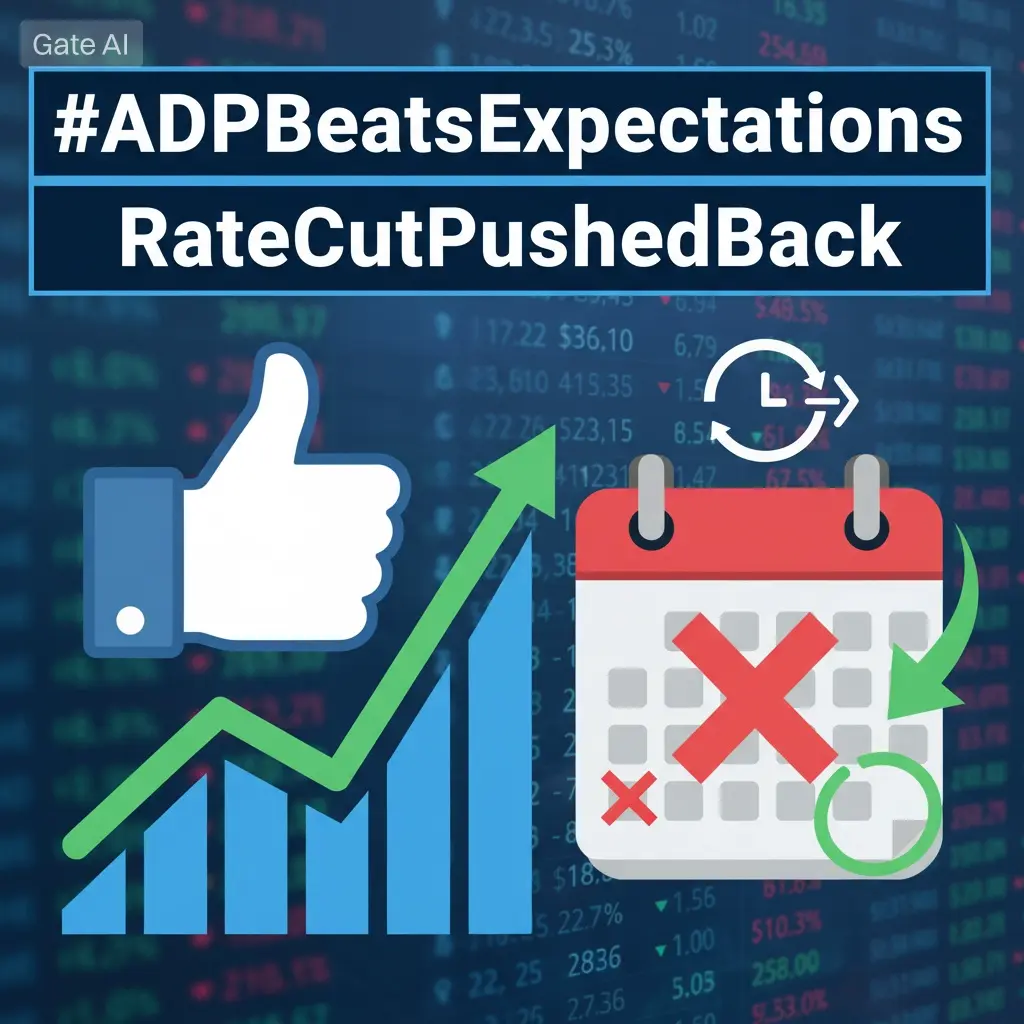
#ADPBeatsExpectationsRateCutPushedBack 📉⚡
The latest ADP employment data has landed above expectations, and the market reaction is not just a simple “good or bad jobs report” narrative — it is a direct recalibration of monetary policy expectations, liquidity assumptions, and near-term risk appetite across global markets. When labor data comes in stronger than forecast, it does not just signal economic resilience; it immediately pressures the timeline for potential rate cuts, and that shift is exactly what we are seeing being priced in right now.
The immediate implication is clear: the probabi
SoominStar
#ADPBeatsExpectationsRateCutPushedBack 📉⚡
The latest ADP employment data has landed above expectations, and the market reaction is not just a simple “good or bad jobs report” narrative — it is a direct recalibration of monetary policy expectations, liquidity assumptions, and near-term risk appetite across global markets. When labor data comes in stronger than forecast, it does not just signal economic resilience; it immediately pressures the timeline for potential rate cuts, and that shift is exactly what we are seeing being priced in right now.
The immediate implication is clear: the probability of an early rate cut has been pushed further back. And in macro terms, that single adjustment is enough to rewire short-term positioning across equities, crypto, and bond markets simultaneously. Because in today’s financial system, everything still ultimately revolves around one core variable — liquidity expectations.
Stronger-than-expected ADP numbers indicate that the labor market remains resilient, meaning inflationary pressure is less likely to cool at the pace the market previously anticipated. For central banks, this creates a dilemma: cutting rates too early risks reigniting inflation, while holding rates higher for longer risks slowing down growth momentum. And in that tension, markets are forced to constantly reprice expectations.
This repricing is where volatility is born.
Risk assets typically respond to delayed rate cut expectations with short-term pressure, because higher-for-longer interest rates mean tighter financial conditions. Capital becomes more expensive, liquidity becomes more selective, and speculative appetite weakens. That is why across crypto and equities, reactions often appear aggressive even when the underlying data shift seems incremental.
But the real story is not just the headline beat — it is the expectation gap adjustment. Markets were previously leaning toward earlier monetary easing. That positioning is now being unwound, and unwinds are rarely smooth. They tend to create sharp directional moves as over-leveraged assumptions get corrected in real time.
This is where the structure becomes important. In pre-data positioning phases, markets often build excessive optimism around policy easing. When data contradicts that narrative, the adjustment is not gradual — it is forced. Traders who were positioned for liquidity expansion are suddenly exposed to tightening conditions, leading to rapid repositioning across derivatives and spot markets.
At the same time, this environment strengthens the dollar narrative in the short term, as delayed rate cuts generally support higher yields and stronger currency flows. That indirectly adds pressure on risk assets, especially those sensitive to global liquidity cycles.
However, it is critical not to misinterpret this as a long-term directional shift. Macro regimes do not change from a single data print. What changes is timing and velocity of expectations. The underlying cycle remains intact, but the market’s perception of when policy shifts will occur gets continuously refined.
In practical terms, what we are seeing is a compression of optimism, not a reversal of cycle structure.
For crypto markets, this type of macro adjustment often results in:
Short-term volatility spikes 📉
Liquidation cascades in over-leveraged positions ⚡
False breakdowns followed by stabilization phases 📊
Delayed trend continuation until liquidity clarity returns
The key pressure point is positioning. When too many participants are aligned with a single macro expectation — in this case, early rate cuts — any deviation from that expectation creates amplified reactions. Markets do not punish the data; they punish crowded positioning around the data.
This is why reactions often feel exaggerated compared to the actual magnitude of the economic surprise.
Looking forward, the focus now shifts to how subsequent data prints align with this revised expectation framework. One strong ADP report does not define the entire labor trend, but it does reset the baseline for what markets consider “realistic” in terms of policy timing.
If future data continues to show resilience, the rate-cut narrative will continue to be pushed outward, reinforcing tighter conditions. If data weakens, markets will quickly reintroduce easing expectations — potentially with even more aggressive repricing due to compressed positioning.
This constant oscillation is what defines the current macro environment: no fixed narrative, only evolving probability pricing.
For traders and market participants, the critical takeaway is not to anchor into a single direction based on one report. Instead, it is to understand how quickly expectations are being repriced and how aggressively liquidity is responding to that repricing.
Because in this phase of the cycle, the real driver is not whether rates will be cut…
It is when the market believes they will be cut — and how violently that belief keeps changing. 📉⚡
repost-content-media
  • Reward
  • Comment
  • Repost
  • Share
#CircleMints250MUSDCOnSolana Circle has just minted another $250 million USDC on Solana, and if you are treating this as a routine treasury adjustment, you are completely missing the structural signal embedded inside this move. In modern stablecoin infrastructure, minting is not just “supply creation” — it is a direct reflection of anticipated liquidity demand, settlement readiness, and capital flow positioning across digital markets.
This is not happening in isolation. Over the past weeks, we have already seen multi-billion dollar USDC minting cycles across different chains, and each wave tel
USDC-0.01%
SOL1.02%
SoominStar
#CircleMints250MUSDCOnSolana Circle has just minted another $250 million USDC on Solana, and if you are treating this as a routine treasury adjustment, you are completely missing the structural signal embedded inside this move. In modern stablecoin infrastructure, minting is not just “supply creation” — it is a direct reflection of anticipated liquidity demand, settlement readiness, and capital flow positioning across digital markets.
This is not happening in isolation. Over the past weeks, we have already seen multi-billion dollar USDC minting cycles across different chains, and each wave tells the same underlying story: stablecoin infrastructure is not passive anymore — it is actively syncing with market liquidity cycles, institutional flow expectations, and on-chain settlement demand.
When $250M USDC is minted specifically on Solana, the message is even more precise. It indicates that liquidity demand is not just growing — it is being directionally allocated toward high-throughput, low-cost settlement environments where capital velocity matters more than anything else. Solana, in this context, is not just a blockchain. It is a liquidity execution layer optimized for speed, scale, and continuous capital rotation.
But here is where the deeper interpretation begins.
Stablecoin minting at this scale is rarely speculative. It is typically driven by one or more of the following structural demands:
Exchange inflows preparing for market participation 📊
Institutional settlement flows requiring immediate liquidity rails ⚡
Arbitrage positioning across fragmented liquidity venues 🔄
DeFi collateral expansion and yield strategy deployment 💰
When multiple of these factors align simultaneously, minting becomes a leading indicator of incoming market activity, not a lagging confirmation.
And this is exactly why the $250M USDC issuance matters.
It signals that capital is not sitting idle — it is being prepared for deployment. Whether that deployment flows into trading activity, liquidity provisioning, derivatives hedging, or cross-chain settlement efficiency, the key takeaway remains the same: dry powder is being positioned on-chain at scale.
Now zoom out.
The stablecoin sector, led by major issuers like Circle, has become one of the most important liquidity telemetry systems in crypto markets. Unlike price charts, which reflect reaction, stablecoin supply reflects intent. Minting reflects preparation. Redemption reflects de-risking. And net expansion reflects confidence in deployment environments.
This is why large-scale USDC movements often precede volatility expansion phases in broader markets. Liquidity does not move randomly — it clusters before activity spikes.
Solana’s role in this is particularly important. Over the past cycle, it has evolved from an experimental high-speed chain into a serious settlement environment for:
High-frequency DeFi activity
NFT and consumer-grade on-chain applications
Institutional pilot liquidity flows
Stablecoin-based settlement routing
This $250M mint reinforces that trajectory. It is a validation that real capital flows are not just testing Solana — they are actively utilizing it as a functional liquidity corridor.
But there is another layer here that most participants ignore.
Stablecoin expansion at scale often precedes volatility compression followed by expansion. When liquidity enters the system in anticipation of deployment, markets may initially appear stable or even slightly compressed. However, once that liquidity is activated, it tends to create rapid directional movement across multiple correlated assets.
This is why stablecoin minting is not just a supply-side metric — it is a future volatility indicator.
We are also operating in a macro environment where liquidity sensitivity is already elevated. Interest rate expectations, risk appetite rotation, and cross-market capital flow uncertainty are all contributing to a system where even small liquidity injections can have outsized impact on short-term market behavior.
In that context, a $250M mint is not small. It is a precision injection into an already reactive system.
What makes this even more significant is the timing. Markets are currently transitioning through phases of sentiment uncertainty, where participants are still reacting rather than confidently positioning. In such environments, liquidity injections do not just support activity — they often trigger it.
And once liquidity starts moving, it does not remain isolated. It cascades:
Into trading volume spikes 📈
Into leverage expansion in derivatives ⚡
Into volatility clustering across correlated assets 🔄
Into rapid sentiment flips driven by momentum acceleration 🔥
This is the real mechanism behind stablecoin-driven market expansion phases.
So the key question is not “why did Circle mint $250M USDC?”
The real question is: what is this liquidity being prepared for?
Because historically, large-scale stablecoin expansion is rarely random. It is almost always aligned with upcoming phases of increased capital activity — whether in trading, DeFi positioning, cross-chain arbitrage, or institutional settlement operations.
And in a market structure like this, where liquidity is the primary driver of price discovery, ignoring stablecoin flows is equivalent to ignoring the fuel supply of the entire system.
To summarize the structural signal:
This mint is not noise.
It is not routine.
It is not isolated.
It is a pre-positioned liquidity expansion event inside a system already preparing for increased capital velocity.
And when that liquidity activates, the market rarely moves slowly.
It moves aggressively, selectively, and without warning. ⚡💰
repost-content-media
  • Reward
  • Comment
  • Repost
  • Share
#Web3SecurityGuide Web3 security is no longer an optional topic or a “developer-only concern.” It has become the backbone of survival in a financial system where code is money, wallets are banks, and a single mistake can lead to irreversible loss. Unlike traditional finance, there is no customer support hotline, no chargeback system, and no central authority to reverse errors. In Web3, you are your own security layer — and also your own weakest point if you are careless.
This shift makes security not just technical knowledge, but a core financial discipline. Every interaction on-chain carries
TOKEN-0.61%
SoominStar
#Web3SecurityGuide Web3 security is no longer an optional topic or a “developer-only concern.” It has become the backbone of survival in a financial system where code is money, wallets are banks, and a single mistake can lead to irreversible loss. Unlike traditional finance, there is no customer support hotline, no chargeback system, and no central authority to reverse errors. In Web3, you are your own security layer — and also your own weakest point if you are careless.
This shift makes security not just technical knowledge, but a core financial discipline. Every interaction on-chain carries risk: signing a transaction, connecting a wallet, approving a contract, or even interacting with a dApp interface. Attackers don’t need to break systems anymore — they only need users to approve the wrong action once.
That is why understanding Web3 security is not about fear — it is about control. Control over your assets, your permissions, and your exposure.
---
🔥 1. Wallet Security is Your First Defense Layer
Your wallet is not just a storage tool — it is your identity, bank account, and access key combined.
Never share your seed phrase or private key under any condition 🔑
Avoid storing seed phrases digitally (notes, screenshots, cloud storage) 📵
Use hardware wallets for long-term holdings where possible 🧊
Separate wallets for trading, holding, and interacting with dApps
A single compromised seed phrase means total loss. No recovery exists in decentralized systems.
---
⚠️ 2. Smart Contract Approvals Are Silent Risks
One of the most underestimated attack surfaces in Web3 is token approvals.
Always review what permissions you are granting before signing
Avoid unlimited approvals unless absolutely necessary
Regularly revoke unused permissions using trusted tools
Be cautious of “airdrop claim” contracts that require broad access
Attackers often drain wallets not by hacking them, but by tricking users into authorizing malicious contracts voluntarily.
---
🧠 3. Phishing Attacks Are Getting Smarter
Phishing in Web3 is not limited to fake emails anymore — it has evolved into multi-layered deception.
Fake websites mimicking real dApps 🌐
Discord/Telegram impersonation scams 💬
Malicious browser extensions
Fake support agents asking for verification steps
Rule of thumb: if someone asks for your seed phrase or private key, it is always a scam — no exceptions.
Even advanced users fall victim because modern phishing is not poorly designed — it is psychologically engineered.
---
🔍 4. Transaction Awareness is Critical
Every transaction you sign is a legally binding action on-chain.
Always read transaction details before confirming
Watch for unexpected token transfers or approvals
Be cautious of “gasless approvals” or hidden function calls
Verify contract addresses before interacting
Attackers often hide malicious logic behind normal-looking interfaces. What you see is not always what you sign.
---
🌐 5. dApp Risk Management Matters
Not all decentralized applications are equally safe.
Prefer audited and well-known protocols
Check community reputation and historical incidents
Avoid new, unaudited platforms offering unrealistic returns
Understand that “decentralized” does not mean “safe”
Many losses in Web3 come from interacting with low-quality or unverified smart contracts, not from major protocol failures.
---
🧩 6. Network and Device Security is Often Ignored
Even if your wallet is secure, your device can become the entry point.
Keep browsers and extensions updated
Avoid using public WiFi for transactions 📶
Use separate browser profiles for crypto activity
Install extensions only from trusted sources
Enable hardware-based authentication where possible
Malware and clipboard hijackers are increasingly targeting crypto users specifically.
---
💣 7. Social Engineering is the Real Threat Engine
The most dangerous attacks are not technical — they are psychological.
Fake urgency (“your wallet will be locked”)
Impersonation of support teams
Fake investment opportunities or “exclusive access”
Pressure-based manipulation tactics
Security failure often begins with trust, not code.
---
🛡️ 8. Operational Security (OpSec) for Advanced Users
For serious participants in Web3, operational discipline becomes essential.
Never reuse wallet addresses publicly
Avoid linking identity with high-value wallets
Separate on-chain activity across multiple wallets
Minimize exposure of holdings in public environments
Treat every interaction as potentially hostile until verified
In decentralized systems, privacy is not secrecy — it is protection.
---
📊 9. Risk Awareness in DeFi Ecosystem
DeFi introduces additional complexity layers:
Impermanent loss in liquidity pools
Smart contract exploits and flash loan attacks
Oracle manipulation risks
Governance attack vectors in low-decentralization protocols
Yield always comes with embedded risk — and higher yield usually signals higher hidden exposure.
---
⚡ 10. Core Principle: Trust Nothing, Verify Everything
The foundation of Web3 security can be summarized in one principle:
Trust is not assumed — it is verified repeatedly.
Verify links
Verify contracts
Verify permissions
Verify identity claims
Verify before every signature
Because in decentralized systems, verification replaces authority.
---
🔚 Final Reality Check
Web3 is powerful because it removes intermediaries. But that same freedom removes protection layers that users are used to in traditional finance. There is no reversal mechanism. No safety net. No institutional buffer.
That means responsibility shifts entirely to the user.
Security is not about paranoia — it is about structure. It is about building habits that protect capital before risk even appears. The strongest participants in Web3 are not the ones chasing every opportunity…
They are the ones who survive long enough to compound them.
In this ecosystem, speed creates opportunity — but security preserves survival. And without survival, there is no long-term success. 🔐⚡
repost-content-media
  • Reward
  • Comment
  • Repost
  • Share
#Web3SecurityGuideWeb3 security is no longer an optional topic—it has become the foundation of survival in the decentralized financial ecosystem. As blockchain adoption grows, so does the sophistication of attacks, exploits, and manipulation strategies targeting users, protocols, and liquidity systems. In 2026, security is not just about protecting assets; it is about protecting participation in the entire digital economy.
The reality is simple but harsh: in Web3, there is no “customer support” to reverse your mistakes. One wrong click, one malicious signature, or one compromised private key c
post-image
  • Reward
  • 5
  • Repost
  • Share
SoominStar:
To The Moon 🌕
View More
#CircleMints250MUSDCOnSolana
#Gate广场五月交易分享 Circle minting another 250 million USDC on the Solana network is far more important than most traders realize. This is not simply a routine treasury action or another random stablecoin issuance headline. What is happening right now represents a major structural transformation inside the digital dollar economy, and Solana is rapidly positioning itself at the center of that shift.
Over the past several weeks, billions of dollars worth of USDC have been minted directly on Solana. That level of issuance is not accidental. Institutions do not prepare li
USDC-0.01%
SOL1.02%
post-image
  • Reward
  • 4
  • Repost
  • Share
SoominStar:
2026 GOGOGO 👊
View More
#ADPBeatsExpectationsRateCutPushedBack
The latest U.S. ADP employment report has completely shifted the macro narrative across global financial markets, and the impact is far bigger than one strong economic headline. Markets were preparing for a softer economy, easier monetary conditions, and a possible acceleration toward Federal Reserve rate cuts. Instead, the labor market delivered a powerful reminder that the U.S. economy is still showing resilience — and that changes everything for liquidity expectations, crypto momentum, and risk asset positioning.
This was not a minor data surprise.
T
BTC0.89%
ETH0.48%
post-image
  • Reward
  • 3
  • Repost
  • Share
SoominStar:
LFG 🔥
View More
#MayTokenUnlockWave The crypto market is entering a dangerous phase where supply expansion is about to collide directly with fragile liquidity conditions. Nearly billions of dollars in scheduled token unlocks are preparing to hit the market throughout May, and this is not just another routine vesting cycle. The scale of these releases has the potential to reshape short-term market structure, pressure altcoin momentum, increase volatility, and expose which ecosystems actually have strong demand beneath the surface.
Most retail traders focus only on price charts while ignoring one of the most i
post-image
  • Reward
  • 3
  • Repost
  • Share
SoominStar:
Buy To Earn 💰️
View More
#WCTCTradingKingPK The financial markets of 2026 are exposing a brutal truth: most people are not losing because the market is impossible — they are losing because they enter the battlefield without discipline, strategy, or emotional control. Trading today is no longer a simple game of guessing direction. It is psychological warfare between preparation and emotion, patience and impulsiveness, intelligence and greed.
This is exactly why the #WCTCTradingKingPK mindset matters.
The modern trader cannot survive on hype alone anymore. Volatility across crypto, forex, commodities, and global equiti
BTC0.89%
ETH0.48%
post-image
  • Reward
  • 5
  • Repost
  • Share
SoominStar:
To The Moon 🌕
View More
#DailyPolymarketHotspot
Prediction markets are rapidly becoming one of the most powerful reflections of real-time global sentiment, and platforms like Polymarket are proving that crowd psychology can move faster than traditional media, political analysts, and even institutional forecasting models. What we are witnessing right now is not simply online speculation — it is the financialization of public expectation itself.
Every major geopolitical event, economic decision, election cycle, regulatory development, and market narrative is now being instantly priced through collective conviction. P
post-image
  • Reward
  • 3
  • Repost
  • Share
SoominStar:
To The Moon 🌕
View More
#JapanTokenizesGovernmentBonds
Japan moving toward the tokenization of government bonds is not just another blockchain experiment. This is a major signal that traditional finance is slowly merging with digital infrastructure at the sovereign level. While many people still treat crypto and blockchain as speculative technology built only for trading meme coins and chasing volatility, governments and institutional systems are quietly preparing for something much larger: the transformation of global financial architecture itself.
The tokenization of government bonds changes the conversation comp
post-image
  • Reward
  • 4
  • Repost
  • Share
SoominStar:
Ape In 🚀
View More
#BTCBackAbove80K
#GateSquareMayTradingShare
Bitcoin pushing back above the $80,000 zone is not just another temporary crypto headline designed to create excitement on social media. This recovery carries serious psychological weight because the market recently survived one of the harshest combinations of pressure seen this cycle: geopolitical instability, rising Treasury yields, restrictive monetary policy, panic-driven liquidations, and collapsing trader confidence.
For weeks, bears controlled the narrative. Every bounce was dismissed as weak. Every recovery attempt faced aggressive sellin
BTC0.89%
post-image
  • Reward
  • 4
  • Repost
  • Share
SoominStar:
Ape In 🚀
View More
I'm trading on Gate, a top-tier exchange with a 13-year track record. Come join me and dive into the hottest events right now! https://www.gate.com/campaigns/4693?ref_type=132
post-image
  • Reward
  • 5
  • Repost
  • Share
SoominStar:
To The Moon 🌕
View More
I'm trading on Gate, a top-tier exchange with a 13-year track record. Come join me and dive into the hottest events right now! https://www.gate.com/campaigns/4741?ref_type=132
post-image
  • Reward
  • 5
  • Repost
  • Share
SoominStar:
To The Moon 🌕
View More
  • Reward
  • 4
  • Repost
  • Share
SoominStar:
To The Moon 🌕
View More
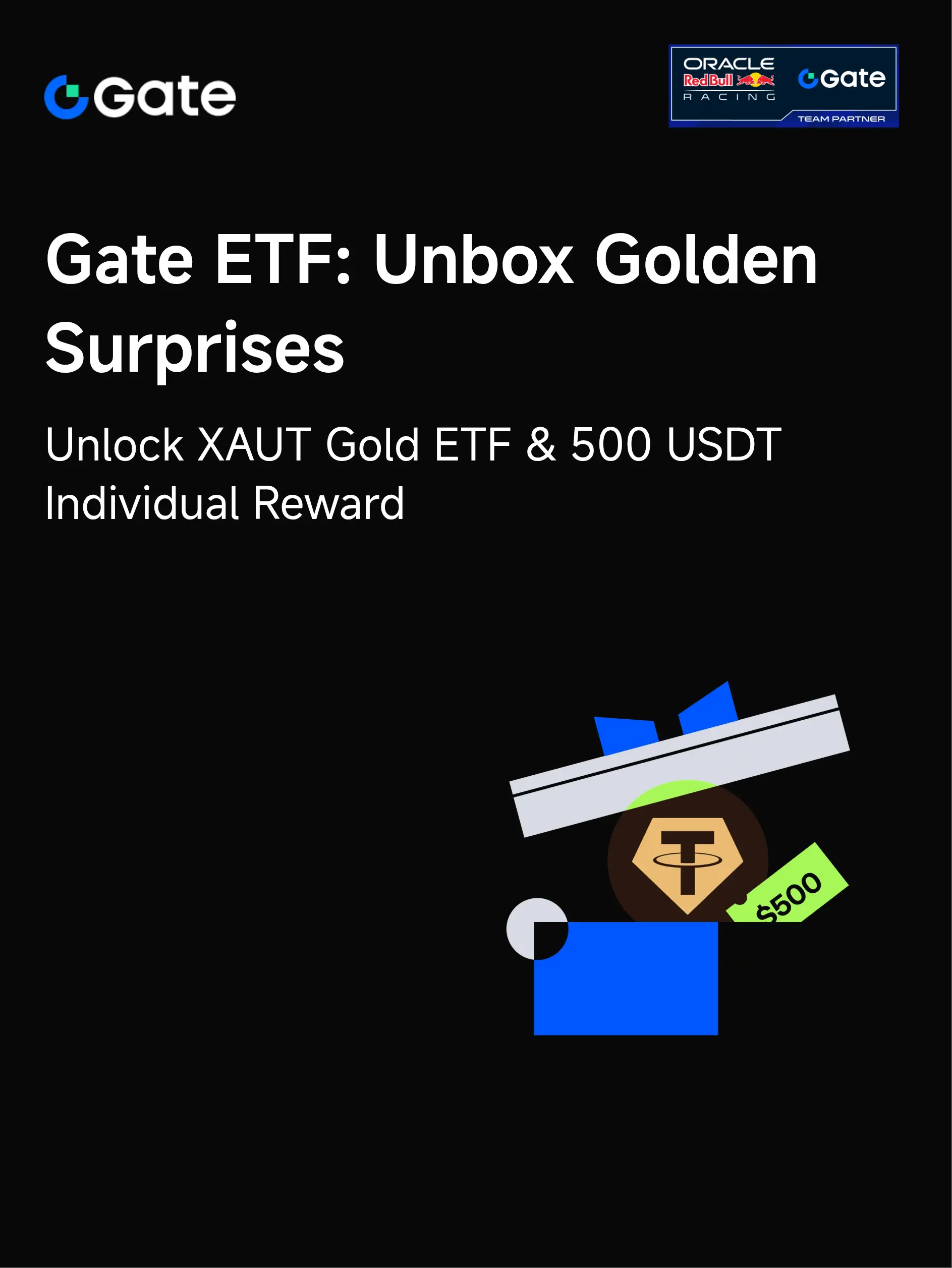
New and existing users can receive a 10 USDT subsidy voucher by joining ETF trading. Complete trading and referral tasks to earn lucky draw entries—100% win rate for mystery boxes, with rewards up to 88 USDT in XUAT3L/3S tokens. Reach trading milestones to unlock tiered prize pools and share a 30,000 USDT total grand prize, with individual rewards up to 500 USDT. https://www.gate.com/campaigns/4691?ch=2408&ref=VLIWBLOKUW&ref_type=132&utm_cmp=52XLRXjS
post-image
  • Reward
  • 6
  • Repost
  • Share
SoominStar:
DYOR 🤓
View More
  • Reward
  • 4
  • Repost
  • Share
SoominStar:
Ape In 🚀
View More
  • Pin