
#GateSquareMayTradingShare
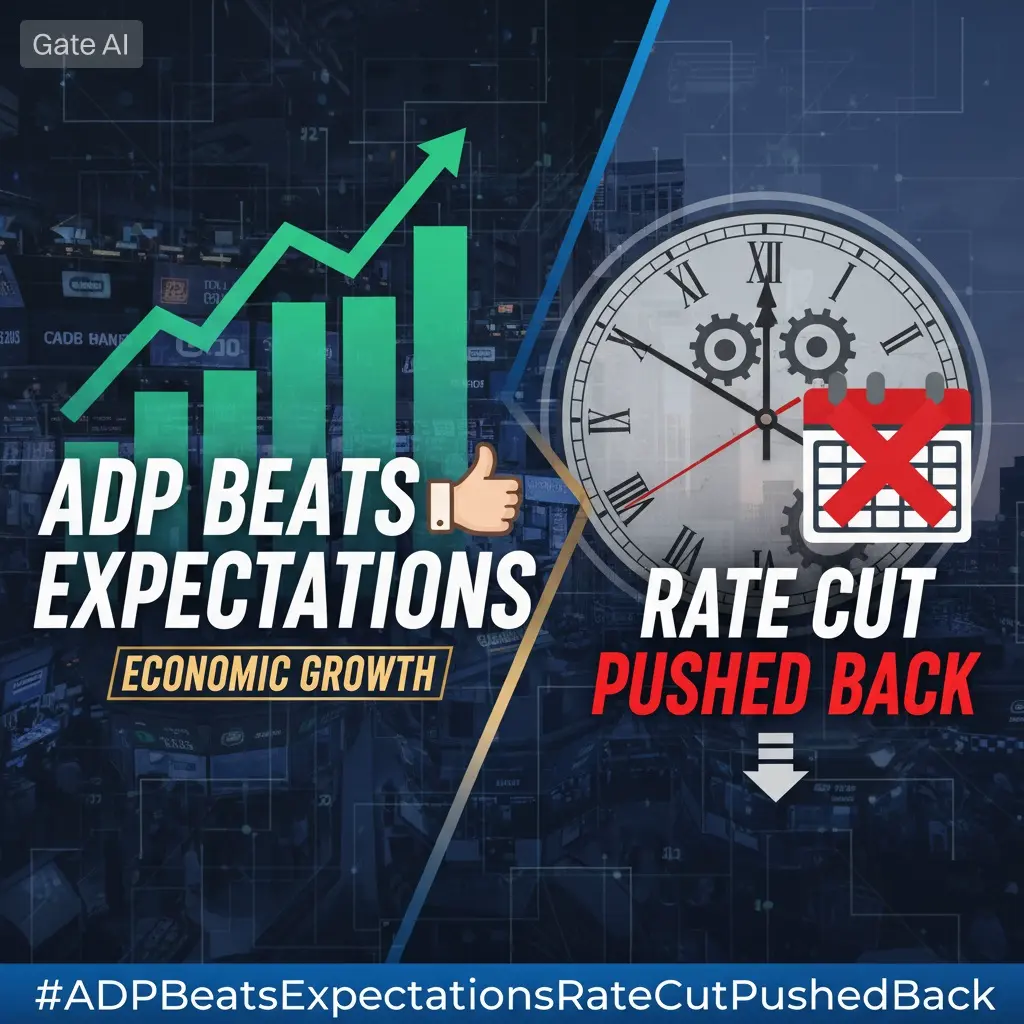
The latest U.S. ADP employment report may end up becoming one of the most important macroeconomic turning points for financial markets in recent months. What initially appeared to be a routine labor-market update quickly transformed into a large-scale repricing event that impacted everything from Federal Reserve expectations and Treasury yields to Bitcoin volatility, dollar strength, and global risk appetite.
The reason markets reacted so aggressively is because the data directly challenged one of the biggest assumptions traders had been positioning around throughout 2026: the expectation that the Federal Reserve would soon begin moving toward faster and deeper interest-rate cuts.
Instead, the labor market once again showed surprising resilience.
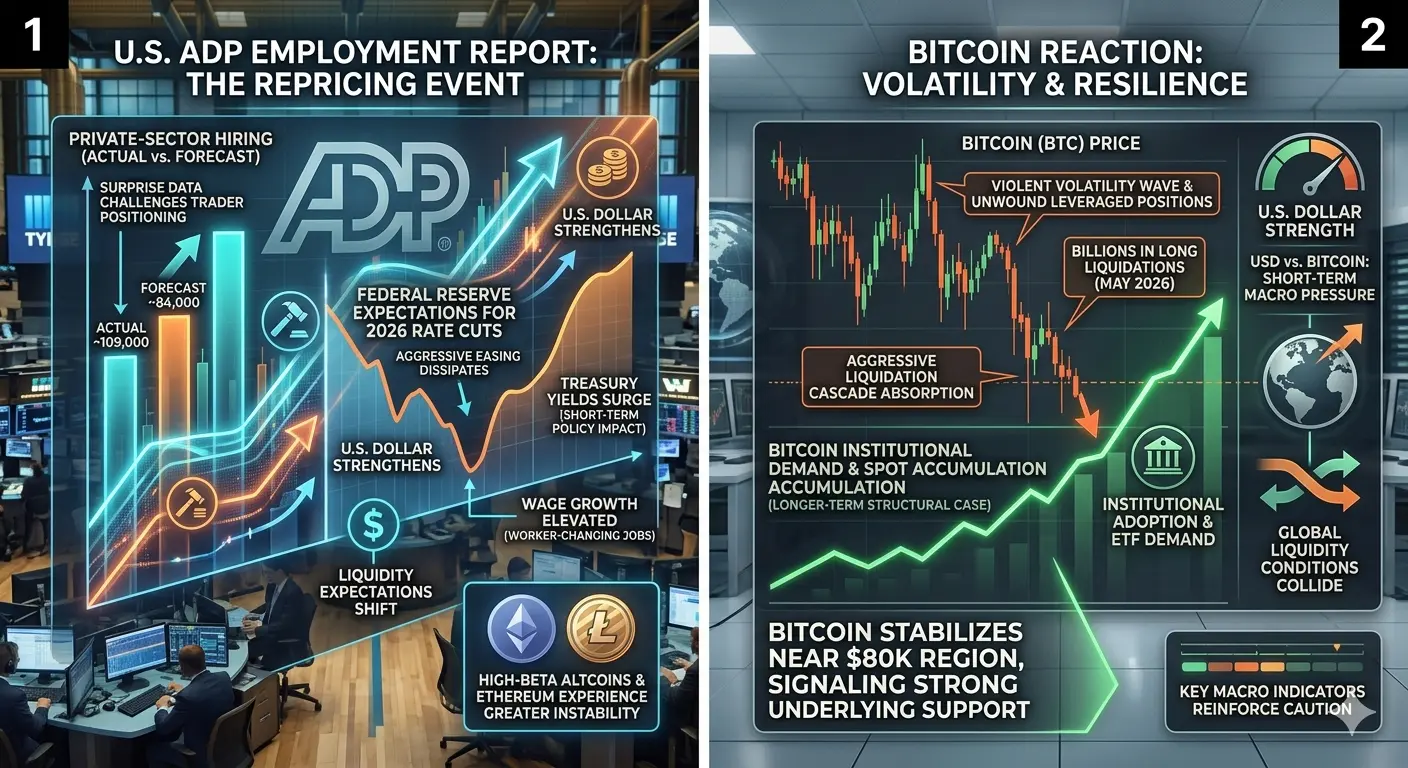
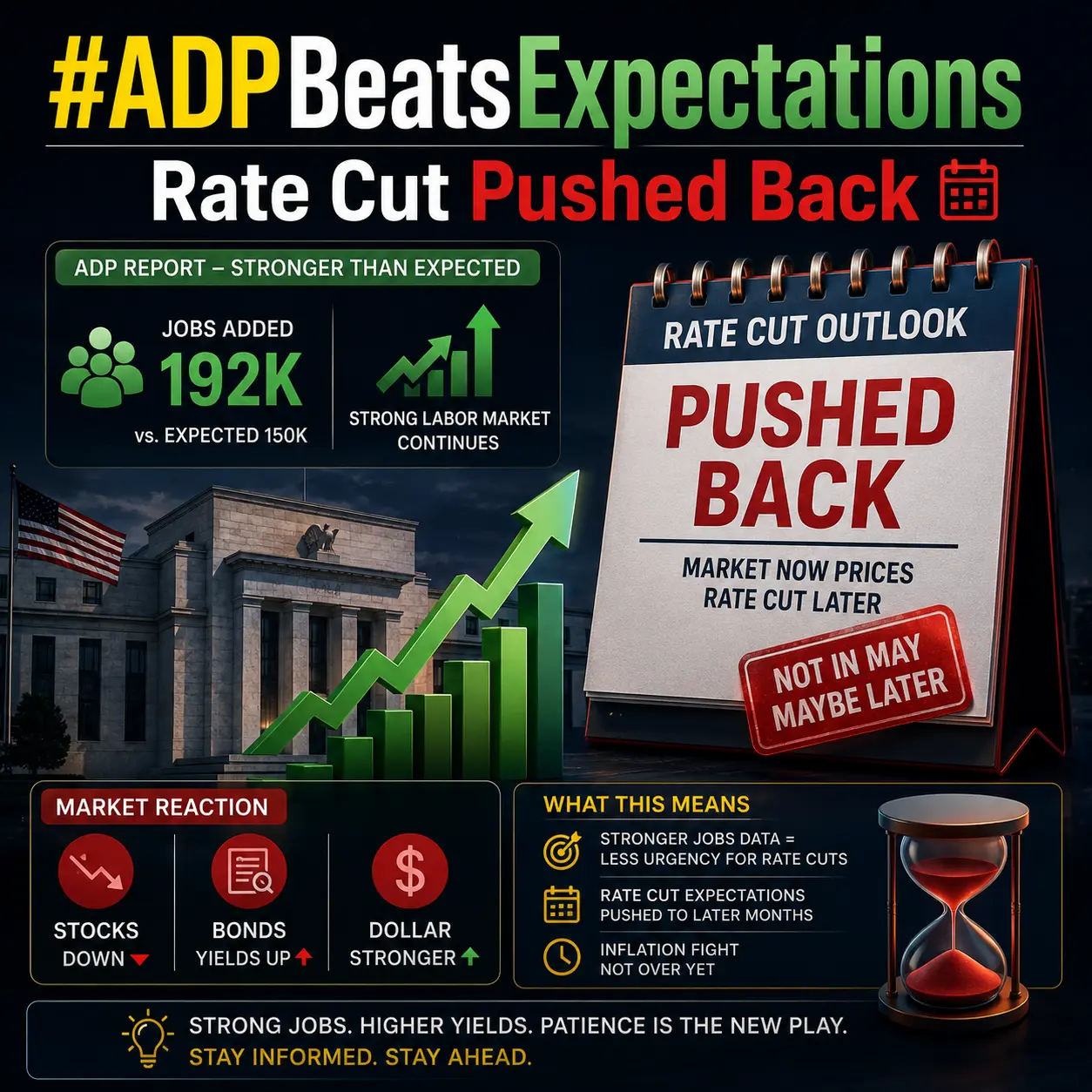
Private-sector hiring came in significantly above forecasts, with approximately 109,000 jobs added compared to expectations near 84,000. In macro markets, surprises matter more than raw numbers themselves. A stronger-than-expected employment report immediately signals that economic activity remains healthier than anticipated despite high interest rates and restrictive monetary policy conditions.
That changes everything for liquidity expectations.
For months, many investors had been building positions based on the idea that slowing economic conditions would eventually force the Federal Reserve to pivot toward easier policy. Lower rates would likely weaken the dollar, reduce Treasury yields, improve financial liquidity, and create a stronger environment for risk assets like Bitcoin, technology stocks, and high-growth speculative sectors.
But stronger labor data delays that timeline.
The report also showed that wage growth remains elevated, particularly for workers changing jobs. That detail is extremely important because persistent wage inflation keeps pressure on overall inflation metrics. When wages continue rising rapidly, the Federal Reserve becomes more cautious about cutting rates too early out of fear that inflation could reaccelerate.
As a result, financial markets immediately began repricing toward a “higher-for-longer” interest-rate environment.
Rate-cut probabilities collapsed almost instantly after the release. Expectations for aggressive easing during the coming quarters weakened sharply, Treasury yields surged, and the U.S. dollar strengthened against global currencies. In institutional markets, these shifts are not minor reactions — they directly influence global capital flows, leverage conditions, and liquidity availability across nearly every asset class.
Crypto markets reacted immediately because digital assets remain deeply connected to liquidity conditions.
Bitcoin experienced a violent wave of volatility as leveraged positions were rapidly unwound across derivatives exchanges. Billions of dollars in liquidations swept through the market in a matter of hours, with long positions absorbing the majority of the damage. The move exposed how heavily traders had positioned for continued upside acceleration and easier macro conditions.
Yet despite the aggressive liquidation cascade, Bitcoin managed to stabilize back near the $80K region relatively quickly.
That detail may actually be one of the most important signals in the entire event.
Historically, multi-billion-dollar liquidation events combined with rising Treasury yields and a strengthening dollar have often produced much deeper crypto corrections. The fact that Bitcoin absorbed the shock without completely collapsing suggests that spot demand and institutional accumulation remain stronger beneath the surface than many traders expected.
This creates an unusual market structure where short-term macro pressure and long-term structural demand are now colliding directly against each other.
Ethereum and high-beta altcoins experienced even greater instability during the repricing event. Mid-cap tokens and leverage-heavy assets saw particularly sharp drawdowns as traders rushed to reduce exposure amid fears that tighter liquidity conditions could continue weighing on speculative sectors. This once again highlighted the growing divide inside crypto markets between assets attracting institutional interest and assets relying primarily on speculative momentum.
At the same time, traditional macro indicators reinforced the market’s shift toward caution.
Treasury yields climbed aggressively after the report, particularly on the short end of the curve where policy expectations react most strongly. The U.S. dollar also strengthened significantly as global investors adjusted for the possibility that interest rates may remain elevated longer than previously expected.
Historically, this environment tends to create headwinds for Bitcoin and other risk-sensitive assets because higher yields increase the attractiveness of traditional fixed-income instruments while reducing the flow of speculative liquidity into volatile markets.
Energy markets are adding another layer of complexity as well.
Oil prices remain elevated relative to historical averages, keeping inflation concerns alive across the global economy. Persistent energy inflation complicates the Federal Reserve’s path because rising fuel and transportation costs can continue feeding broader consumer-price pressures even if other sectors begin cooling.
This means the market is no longer focused only on growth slowdown risks. It is increasingly focused on the possibility of prolonged restrictive conditions combined with stubborn inflation — a scenario that creates uncertainty across both equities and crypto.
For Bitcoin specifically, the market structure now appears trapped between competing forces.
On one side, macroeconomic conditions remain restrictive, liquidity expansion is slowing, and aggressive rate cuts are being pushed further into the future. On the other side, institutional adoption, ETF demand, sovereign interest in digital assets, and long-term accumulation trends continue supporting the broader structural bull case.
This tension explains why Bitcoin has entered a highly volatile consolidation phase rather than immediate continuation or collapse.
The current structure suggests the market is searching for confirmation regarding the next major macro direction. Traders are watching inflation reports, Federal Reserve commentary, Treasury markets, employment data, and geopolitical developments simultaneously because any major shift in those areas could determine the next large liquidity wave entering or leaving risk assets.
Until then, volatility will likely remain elevated.
The era of effortless liquidity-driven rallies appears to be fading, at least temporarily. Markets are becoming more sensitive to economic data, policy expectations, and capital-flow dynamics than they were during previous phases of the cycle.
And that means traders can no longer rely only on narratives or momentum.
Macro structure now matters more than ever.
The latest ADP report proved that a single economic release can still reshape expectations across the entire global financial system within hours. It also proved something equally important: Bitcoin is no longer trading in isolation from traditional finance.
It is now reacting as part of the global macro machine itself.
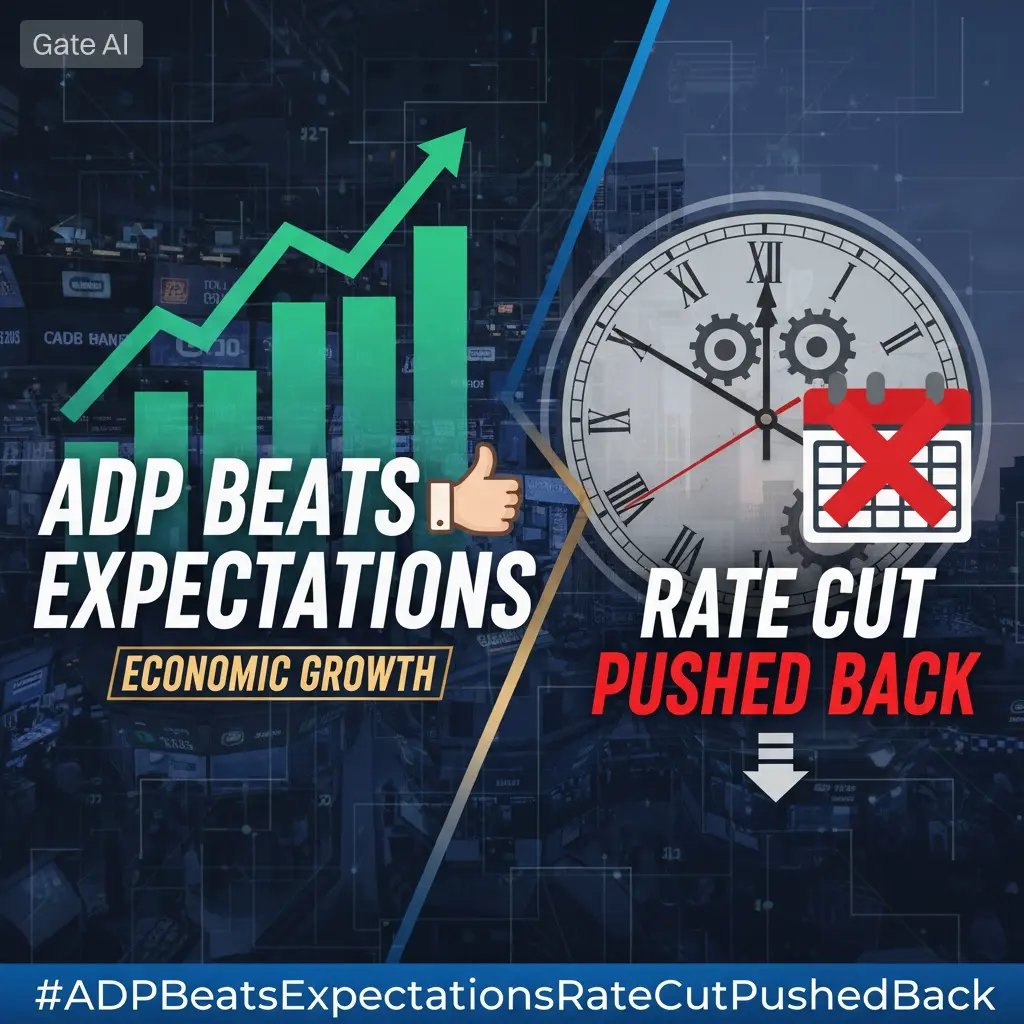
#ADPBeatsExpectationsRateCutPushedBack
The latest U.S. ADP employment report may end up becoming one of the most important macroeconomic turning points for financial markets in recent months. What initially appeared to be a routine labor-market update quickly transformed into a large-scale repricing event that impacted everything from Federal Reserve expectations and Treasury yields to Bitcoin volatility, dollar strength, and global risk appetite.
The reason markets reacted so aggressively is because the data directly challenged one of the biggest assumptions traders had been positioning around throughout 2026: the expectation that the Federal Reserve would soon begin moving toward faster and deeper interest-rate cuts.
Instead, the labor market once again showed surprising resilience.
Private-sector hiring came in significantly above forecasts, with approximately 109,000 jobs added compared to expectations near 84,000. In macro markets, surprises matter more than raw numbers themselves. A stronger-than-expected employment report immediately signals that economic activity remains healthier than anticipated despite high interest rates and restrictive monetary policy conditions.
That changes everything for liquidity expectations.
For months, many investors had been building positions based on the idea that slowing economic conditions would eventually force the Federal Reserve to pivot toward easier policy. Lower rates would likely weaken the dollar, reduce Treasury yields, improve financial liquidity, and create a stronger environment for risk assets like Bitcoin, technology stocks, and high-growth speculative sectors.
But stronger labor data delays that timeline.
The report also showed that wage growth remains elevated, particularly for workers changing jobs. That detail is extremely important because persistent wage inflation keeps pressure on overall inflation metrics. When wages continue rising rapidly, the Federal Reserve becomes more cautious about cutting rates too early out of fear that inflation could reaccelerate.
As a result, financial markets immediately began repricing toward a “higher-for-longer” interest-rate environment.
Rate-cut probabilities collapsed almost instantly after the release. Expectations for aggressive easing during the coming quarters weakened sharply, Treasury yields surged, and the U.S. dollar strengthened against global currencies. In institutional markets, these shifts are not minor reactions — they directly influence global capital flows, leverage conditions, and liquidity availability across nearly every asset class.
Crypto markets reacted immediately because digital assets remain deeply connected to liquidity conditions.
Bitcoin experienced a violent wave of volatility as leveraged positions were rapidly unwound across derivatives exchanges. Billions of dollars in liquidations swept through the market in a matter of hours, with long positions absorbing the majority of the damage. The move exposed how heavily traders had positioned for continued upside acceleration and easier macro conditions.
Yet despite the aggressive liquidation cascade, Bitcoin managed to stabilize back near the $80K region relatively quickly.
That detail may actually be one of the most important signals in the entire event.
Historically, multi-billion-dollar liquidation events combined with rising Treasury yields and a strengthening dollar have often produced much deeper crypto corrections. The fact that Bitcoin absorbed the shock without completely collapsing suggests that spot demand and institutional accumulation remain stronger beneath the surface than many traders expected.
This creates an unusual market structure where short-term macro pressure and long-term structural demand are now colliding directly against each other.
Ethereum and high-beta altcoins experienced even greater instability during the repricing event. Mid-cap tokens and leverage-heavy assets saw particularly sharp drawdowns as traders rushed to reduce exposure amid fears that tighter liquidity conditions could continue weighing on speculative sectors. This once again highlighted the growing divide inside crypto markets between assets attracting institutional interest and assets relying primarily on speculative momentum.
At the same time, traditional macro indicators reinforced the market’s shift toward caution.
Treasury yields climbed aggressively after the report, particularly on the short end of the curve where policy expectations react most strongly. The U.S. dollar also strengthened significantly as global investors adjusted for the possibility that interest rates may remain elevated longer than previously expected.
Historically, this environment tends to create headwinds for Bitcoin and other risk-sensitive assets because higher yields increase the attractiveness of traditional fixed-income instruments while reducing the flow of speculative liquidity into volatile markets.
Energy markets are adding another layer of complexity as well.
Oil prices remain elevated relative to historical averages, keeping inflation concerns alive across the global economy. Persistent energy inflation complicates the Federal Reserve’s path because rising fuel and transportation costs can continue feeding broader consumer-price pressures even if other sectors begin cooling.
This means the market is no longer focused only on growth slowdown risks. It is increasingly focused on the possibility of prolonged restrictive conditions combined with stubborn inflation — a scenario that creates uncertainty across both equities and crypto.
For Bitcoin specifically, the market structure now appears trapped between competing forces.
On one side, macroeconomic conditions remain restrictive, liquidity expansion is slowing, and aggressive rate cuts are being pushed further into the future. On the other side, institutional adoption, ETF demand, sovereign interest in digital assets, and long-term accumulation trends continue supporting the broader structural bull case.
This tension explains why Bitcoin has entered a highly volatile consolidation phase rather than immediate continuation or collapse.
The current structure suggests the market is searching for confirmation regarding the next major macro direction. Traders are watching inflation reports, Federal Reserve commentary, Treasury markets, employment data, and geopolitical developments simultaneously because any major shift in those areas could determine the next large liquidity wave entering or leaving risk assets.
Until then, volatility will likely remain elevated.
The era of effortless liquidity-driven rallies appears to be fading, at least temporarily. Markets are becoming more sensitive to economic data, policy expectations, and capital-flow dynamics than they were during previous phases of the cycle.
And that means traders can no longer rely only on narratives or momentum.
Macro structure now matters more than ever.
The latest ADP report proved that a single economic release can still reshape expectations across the entire global financial system within hours. It also proved something equally important: Bitcoin is no longer trading in isolation from traditional finance.
It is now reacting as part of the global macro machine itself.
#ADPBeatsExpectationsRateCutPushedBack