Nazdej

vip
Age 0.2 Yıl
Peak Tier 0
No content yet
MrFlower_XingChenvip
#NasdaqEntersPredictionMarkets Wall Street Moves Into the Forecast Economy
A new frontier is opening at the intersection of finance, data, and behavioral economics. With #NasdaqEntersPredictionMarkets gaining traction, the narrative signals something larger than a product expansion. It represents the institutionalization of probability trading — bringing forecast-based contracts closer to mainstream capital markets.
If realized at scale, such a move would blend traditional exchange infrastructure with event-driven markets long dominated by niche platforms and crypto-native ecosystems.
What Are Prediction Markets?
Prediction markets allow participants to trade contracts tied to the probability of future events. These events can include:
Election outcomes
Central bank decisions
Economic data releases
Regulatory approvals
Corporate milestones
Participants buy and sell contracts whose prices reflect perceived probability. For example, a contract trading at 60 cents may imply a 60% perceived chance of the event occurring.
Unlike opinion polls or analyst surveys, prediction markets aggregate financial incentives. Traders risk capital, not just reputation.
Why Would Nasdaq Enter This Space?
Nasdaq operates one of the world’s largest equity exchanges and is deeply embedded in global capital markets infrastructure. Entering prediction markets would align with several strategic objectives:
1. Data Monetization
Event contracts generate real-time sentiment data. Exchanges can package probability curves, volatility estimates, and behavioral trends for institutional clients.
2. Diversification of Revenue
Traditional trading volumes fluctuate with market cycles. Event-driven markets could provide alternative transaction streams tied to macro and political catalysts.
3. Competition With Decentralized Platforms
Blockchain-based prediction markets have grown in recent years. By offering regulated alternatives, Nasdaq could capture institutional participants who prefer established oversight frameworks.
Regulatory Considerations
Prediction markets occupy a complex regulatory space in the United States. Depending on structure, they may fall under:
Commodity derivatives oversight
Securities frameworks
Gaming and wagering regulations
Coordination with agencies such as the U.S. Securities and Exchange Commission and the Commodity Futures Trading Commission would be essential.
Institutional entry into prediction markets could accelerate regulatory clarity, creating formal guidelines around event-based derivatives.
Market Impact
If a major exchange formalizes prediction trading, several consequences may follow:
Increased Liquidity
Institutional capital could deepen order books and tighten spreads.
Greater Transparency
Centralized clearing and compliance requirements may reduce counterparty risk.
Integration With Traditional Hedging
Corporations and funds might hedge regulatory or macro risk through event contracts rather than relying solely on options or futures.
For example:
Banks could hedge interest rate decision outcomes.
Energy firms could hedge geopolitical risk probabilities.
Asset managers could price election volatility more precisely.
Intersection With Technology
Nasdaq already leverages advanced matching engines, real-time data distribution, and surveillance tools. Applying these systems to event markets could create high-frequency probability trading environments.
Artificial intelligence models may also interact with prediction markets, dynamically pricing contracts based on news sentiment, macro indicators, and statistical modeling.
This fusion of AI-driven analysis and event pricing may redefine how markets interpret uncertainty.
Political and Ethical Debate
Prediction markets tied to elections and policy decisions raise ethical questions:
Could financial incentives distort political discourse?
Would insider knowledge create unfair advantages?
Should sensitive geopolitical events be tradable?
Institutional oversight might address some concerns, but debate would likely intensify if large exchanges formalize such markets.
Global Competitive Landscape
International exchanges may respond competitively. Financial centers in Europe and Asia could explore similar offerings, aiming to attract cross-border capital.
As global finance becomes more data-driven, forecasting may become a tradable asset class in its own right.
Broader Implications for Wall Street
#NasdaqEntersPredictionMarkets symbolizes a philosophical shift.
Markets traditionally price assets — stocks, bonds, commodities. Prediction markets price probabilities.
If probabilities become standardized financial instruments, the distinction between forecasting and investing narrows. Markets would not just reflect economic outcomes; they would quantify expectations in real time with institutional backing.
Conclusion
The potential entry of Nasdaq into prediction markets marks a structural evolution in financial innovation.
It merges:
Behavioral economics
Derivatives infrastructure
Regulatory frameworks
Advanced analytics
Whether this development transforms global trading or remains a niche expansion will depend on regulatory clarity, liquidity participation, and public acceptance.
But one thing is clear: the monetization of probability is no longer experimental. It is approaching the core of institutional finance.
And if Wall Street begins pricing the future itself, the meaning of “market expectations” may never be the same again.
#DeepCreationCamp

  • Reward
  • Comment
  • Repost
  • Share
#CryptoSurvivalGuide Crypto Survival Guide — Thriving in a Highly Volatile Digital Asset Market
The cryptocurrency ecosystem continues to evolve rapidly, offering significant opportunities but also carrying substantial financial risk. Survival in this market is not about chasing every price movement but about developing a disciplined strategy that protects capital during uncertainty.
Digital assets such as Bitcoin and Ethereum are often influenced by global liquidity conditions, geopolitical developments, and investor sentiment rather than purely technical factors.
Risk Awareness Comes First
T
BTC-2,96%
ETH-3,8%
  • Reward
  • 1
  • 1
  • Share
Yunnavip:
2026 gogo
#CLARITYActAdvances CLARITY Act Advances — A New Chapter in Global Crypto Regulation
The advancement of the Digital Asset Market Clarity Act represents one of the most significant regulatory developments in the United States’ approach to cryptocurrency governance. As digital assets continue integrating into the global financial system, policymakers are attempting to establish a structured legal framework that balances innovation, market stability, and investor protection.
The CLARITY Act is designed to resolve long-standing ambiguity regarding how cryptocurrencies should be classified under fe
BTC-2,96%
ETH-3,8%
TOKEN-5,43%
DEFI8,71%
  • Reward
  • 1
  • Repost
  • Share
Yunnavip:
2026 gogo
#VitalikOutlinesEthereumScalingPlan Vitalik Outlines Ethereum Scaling Plan — Future of Blockchain Capacity
The scaling roadmap proposed by Vitalik Buterin focuses on transforming Ethereum into a high-capacity smart-contract network while preserving decentralization and security.
The main goal is not only to increase transaction speed but also to build a sustainable architecture capable of supporting global-scale decentralized applications.
Short-Term Performance Improvements
Upcoming upgrades aim to improve efficiency within the existing Ethereum consensus framework.
Parallel Block Processing
ETH-3,8%
  • Reward
  • 1
  • Repost
  • Share
Yunnavip:
2026 gogo
#Bitcoin’sSafeHavenAppeal Bitcoin’s Safe-Haven Appeal in a High-Volatility World
In periods of geopolitical uncertainty involving Iran, United States, and broader Middle East tensions, global capital often searches for assets that can preserve value under stress. This environment has renewed discussion about whether Bitcoin can function as a digital safe-haven asset.
Unlike traditional defensive assets such as gold, Bitcoin represents a newer category of macro-risk hedging instrument. Its performance during crises depends largely on investor behavior rather than established historical certaint
BTC-2,96%
  • Reward
  • 1
  • Repost
  • Share
Yunnavip:
2026 gogo
#PreciousMetalsAndOilPricesSurge The current price action in Iran–United States–Israel tensions suggests that the surge in precious metals and oil is largely being driven by a geopolitical risk premium rather than pure structural demand growth.
At this stage, the market is showing characteristics of a headline-sensitive volatility phase rather than a confirmed long-term macro breakout.
Oil Market Interpretation
Crude oil is currently pricing in a war-risk supply disruption probability, especially due to uncertainty around the Strait of Hormuz.
The move toward the $80+ region reflects hedging b
  • Reward
  • 1
  • Repost
  • Share
Yunnavip:
2026 gogo
Market Logic Analysis: Reading the Market Beyond the Candles
Most traders spend years staring at charts but never truly understand what they are looking at. Indicators flash signals, price moves aggressively, social media explodes with opinions — and yet the deeper question often remains unanswered:
Why is the market moving this way right now?
That question is the foundation of market logic analysis.
Market logic analysis is not about predicting the future with certainty. It is about understanding the structure of cause and effect inside the market. Price does not move randomly. It reacts to l
BTC-2,96%
DEFI8,71%
  • Reward
  • 1
  • Repost
  • Share
Yunnavip:
2026 GOGOGO 👊
good
MrFlower_XingChenvip
The announcement for the "Creator Certification Incentive Program" rewards has not been made yet. It will be announced very soon. Right now, the data is being collected. Everyone should stay patient and not lose heart. According to @GateLive_Admin
Thankyou 🥰
  • Reward
  • 1
  • Repost
  • Share
Yunnavip:
2026 GOGOGO 👊
good
MrFlower_XingChenvip
#IsraelStrikesIranBTCPlunges 🌍 Breaking: U.S. & Israel Launch Strikes on Iran — Bitcoin Crashes Amid Global Shock
In a major geopolitical escalation on February 28, 2026, the United States and Israel launched coordinated military strikes on targets inside Iran, marking a significant shift in Middle Eastern tensions. The offensive, described by U.S. officials as a preemptive operation aimed at diminishing perceived security threats, triggered immediate military retaliation from Iran, which launched missiles and drones toward Israeli territory. Explosions were reported in Tehran, including near key government sites, and civilian airspaces across the region were closed as nations braced for further conflict.
The strikes were characterized by the Pentagon as part of “major combat operations,” with U.S. President Donald Trump asserting that the action was necessary to counter Iran’s missile and nuclear ambitions. Iran responded with strong rhetoric promising retaliation, while multiple countries, including the U.K. and Canada, began evacuating diplomatic personnel, underscoring rising fears of a broader regional war.
📉 Crypto Markets Rattle — Bitcoin Tumbles Below Key Levels
The outbreak of conflict had an immediate and dramatic impact on global financial markets, especially cryptocurrencies. Within minutes of the news breaking, Bitcoin’s price plunged sharply, dropping toward the $63,000 level — its lowest point since early February 2026. The rapid decline represented roughly a 5% loss in value within a short period, as markets reacted to the sudden surge in geopolitical risk and uncertainty.
Market data indicates that traders with leveraged positions were hit particularly hard; over $100 million worth of long Bitcoin positions were liquidated within minutes as panic selling intensified and automated margin calls forced further closures. Major altcoins such as Ethereum, Solana, and XRP also saw broad sell-offs as investors rotated out of risk-on assets and sought safer holdings.
📊 What This Means for Crypto and Global Risk Sentiment
Analysts note that Bitcoin and other digital assets often react sharply to geopolitical shocks because they are viewed as high-volatility, risk-sensitive assets rather than consistent safe havens. During sudden international conflicts, traders frequently reduce exposure to speculative markets, causing rapid price declines that are amplified by algorithmic trading and leveraged positions.
The broader crypto market’s pullback reflects a wider “risk-off” sentiment across global markets. Historically, such moments push capital toward traditional safe-haven assets like gold and government bonds, while equities and cryptocurrencies experience heightened volatility. As tensions evolve, investors are closely monitoring both military developments and diplomatic signals that could determine whether markets stabilize or face continued pressure in the days ahead.
repost-content-media
  • Reward
  • 1
  • Repost
  • Share
Yunnavip:
2026 GOGOGO 👊
good
MrFlower_XingChenvip
The 2026 Future Report
1. Introduction — Where AI Meets Web3
In 2026, the fusion of Artificial Intelligence (AI) and blockchain technology has matured into one of the most dynamic sectors within the global crypto ecosystem. AI tokens are no longer just speculative assets—many now underpin fully operational networks powering decentralized compute, data marketplaces, and autonomous AI agents. These tokens bridge the worlds of machine intelligence and decentralized governance, laying the groundwork for what industry analysts call the AI-Web3 economy. This trend reflects a broader shift where machine decision-making and distributed trust systems work hand-in-hand to create new forms of digital infrastructure and economic coordination.
2. Expanding Global Market Forces Driving AI Tokens
Several major trends are propelling AI tokens forward:
Institutional interest is surging. Big tech and crypto investors are increasingly allocating capital to blockchain AI initiatives as part of diversified portfolio strategies.
AI utility continues to grow. Enterprises now deploy AI bots and analytics across on-chain and off-chain domains, increasing the real-world usage of AI token ecosystems.
Macro tech integration. Leaders in computing, cloud services, and decentralized finance are experimenting with AI tools that integrate directly with blockchain infrastructure.
Narrative momentum: Historically, crypto cycles favor thematic narratives like DeFi and NFTs. In 2026, AI is emerging as the next big narrative driver for crypto performance.
3. Decentralized Compute Networks — Democratizing AI Power
Decentralized compute networks have become a cornerstone of the AI token sector. These platforms incentivize global participants to contribute spare computing capacity to train and run machine-learning models without relying on centralized data centers. This not only lowers barriers for developers and researchers but also reduces the concentration of AI power in a few tech giants.
Recent activity shows builders are continuing to ship meaningful progress on decentralized compute layers, with growing developer engagement and academic partnerships fueling innovation across subnetworks dedicated to tailored AI workloads.
4. Decentralized Data Infrastructure — Tokenizing Information
Data remains the lifeblood of machine learning. Blockchain-powered data infrastructures enable contributors to tokenize, share, and monetize datasets with smart contract-governed access rights. This opens new pathways for privacy-preserving AI training and collaborative data marketplaces where multiple stakeholders benefit economically from contributing and consuming information.
Projects focusing on secure data exchange are attracting attention, especially in a market landscape where data ownership, ethical use, and regulatory compliance are increasingly scrutinized.
5. Autonomous AI Agents — Machines That Act On Chain
Autonomous AI agents represent a cutting-edge frontier in crypto innovation. These sophisticated programs can analyze live market conditions, execute transactions, and manage on-chain resources without constant human input. AI agents intersect with DeFi, liquidity provisioning, and automated portfolio optimization, marking a shift toward machine-native economic activity.
Current technology enables agents to interact with decentralized finance protocols, adjust strategies in real time, and orchestrate complex tasks—pushing the boundary of what decentralized intelligence can achieve.
6. Token Utility and Economic Framework
AI tokens serve a variety of ecosystem roles:
Payment: They pay for computation, data access, and AI-driven services.
Governance: Token holders vote on network parameters, upgrades, and treasury allocations.
Staking & Security: Tokens help secure distributed networks against malicious actors.
Incentives: Rewards for contributions like model training, data optimization, and service provision foster sustainable growth.
Aligning token demand with real economic activity—rather than pure speculation—is central to the long-term credibility of AI token ecosystems.
7. Investment Landscape in 2026 — Deepening Capital Interest
Investors are increasingly segmenting crypto portfolios to include AI token exposure alongside major assets like BTC and ETH. Institutional involvement is notable, with new funds dedicated to frontier technologies including AI agents, decentralized compute protocols, and tokenized data markets. This trend underscores a belief that AI tokens will play foundational roles in future digital infrastructure.
While volatility remains high, tokens with strong developer activity and real-world utility are attracting long-term capital and strategic partnerships.
8. Sector Risks and Regulatory Challenges
AI tokens face several challenges:
Volatility: Prices can swing sharply based on sentiment and technological developments.
Technical complexity: Distributed AI solutions must overcome real performance and energy efficiency constraints.
Regulation: Laws governing AI ethics, data rights, and digital assets are still evolving and may reshape adoption pathways.
Competitive pressure: Centralized giants with vast compute and data resources present a formidable headwind for decentralized alternatives.
Moreover, autonomous AI agents raise new questions about financial crime, liability, and blockchain governance in decentralized systems—highlighting policy and safety gaps that need addressing.
9. Sector Evolution and Future Outlook
Looking ahead, the AI token sector is expected to evolve through four key stages:
Infrastructure maturation: Robust decentralized compute and data layers that rival centralized counterparts.
Ecosystem growth: More developers, contributors, and enterprises engaging with AI-blockchain systems.
Enterprise experimentation: Adoption by organizations exploring decentralized alternatives to cloud and data services.
Mainstream integration: AI tokens becoming standard tools for computational coordination and autonomous economic systems.
Only projects emphasizing technical execution, transparent governance, and measurable adoption metrics are likely to remain relevant through multiple market cycles.
10. Conclusion — A Strategic Sector at the Crux of AI & Web3
AI tokens capture a critical intersection where machine intelligence meets decentralized systems. While hype cycles fuel narrative peaks and troughs, the underlying structural developments suggest AI-powered crypto networks may become essential infrastructure for intelligent, distributed digital economies.
For anyone diving deep into this sector, the core priorities remain:
Evaluating true utility over marketing narratives
Assessing on-chain engagement and developer activity
Understanding tokenomics and real-world demand drivers
As digital economies increasingly depend on automated coordination, data marketplace efficiency, and decentralized compute, AI tokens could define the foundational layers of the next era of web-scale innovation.
#DeepCreationCamp
repost-content-media
  • Reward
  • 1
  • Repost
  • Share
Yunnavip:
2026 GOGOGO 👊
good
MrFlower_XingChenvip
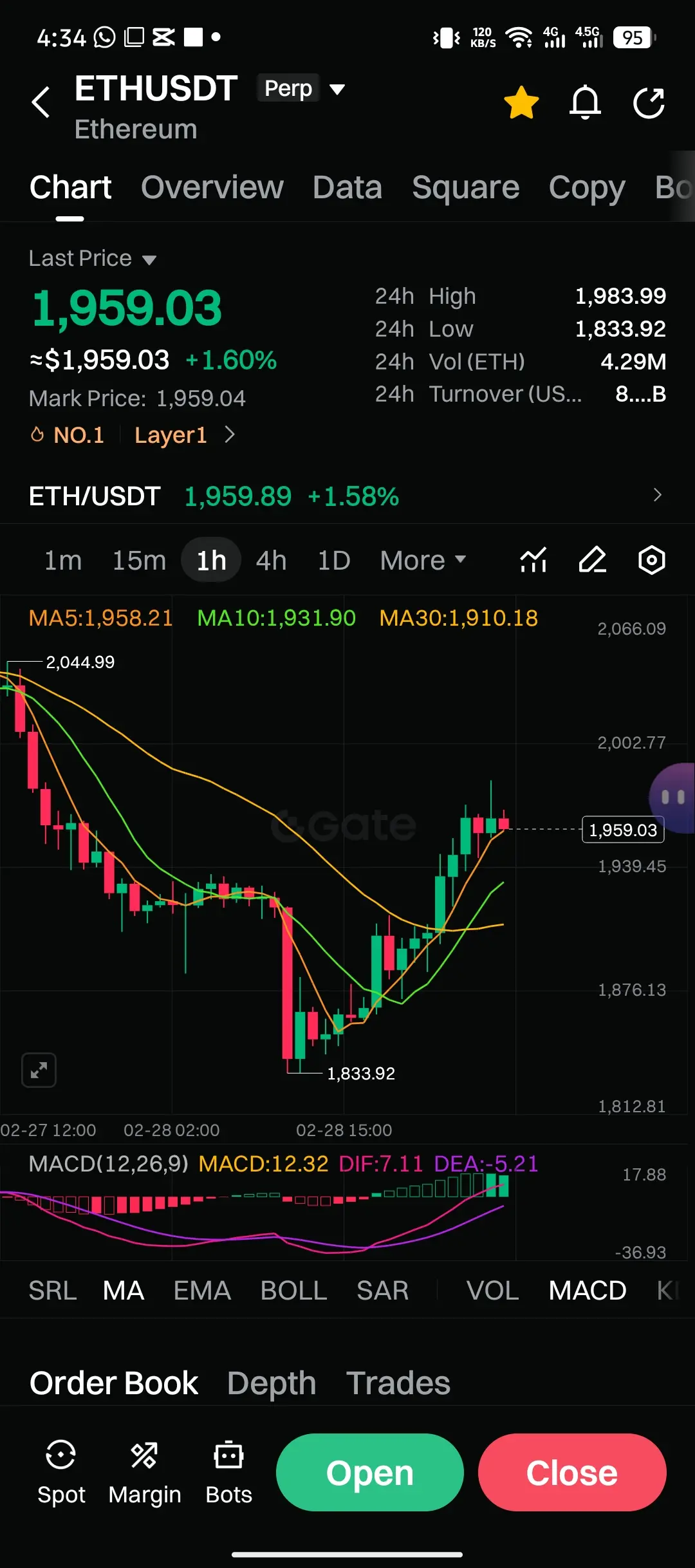
#DeepCreationCamp Currently, Ethereum (ETH/USDT Perpetual) is trading around the $1,959 zone on the 1-hour timeframe. The market recently declined from the $2,040 area down to approximately $1,833, where strong buying pressure appeared and formed a clear short-term bottom. From that low, price has shown a strong bullish recovery, printing higher lows and higher highs on the 1H chart. This structure indicates that short-term momentum has shifted from bearish to bullish, but the price is now approaching an important resistance zone, which makes the current area a decision point.
From a moving average perspective, the structure is supportive of bulls. The short-term moving averages (MA5 and MA10) are positioned above the MA30, and the current price is trading above all three averages. This alignment typically suggests short-term bullish continuation. When price remains above these averages and they begin to slope upward, it reflects sustained buying pressure. However, the real confirmation of strength will come if price can maintain closes above nearby resistance rather than simply wicking into it.
Looking at momentum indicators, the MACD on the 1-hour timeframe shows bullish characteristics. The MACD line is above the signal line, and the histogram has turned positive (green), indicating strengthening upward momentum. This supports the idea that buyers currently control short-term movement. However, momentum indicators alone are not enough; they must be confirmed with volume and strong candle closes, especially near major psychological levels.
The key resistance zone lies between $1,980 and $2,000. The $2,000 level is psychologically significant and often attracts heavy liquidity. If ETH manages to produce a strong 1-hour candle close above $2,000 with increased volume, the next upside targets become $2,020, followed by $2,050, and potentially $2,080 if bullish momentum accelerates. A clean breakout above $2,000 would confirm continuation of the recovery move and could trigger short liquidations, adding fuel to the rally.
On the downside, immediate support is located near $1,930. A deeper and stronger support zone exists around $1,900, while the recent swing low at $1,833 remains the major structural support. If price fails to break $2,000 and shows rejection—such as long upper wicks or a bearish engulfing candle—then a pullback toward $1,930 is likely. If $1,930 breaks with strong selling volume, the market could revisit $1,900. A break below $1,900 would weaken the bullish recovery structure and potentially shift momentum back to sellers.
Volume is crucial at this stage. Breakouts without strong volume often turn into fake moves. Therefore, traders should monitor whether buying pressure increases as price approaches and attempts to break $2,000. Additionally, funding rates and overall crypto market conditions—especially Bitcoin’s stability—can influence ETH’s next move, since Ethereum typically follows broader market sentiment.
From a probability perspective, the short-term bias slightly favors bulls due to trend structure, moving average alignment, and positive MACD momentum. However, price is still below a major resistance level, so confirmation is required. Entering before a confirmed breakout increases risk. A safer bullish strategy would involve waiting for a clear 1-hour close above $2,000 before targeting higher levels. Conversely, if rejection appears at resistance, a short trade toward $1,930–$1,900 becomes reasonable with proper confirmation.
Risk management is essential, especially in futures trading. Using moderate leverage (such as 3x–5x) reduces liquidation risk. Position sizing should ensure that no more than a small percentage of total capital is at risk per trade. Stop losses must be placed logically—below support for long positions and above resistance for short positions—rather than based on emotion.
In conclusion, Ethereum is currently in a bullish recovery phase but sitting at a critical resistance zone. A confirmed breakout above $2,000 opens the door for continuation toward $2,050 and beyond. Failure to break this level could trigger a healthy pullback toward $1,930 or lower. The next few hourly candle closes will likely determine the immediate direction.
📌 Entry:
$1,975 – $1,990 (after confirmation)
🎯 Targets:
TP1: $1,930
TP2: $1,900
TP3: $1,870
🛑 Stop Loss:
Above $2,015
repost-content-media
  • Reward
  • 1
  • Repost
  • Share
Yunnavip:
2026 GOGOGO 👊
#TrumpordersfederalbanonAnthropicAI is gaining attention after reports that U.S. President Donald Trump directed federal agencies to stop using technology developed by Anthropic. According to multiple media outlets, the order instructs government departments to phase out Anthropic’s AI systems over a defined transition period. The move has triggered strong reactions across the technology and policy communities.
At the center of the issue is a disagreement between Anthropic and parts of the U.S. defense establishment regarding how advanced AI systems should be deployed in military and intellige
MrFlower_XingChenvip
#TrumpordersfederalbanonAnthropicAI is gaining attention after reports that U.S. President Donald Trump directed federal agencies to stop using technology developed by Anthropic. According to multiple media outlets, the order instructs government departments to phase out Anthropic’s AI systems over a defined transition period. The move has triggered strong reactions across the technology and policy communities.
At the center of the issue is a disagreement between Anthropic and parts of the U.S. defense establishment regarding how advanced AI systems should be deployed in military and intelligence environments. Reports indicate that concerns were raised about operational control, compliance standards, and national security protocols. In response, federal authorities reportedly categorized the situation as a potential security risk, which led to the directive halting federal usage.
This development is significant because Anthropic is considered one of the leading AI research firms in the United States. A federal-level restriction on a domestic AI company is highly unusual and signals a broader shift in how governments may regulate or control advanced artificial intelligence technologies. It also highlights the growing tension between AI developers who emphasize safety guardrails and government agencies seeking broader operational capabilities.
The impact of this decision could extend beyond one company. AI firms working with governments may now face stricter contractual requirements, increased scrutiny, and more complex compliance obligations. At the same time, competitors in the AI sector could see new opportunities to secure federal partnerships under revised policy frameworks.
Financial markets may also react to this kind of news. Technology stocks, AI-related companies, and even crypto markets sometimes experience volatility when major regulatory or geopolitical announcements occur. Investors tend to reassess risk exposure when government intervention signals uncertainty in a fast-growing industry like artificial intelligence.
Ultimately, this situation reflects a larger global debate about AI governance, national security, corporate ethics, and technological sovereignty. As artificial intelligence becomes more deeply integrated into defense, infrastructure, and economic systems, policy decisions like this may become more common. The story is still developing, and further clarifications from federal agencies and Anthropic itself will determine the longer-term consequences for the AI sector.
  • Reward
  • 2
  • Repost
  • Share
ybaservip:
To The Moon 🌕
View More
good
MrFlower_XingChenvip
#95%ofAltsBelow200-daySMA refers to a market condition where approximately 95% of alternative cryptocurrencies are trading below their 200-day Simple Moving Average (SMA). The 200-day SMA is a widely used long-term technical indicator that helps traders evaluate overall market trend strength. When an asset stays above this line, it usually signals long-term bullish momentum, while trading below it indicates weakness or a prevailing downtrend. In the current situation, this reading suggests that most altcoins are experiencing prolonged bearish pressure.
In technical market analysis, this kind of extreme reading is often considered a sign of broad market risk sentiment. Many altcoins move in correlation with major market leaders such as Bitcoin and Ethereum, so when dominant assets face volatility or uncertainty, smaller market-cap altcoins tend to decline even more. The fact that only around 5% of altcoins are trading above their long-term moving average indicates that recovery strength across the sector is currently weak.
However, some traders interpret this type of market structure as a potential early warning of a future reversal opportunity. Historically, when a very large proportion of assets fall below their long-term averages, markets sometimes enter accumulation phases before a broader recovery cycle begins. This does not guarantee an immediate price rise, but it suggests that the market may be approaching an oversold or undervalued zone if buying interest returns.
Overall, the hashtag highlights a bearish long-term environment for altcoins, reflecting weak momentum across the sector. While the trend currently favors sellers, such extreme technical readings are often monitored by investors looking for potential bottom formations or future bullish cycles. Market direction will ultimately depend on liquidity conditions, macroeconomic sentiment, and the performance of major crypto assets.
repost-content-media
  • Reward
  • 1
  • Repost
  • Share
Yunnavip:
2026 GOGOGO 👊
good
MrFlower_XingChenvip
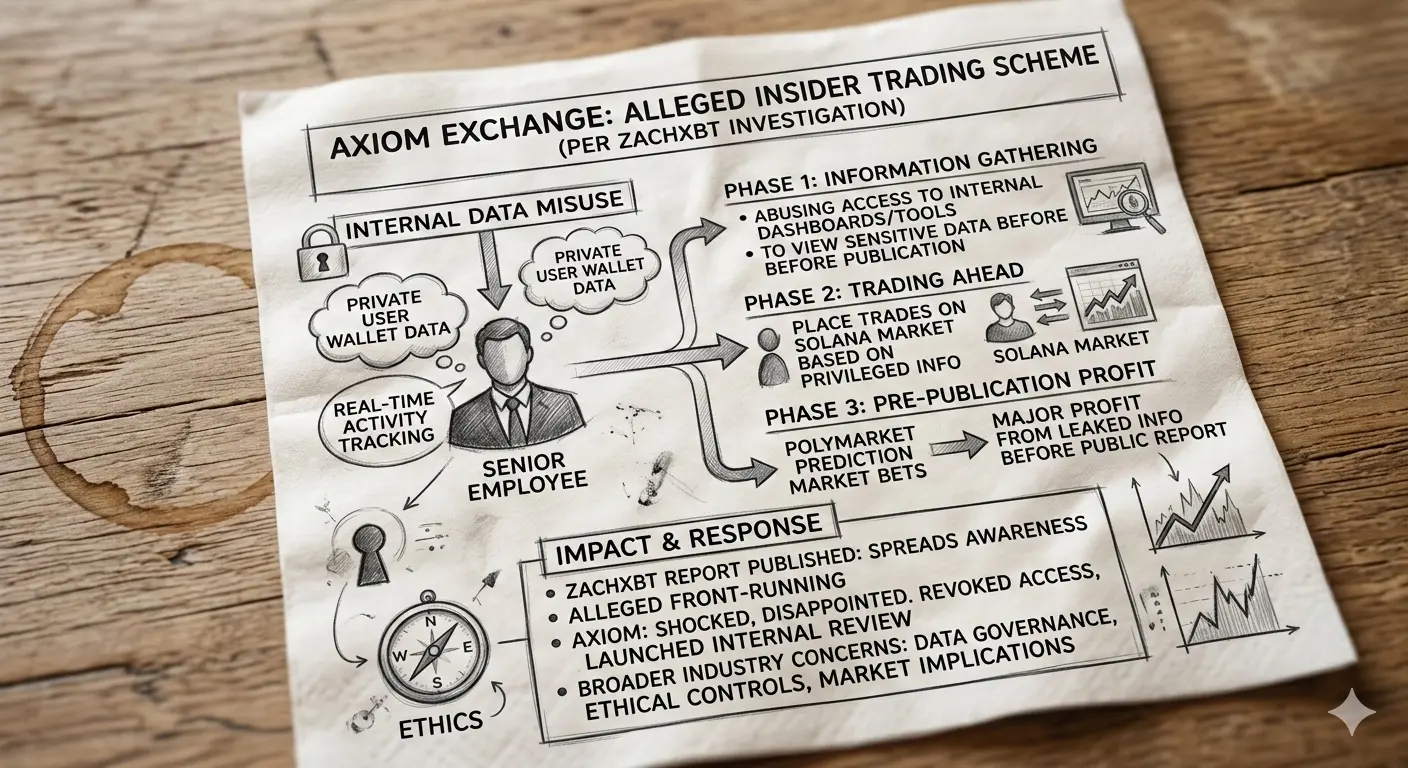
#ZachXBTExposesTheAxiomIncident refers to a major blockchain investigation published by on-chain sleuth ZachXBT alleging insider trading and misuse of internal data at Axiom Exchange, a Solana-based trading platform. According to multiple reports, ZachXBT’s investigation claims that a senior employee and possibly others at the platform abused their access to internal dashboards and tools to view private user wallet information and track traders’ activity. By seeing sensitive trading data before it was public, these employees allegedly used this privileged information to trade ahead of users and generate profits, a practice similar to front-running in traditional finance.
The allegations have sparked widespread attention not just because of the seriousness of insider trading claims but also due to unusual market behavior around the news. Before the report was publicly released, a large prediction market (with millions of dollars in volume) on Polymarket was dominated by bets that Axiom would be the company named in the exposé, and several wallets reportedly made significant profits from those bets before the public post—raising additional concerns about information leaks and advantage. Axiom responded to the allegations by stating it was “shocked and disappointed,” revoked access to the tools in question, and launched an internal review, but the incident has triggered broader discussions about data access, governance, and ethical controls at crypto trading platforms.
Overall, the hashtag is being used to highlight and spread awareness of this alleged insider trading scandal, the potential misuse of customer data by employees, and the resulting market and regulatory implications for the crypto industry.
repost-content-media
  • Reward
  • 1
  • Repost
  • Share
Yunnavip:
2026 GOGOGO 👊
good
MrFlower_XingChenvip
#EthereumFoundationUnveilsItsStrawmap The future of Ethereum is being shaped by long-term research initiatives as the ecosystem prepares for the next phase of blockchain evolution. With the recent strategic vision released by the Ethereum Foundation, the network is moving toward a highly scalable, privacy-focused, and ultra-fast settlement infrastructure. Developers are exploring upgrades that could reduce transaction finality times from minutes to nearly seconds, making Ethereum more suitable for institutional finance, real-world payments, and high-frequency decentralized applications.
In the coming years, the ecosystem is expected to push scaling boundaries through advanced Layer-2 aggregation technologies and next-generation data availability architectures. Research targets include extremely high throughput processing environments that could potentially support thousands of transactions per second on the base layer and even higher capacity across interconnected scaling solutions. These improvements aim to reduce congestion, lower gas costs during high demand periods, and enhance overall user experience for decentralized applications.
Security is also becoming a major focus as the network prepares for future computing threats. One of the long-term priorities involves integrating post-quantum cryptographic mechanisms to protect the blockchain against advances in quantum computing. At the same time, privacy innovation is expected to grow, with researchers working on native protocol-level privacy options that would allow users to conduct confidential transactions without relying solely on external privacy tools.
Looking ahead, Ethereum’s roadmap suggests a multi-fork development cycle extending toward the end of the decade, where major protocol upgrades may be deployed gradually as research matures. If these technological goals are achieved, Ethereum could strengthen its position as a foundational global blockchain platform supporting decentralized finance, digital identity systems, and next-generation Web3 infrastructure. Market participants are watching closely because successful execution of these plans could significantly influence long-term adoption, network value, and ecosystem dominance in the blockchain industry.
repost-content-media
  • Reward
  • 1
  • Repost
  • Share
Yunnavip:
2026 GOGOGO 👊
very good post
MrFlower_XingChenvip
The future outlook surrounding #JaneStreet10AMSellOff continues to be a major topic in crypto market discussions as traders watch whether the alleged institutional intraday pressure pattern will persist. Analysts are closely monitoring trading behavior linked to Jane Street Group, which is widely recognized as one of the largest market-making participants across ETF and derivative liquidity ecosystems. If the controversial 10:00 AM EST selling pattern truly disappears, some market observers believe it could signal a structural shift in short-term market microstructure rather than coordinated price suppression.
The performance of Bitcoin around the psychological $70,000 resistance zone is expected to be a critical test of market strength in the near future. Sustained trading above this level could attract additional institutional capital inflows, especially if ETF-related liquidity remains balanced between hedging and spot accumulation strategies. Many participants are watching for confirmation of whether current price stability reflects organic demand growth or temporary positioning adjustments inside large trading desks.
Regulatory pressure on global market makers may also shape future market structure. Institutions such as the Securities and Exchange Board of India (SEBI) and other international authorities are increasingly examining high-frequency and arbitrage trading activities to ensure fair execution standards. If stricter compliance rules are introduced, large liquidity providers may need to modify automated hedging models, potentially reducing extreme intraday volatility spikes.
Overall, the coming months could determine whether crypto markets transition into a more transparent price discovery phase or remain influenced by large-scale institutional liquidity strategies. Traders are advised to focus on macro liquidity trends, ETF flow data, and global risk sentiment rather than relying solely on historical intraday patterns. The evolution of institutional participation will likely play a major role in shaping the next major cycle of the cryptocurrency market.
#JaneStreet10AMSellOff
repost-content-media
  • Reward
  • 1
  • Repost
  • Share
Yunnavip:
2026 GOGOGO 👊
#USOCCIssuesNewStablecoinRules The new stablecoin regulatory proposal released by the Office of the Comptroller of the Currency marks a significant step toward federal oversight of the U.S. digital payment asset ecosystem under the framework of the GENIUS Act. The draft rule introduces a tightly controlled licensing system for payment stablecoin issuers, emphasizing risk management, reserve transparency, and operational compliance for institutions operating within U.S. jurisdiction. Regulators aim to position stablecoins as cash-like financial instruments rather than investment products, which
MrFlower_XingChenvip
#USOCCIssuesNewStablecoinRules The new stablecoin regulatory proposal released by the Office of the Comptroller of the Currency marks a significant step toward federal oversight of the U.S. digital payment asset ecosystem under the framework of the GENIUS Act. The draft rule introduces a tightly controlled licensing system for payment stablecoin issuers, emphasizing risk management, reserve transparency, and operational compliance for institutions operating within U.S. jurisdiction. Regulators aim to position stablecoins as cash-like financial instruments rather than investment products, which could fundamentally reshape how digital dollar equivalents function in global finance.
One of the most important requirements in the proposal is the strict 1:1 reserve backing rule. Issuers of permitted payment stablecoins will be required to maintain segregated and non-commingled reserve assets equal to or greater than the value of outstanding tokens. These reserves must be held either directly by the issuing institution or within approved financial custodians. The policy defines eight categories of eligible reserve assets and requires continuous fair-value monitoring to ensure that the redemption value of the stablecoin remains stable and reliable for users.
The proposal also strengthens redemption guarantees by mandating fast and secure conversion mechanisms that allow stablecoin holders to exchange their tokens for traditional currency at the fixed nominal value. At the same time, the rule explicitly prohibits interest-based yield programs or indirect return incentives tied to stablecoin storage or usage. This restriction is designed to prevent stablecoins from evolving into yield-generating investment assets and instead maintain their role as payment settlement tools within the financial system.
Regulators are also considering limiting each issuer to a single branded stablecoin product, which could significantly affect multi-token issuance platforms and white-label infrastructure providers operating in the digital asset sector. Companies and financial technology bridges associated with institutional payment networks may need to redesign their business models if this restriction is finalized. Additionally, the proposal sets a minimum capital requirement of approximately five million U.S. dollars for new stablecoin issuers entering the market.
The public comment period for the draft rule will remain open for sixty days after its publication in the Federal Register, allowing industry participants, banks, and technology firms to provide feedback. If implemented, the regulation could create a unified federal framework for stablecoin issuance in the United States, replacing fragmented state-level oversight with centralized supervision. Market analysts believe the policy may encourage institutional adoption while simultaneously imposing stricter compliance burdens on emerging digital asset startups.
repost-content-media
  • Reward
  • 1
  • Repost
  • Share
Yunnavip:
2026 GOGOGO 👊
good 😊
MrFlower_XingChenvip
The advancement of the CLARITY Act (U.S. 2026 crypto law) is expected to reshape the next phase of digital asset finance by establishing a structured bridge between innovation and compliance-driven market growth. Analysts predict that the legislation will gradually transform the U.S. crypto market into a more institutionally integrated ecosystem where regulatory certainty becomes a competitive advantage rather than a constraint. Authorities such as the U.S. Securities and Exchange Commission, Commodity Futures Trading Commission, and U.S. Department of the Treasury are expected to coordinate enforcement and monitoring frameworks under the new legislative guidance, enabling more unified oversight of digital finance activities.
Looking ahead, market strategists anticipate that the Act may trigger a multi-stage capital reallocation cycle across the cryptocurrency sector. Institutional investors are likely to increase allocations toward high-liquidity and compliance-aligned assets, particularly major layer-1 networks, tokenized financial instruments, and regulated stablecoin infrastructure. Future projections suggest that digital assets with transparent governance models and audited smart contract ecosystems could experience relative valuation premiums as risk-adjusted return metrics become central to portfolio construction.
Another emerging development is the potential acceleration of tokenized real-world asset (RWA) markets within the United States. The regulatory clarity provided by the legislation is expected to encourage banks, asset managers, and fintech platforms to launch blockchain-based securities products that comply with federal reporting standards. Over the next several years, analysts believe that institutional tokenization of equities, bonds, and alternative assets could significantly increase on-chain liquidity while reducing settlement latency and operational costs across financial markets.
In the volatility landscape, the crypto market is expected to transition from news-driven speculative swings toward macro-regulated trading behavior. Short-term volatility spikes may still occur during policy implementation phases, but long-term market structure models indicate declining systemic uncertainty as compliance infrastructure matures. Global competitiveness will also play a role, as other jurisdictions may respond by refining their own digital asset regulations to maintain cross-border capital flow efficiency.
Overall, the advancement of the CLARITY Act represents a structural turning point in digital finance governance. If implementation proceeds smoothly, the United States could establish itself as a global standard-setter for cryptocurrency regulation, influencing international policy alignment and institutional adoption patterns. The next phase of the crypto economy is likely to be defined by the convergence of blockchain innovation, regulatory transparency, and large-scale institutional participation, marking the beginning of a more mature and professionally managed digital asset era.
#CLARITYActAdvances
repost-content-media
  • Reward
  • 1
  • Repost
  • Share
Yunnavip:
2026 GOGOGO 👊
😊
MrFlower_XingChenvip
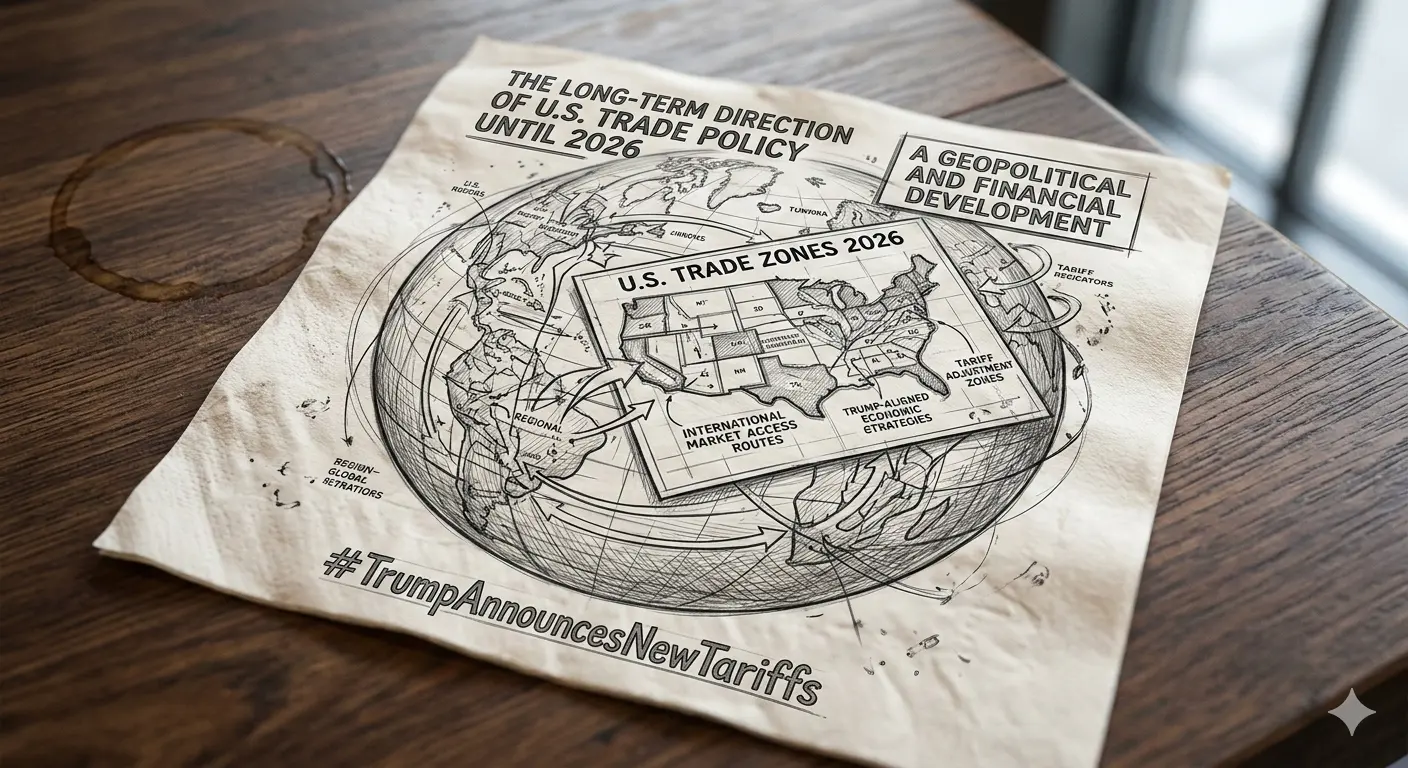
President Trump Expands Global Tariff Policy
The advancement of the tariff initiative associated with Donald Trump has introduced a new phase in U.S. trade strategy aimed at strengthening domestic production and reshaping international supply chains. The policy imposes approximately 10% global tariffs on imported goods, with proposals to potentially raise the rate to 15% or higher for selected trade partners depending on economic and political developments. The measures are being implemented under authority linked to the Trade Act framework and are initially expected to remain active for a limited period unless extended through legislative or executive action. The objective is to protect American manufacturing competitiveness while attempting to correct long-standing trade imbalances.
Political and Legal Controversies Surrounding the Tariff Policy
The tariff announcement has triggered significant political debate inside the United States. Some lawmakers and state authorities are demanding compensation mechanisms for consumers, with discussions suggesting possible refund structures for tariff-related price increases faced by households. Estimates circulating in policy discussions suggest that economic adjustments could translate into consumer reimbursement expectations in the broader market, though the actual implementation process remains uncertain. Legal challenges are also emerging following decisions by the U.S. judiciary system, including actions involving the Supreme Court of the United States, which previously struck down earlier broad tariff expansions, forcing the administration to modify enforcement strategies.
Market Reaction and Economic Impact
Financial markets have reacted with increased volatility following the tariff announcements. U.S. equity indices and technology sector stocks experienced short-term fluctuations as investors assessed the potential impact of trade restrictions on corporate supply chains and international revenue streams. The policy environment is expected to influence global investment sentiment, particularly affecting multinational corporations operating across North America, Europe, and Asia. Analysts suggest that while protectionist tariffs may support some domestic industries, they could also contribute to higher import costs and supply chain adjustments for businesses dependent on global sourcing networks.
Global Trade and Geopolitical Implications
Internationally, major economic blocs are closely monitoring the evolving tariff framework. Trading partners in the European Union, East Asia, and other export-oriented economies are evaluating potential counter-measures or diplomatic negotiations to protect their market interests. Some governments are delaying trade agreements or revising export strategies to reduce exposure to U.S. tariff escalation risk. The policy shift reflects a broader strategic realignment of American trade diplomacy, emphasizing domestic industrial security over unrestricted global market integration.
Future Outlook
Economists predict that the next phase of the tariff policy will depend on legislative approval, judicial review outcomes, and international diplomatic responses. If the tariff structure expands beyond the current level, global trade fragmentation risks may increase, potentially creating segmented pricing zones across international markets. The long-term direction of U.S. trade policy under Trump-aligned economic strategies will likely remain one of the most closely watched geopolitical and financial developments of 2026.
#TrumpAnnouncesNewTariffs
repost-content-media
  • Reward
  • 1
  • Repost
  • Share
Yunnavip:
2026 GOGOGO 👊
good post
MrFlower_XingChenvip
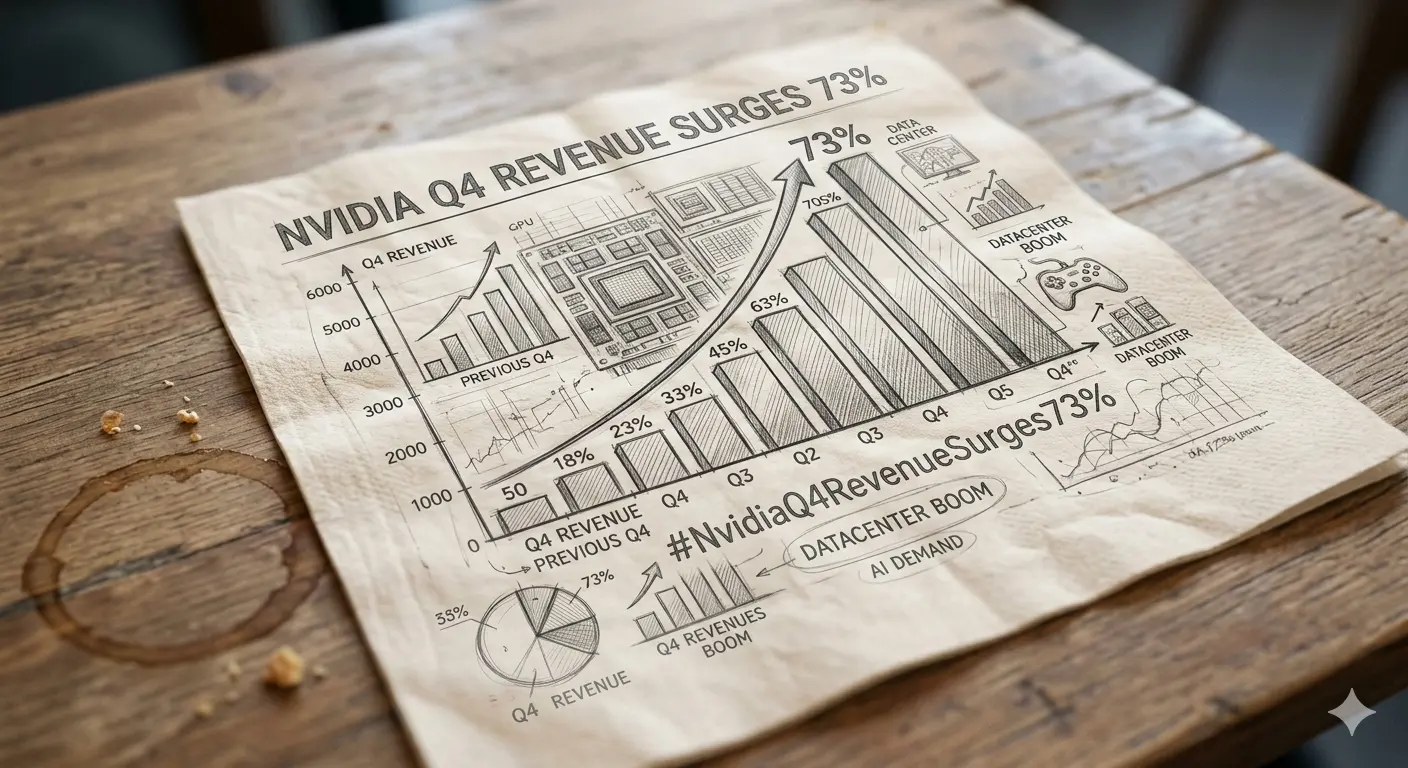
Nvidia Reports Record Q4 Revenue Surge of 73%
NVIDIA Corporation has delivered one of the most impressive earnings reports in the company’s history, posting fourth-quarter revenue of $68.1 billion, a 73 % increase compared with the same period a year ago. This result not only far exceeded Wall Street expectations but also marked a record quarter, underscoring Nvidia’s dominant position at the center of the global artificial intelligence (AI) boom. The strong top-line performance was driven by explosive demand for data center infrastructure, which remains the company’s largest and fastest-growing revenue segment.
AI and Data Centers Power Growth
The company’s data center segment contributed more than 90 % of total Q4 revenue, with results showing massive year-over-year growth. Enterprise customers, cloud providers, and hyperscale computing operators continued to invest heavily in Nvidia’s accelerated computing platforms, reflecting the ongoing corporate shift toward advanced AI capabilities. Nvidia’s CEO highlighted that demand for its chips and systems — particularly for running and training large language models and AI services — remains “insatiable,” reinforcing the company’s leadership in the high-performance computing space.
Profitability and Margins Strengthen
In addition to strong revenue growth, Nvidia reported robust profitability metrics. Earnings per share rose substantially compared with the previous year, comfortably beating analyst forecasts and driving gross margins to levels not seen in recent quarters. This combination of growth and efficiency has strengthened investor confidence in Nvidia’s business model and its ability to sustain long-term earnings expansion even as competition intensifies.
Guidance and Future Expectations
Looking ahead, Nvidia provided optimistic guidance for the first quarter of the next fiscal year, expecting revenue near $78 billion, a figure that again exceeds consensus forecasts. This forward outlook suggests that the company is not only benefiting from current AI spending but also anticipates continued momentum in enterprise computing, networking, and next-generation chip platforms. The guidance reinforces market expectations that Nvidia’s role in powering future AI innovation will only deepen, even as geopolitical and supply chain challenges persist.
Market Reaction and Analyst Views
Despite strong earnings and guidance, Nvidia’s stock price experienced short-term volatility as some investors weighed concerns about whether relentless growth is fully priced into the share valuation. Nevertheless, many analysts remain bullish on the company’s prospects, citing overwhelming demand for AI infrastructure and the strategic importance of Nvidia’s products across technology ecosystems.
Broad Impact on Tech and AI Investment
Beyond Nvidia itself, the company’s outstanding quarterly performance has broader implications for the technology sector and global AI investment patterns. Its results have sparked increased interest from institutional investors, driven momentum in semiconductor supply chains, and influenced sentiment across markets tied to cloud computing, big data, and next-generation AI services. As Nvidia continues to expand its product roadmap and partnerships, its financial results are becoming a key barometer for the health of the AI industry overall.
#NvidiaQ4RevenueSurges73%
repost-content-media
  • Reward
  • 1
  • Repost
  • Share
Yunnavip:
2026 GOGOGO 👊
  • Pin