# IranUSConflictEscalates

40.47K

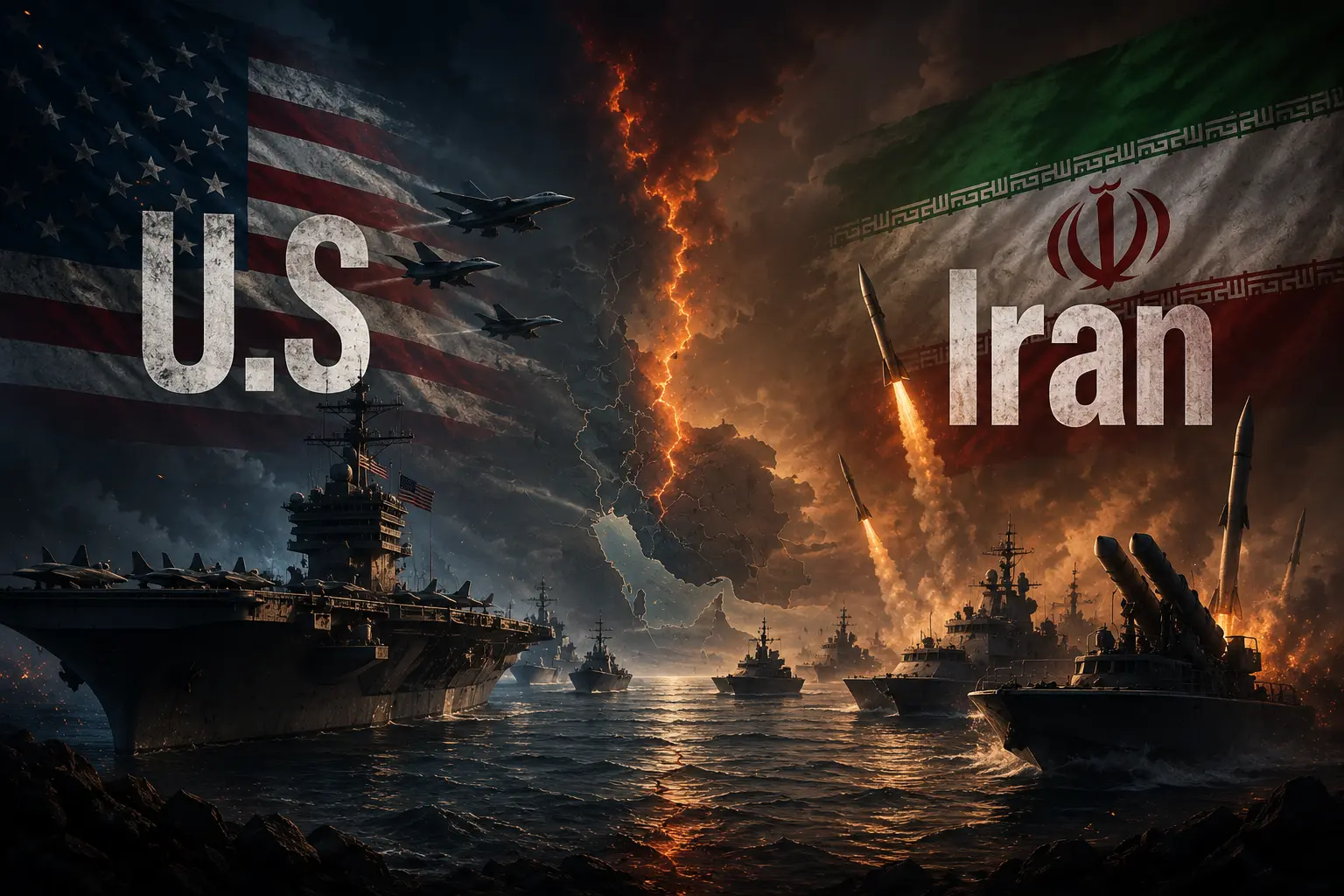
In the early hours of May 8 local time, the U.S. military violated the ceasefire agreement, launching airstrikes on Iran's coastal areas and oil tankers. The Iranian armed forces quickly counterattacked, using ballistic missiles, anti-ship cruise missiles, and drones to strike U.S. naval vessels east of the Strait of Hormuz. Iran's Revolutionary Guard claimed to have repelled three U.S. destroyers, inflicting "significant losses." Oil prices, which had plunged 7% earlier on ceasefire hopes, rebounded sharply, while U.S. stocks erased gains. Tensions at the Strait of Hormuz have reignited, fueling risk-off sentiment and near-term volatility for risk assets.

📢 Gate Square | 5/8 Hot Discussion: #美伊冲突再升级
The prospects for US-Iran talks have suddenly taken a major hit. On May 8, the U.S. Central Command confirmed that U.S. forces intercepted and retaliated against an Iranian attack in the Strait of Hormuz. Owing to this geopolitical conflict, U.S. stocks promptly dropped below their highs, BTC fell through the $80,000 level, and oil prices saw a sharp V-shaped reversal. With tonight’s non-farm payroll data about to be released, can the bulls regain their ground?
🎁 Predict the market trend and draw 5 lucky Koi fish winners to share a $1,000 positio
BTC0.61%
View Original
post-image
  • Reward
  • 20
  • Repost
  • Share
Miss_1903:
LFG 🔥
View More
#IranUSConflictEscalates
The market suddenly shifted from calm to defensive again after the latest US–Iran developments.
Once reports came out about military activity around the Strait of Hormuz, risk assets reacted immediately. U.S. equities pulled back from intraday highs, oil made a sharp V-shaped move, and lost the $80K level again.
Personally, I think the biggest issue right now is uncertainty rather than the conflict itself. Markets can usually handle bad news — what they struggle with is not knowing how far things could go.
What I’m watching most closely is whether this situation stay
BTC0.61%
CryptoSelf
#IranUSConflictEscalates
The market suddenly shifted from calm to defensive again after the latest US–Iran developments.
Once reports came out about military activity around the Strait of Hormuz, risk assets reacted immediately. U.S. equities pulled back from intraday highs, oil made a sharp V-shaped move, and lost the $80K level again.
Personally, I think the biggest issue right now is uncertainty rather than the conflict itself. Markets can usually handle bad news — what they struggle with is not knowing how far things could go.
What I’m watching most closely is whether this situation stays limited or starts affecting global energy flows more seriously. The Strait of Hormuz is too important for oil logistics, so even small escalations there quickly impact broader market sentiment.
As for BTC, I still think the structure is stronger than many people expect. ETF inflows remain solid, and despite the pullback, buyers are still active around key support zones. If macro pressure eases even slightly, reclaiming $80K again is possible.
Tonight’s payroll data will probably decide short-term direction.
If the numbers come in weaker than expected, markets may start pricing stronger rate-cut expectations again, which could help both crypto and equities recover. But if employment data stays too strong, the Fed pressure story continues, and risk assets could remain under stress.
Right now this feels like a market caught between macro uncertainty and long-term bullish positioning.
And usually, when both sides build pressure at the same time, volatility expands fast.
#CryptoMarketSeesVolatility #GateSquare #CreatorCarnival #GateSquareMayTradingShare
repost-content-media
  • Reward
  • 1
  • Repost
  • Share
HighAmbition:
good 👍
#IranUSConflictEscalates
What global markets are experiencing right now is far bigger than a temporary geopolitical scare or a routine correction cycle. A much deeper macro transition is unfolding beneath the surface, and institutional capital is already reacting to it aggressively.
The escalation between Iran and the United States may have triggered the current instability, but the real issue is how quickly uncertainty is spreading across the global financial system. Markets are now attempting to reprice geopolitical risk, inflation expectations, energy disruption probabilities, and liquidit
BTC0.61%
ETH0.75%
CryptoChampion
#IranUSConflictEscalates
What global markets are experiencing right now is far bigger than a temporary geopolitical scare or a routine correction cycle. A much deeper macro transition is unfolding beneath the surface, and institutional capital is already reacting to it aggressively.
The escalation between Iran and the United States may have triggered the current instability, but the real issue is how quickly uncertainty is spreading across the global financial system. Markets are now attempting to reprice geopolitical risk, inflation expectations, energy disruption probabilities, and liquidity conditions all at the same time.
This is exactly the kind of environment where volatility expands across every major asset class simultaneously.
Oil has become the clearest signal of this macro tension. Crude prices are no longer moving purely because of traditional supply-demand dynamics. A large geopolitical premium is now embedded directly into energy markets as traders begin pricing potential disruptions across shipping routes, regional stability, and global supply chains.
Historically, energy markets respond first during geopolitical escalation cycles because oil sits at the core of the global economy. Rising crude prices increase transportation costs, manufacturing pressure, insurance expenses, and inflation expectations worldwide.
That is why discussions around $100+ oil are rapidly returning to institutional conversations.
At the same time, gold continues attracting defensive capital flows. Gold’s strength is not simply retail speculation or short-term momentum trading. It reflects institutional positioning during periods where confidence weakens faster than economic visibility improves.
Whenever macro uncertainty rises sharply, capital naturally searches for stability anchors. Gold is currently functioning as one of the primary global protection assets inside this environment.
Meanwhile, Bitcoin is behaving in a very different way compared to previous crypto cycles.
BTC is no longer reacting purely as a speculative technology asset. Its market structure is increasingly influenced by macro liquidity conditions, institutional positioning, geopolitical headlines, and global risk sentiment.
This structural evolution is important because it shows how deeply crypto is now integrated into broader financial markets.@Gate_Square
Bitcoin still maintains a strong long-term institutional narrative, but short-term price action remains heavily pressured by fear-driven volatility and liquidity uncertainty. The market is essentially caught between long-term bullish adoption trends and short-term macro instability.
Ethereum is reacting even more aggressively because ETH historically behaves as a higher-beta liquidity asset. During risk-off environments, speculative inflows weaken first, leverage participation contracts, and volatility expands faster across altcoins.
This is why Ethereum often experiences stronger downside pressure during periods of macro stress despite maintaining long-term recovery potential.
Another major force driving current market weakness is U.S. dollar strength.
During global instability, institutions often rotate toward the dollar because it remains the world’s dominant reserve liquidity instrument. A stronger dollar indirectly pressures crypto, equities, commodities, and emerging markets because global financial conditions tighten significantly.
At the same time, equity markets are beginning to show classic defensive rotation behavior. Capital is gradually shifting away from speculative growth sectors and moving toward lower-volatility, capital-preservation structures.
This is where markets become psychologically dangerous.
Not because economic systems suddenly collapse overnight, but because confidence deteriorates faster than liquidity can stabilize. That creates violent emotional swings, unstable market structure, fake breakouts, panic liquidations, and highly reactive headline-driven trading conditions.
Right now, the global market is not collapsing.
It is recalibrating under pressure.
Gold is acting as the stability anchor. Oil is acting as the geopolitical shock asset. The U.S. dollar is acting as the global liquidity shield. And crypto markets are moving through a macro adjustment phase driven by uncertainty and capital rotation.
Historically, these periods of maximum fear often become the foundation for the next major expansion cycle. While volatility may continue dominating short-term conditions, institutional accumulation frequently begins quietly underneath the surface long before confidence fully returns.
#GateSquare #ContentMining
#GateSquareMayTradingShare
repost-content-media
  • Reward
  • Comment
  • Repost
  • Share
#IranUSConflictEscalates
What global markets are experiencing right now is far bigger than a temporary geopolitical scare or a routine correction cycle. A much deeper macro transition is unfolding beneath the surface, and institutional capital is already reacting to it aggressively.
The escalation between Iran and the United States may have triggered the current instability, but the real issue is how quickly uncertainty is spreading across the global financial system. Markets are now attempting to reprice geopolitical risk, inflation expectations, energy disruption probabilities, and liquidit
BTC0.61%
ETH0.75%
post-image
post-image
  • Reward
  • 6
  • Repost
  • Share
MasterChuTheOldDemonMasterChu:
Steadfast HODL💎
View More
#IranUSConflictEscalates
US–Iran Conflict 2026:
The US–Iran conflict has evolved into one of the most important macroeconomic and geopolitical events of 2026. What began as diplomatic pressure, sanctions disputes, and failed nuclear negotiations has transformed into a large-scale confrontation involving military strikes, naval operations, cyber incidents, energy disruptions, and severe financial market volatility.
This is no longer just a Middle East political issue. It is now directly influencing oil prices, inflation expectations, central-bank decisions, global trade, gold demand, cryptocu
post-image
  • Reward
  • Comment
  • Repost
  • Share
#GateSquareMayTradingShare
The Global Market Is Entering A Dangerous Macro Repricing Phase — And Most Traders Still Think This Is “Normal Volatility”
What we are witnessing right now across global markets is no longer a simple headline reaction or short-term speculative panic.
This is becoming a full-scale macro repricing environment where geopolitical tension, liquidity instability, inflation expectations, and institutional capital rotation are all colliding at the same time.
The escalation between Iran and the United States is acting as the catalyst, but the deeper story is how global finan
BTC0.61%
ETH0.75%
MrFlower_XingChen
#GateSquareMayTradingShare
The Global Market Is Entering A Dangerous Macro Repricing Phase — And Most Traders Still Think This Is “Normal Volatility”
What we are witnessing right now across global markets is no longer a simple headline reaction or short-term speculative panic.
This is becoming a full-scale macro repricing environment where geopolitical tension, liquidity instability, inflation expectations, and institutional capital rotation are all colliding at the same time.
The escalation between Iran and the United States is acting as the catalyst, but the deeper story is how global financial systems respond when uncertainty suddenly becomes difficult to price.
Markets are forward-looking systems.
They do not wait for confirmed outcomes.
They begin repricing risk the moment probabilities shift.
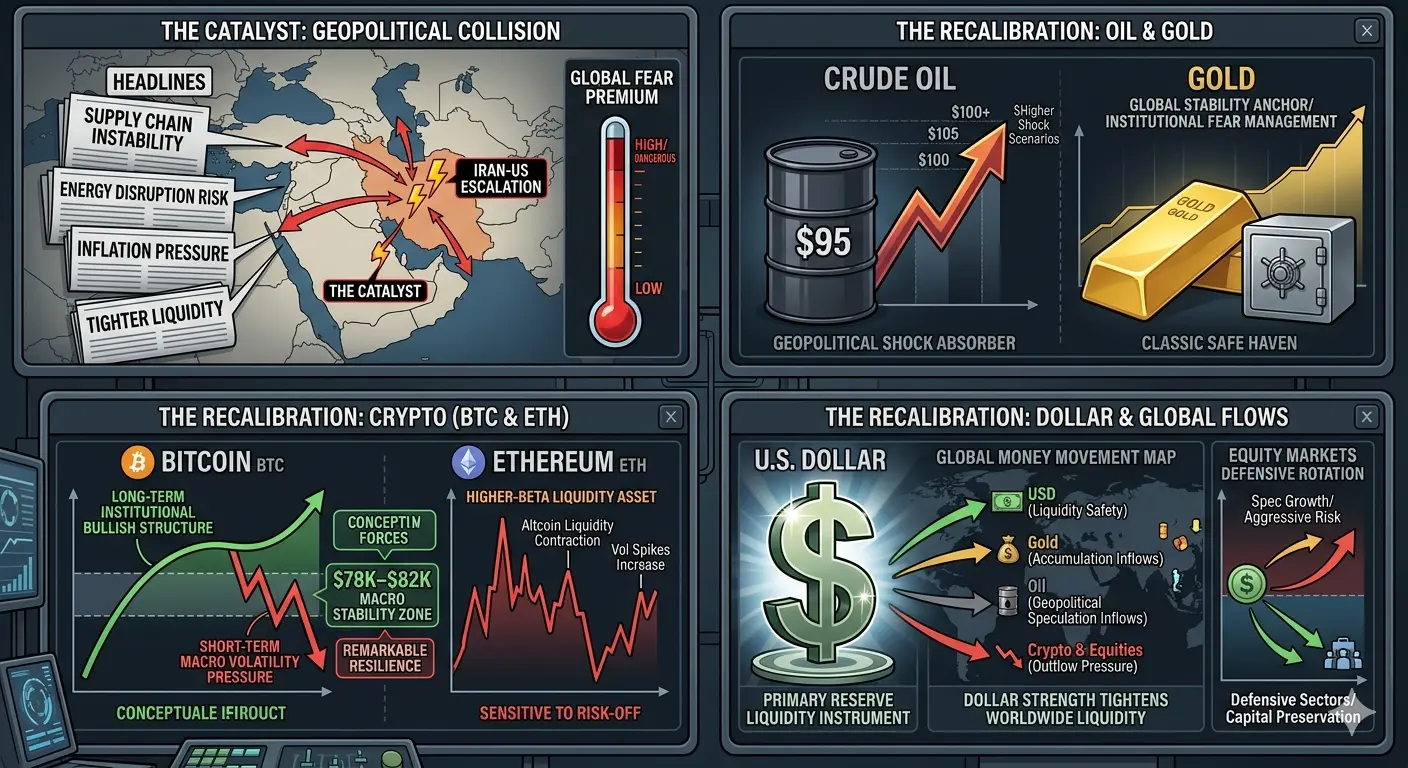
And right now, probability models across global markets are rapidly adjusting for: ⚠️ supply chain instability
⚠️ energy disruption risk
⚠️ inflation pressure
⚠️ tighter liquidity conditions
⚠️ increased volatility across risk assets
That is why almost every major asset class is now reacting simultaneously rather than independently.
This is no longer just a crypto story.
It is a global macro story.
At the center of the current environment sits oil.
Crude oil around the $95 region is not simply reflecting normal supply-demand pricing anymore. It is trading with a geopolitical fear premium embedded directly into its structure.
And historically, oil becomes the first major asset to react aggressively during geopolitical escalation cycles because energy sits at the foundation of the global economic system.
When markets fear instability in the Middle East: • shipping risk increases
• insurance costs rise
• inflation expectations accelerate
• institutional hedging expands
• speculative futures positioning intensifies
That’s why oil can move violently once geopolitical pricing begins accelerating.
If tensions continue escalating, markets will immediately start discussing: 📈 $100 oil
📈 $105 oil
📈 potentially even higher shock scenarios
And that creates a chain reaction across every major financial market because higher energy costs tighten liquidity globally.
At the same time, gold is behaving exactly like a classic macro safe haven.
Gold’s current strength is not speculative excitement.
It is institutional fear management.
When uncertainty rises faster than confidence, capital naturally rotates toward assets perceived as long-term stores of value and stability anchors.
That’s exactly what gold is currently becoming inside the global system.
What makes the current environment especially fascinating is how Bitcoin is responding.
Bitcoin is no longer behaving like a pure speculative asset.
It now reacts as a hybrid macro instrument influenced by: • liquidity conditions
• institutional positioning
• macro headlines
• risk appetite
• and monetary expectations
This is a major structural evolution from earlier crypto cycles.
Right now, Bitcoin still holds its broader bullish structure, but short-term momentum is clearly being suppressed by macro fear and liquidity instability.
That’s why BTC currently feels trapped between two opposing forces: 📈 long-term institutional bullish structure
⚠️ short-term macro-driven volatility pressure
The key region around: 🎯 $78K–$82K
has effectively become Bitcoin’s macro stability zone.
If BTC holds above this region despite geopolitical stress, it signals remarkable structural resilience.
But if liquidity conditions deteriorate further and fear accelerates, deeper volatility expansions become increasingly likely before stabilization occurs.
Ethereum, meanwhile, is reacting with even greater sensitivity.
This is normal.
ETH historically behaves as a higher-beta liquidity asset, meaning it amplifies both bullish and bearish market conditions faster than Bitcoin.
That’s why Ethereum currently looks weaker structurally despite still maintaining long-term recovery potential.
In risk-off environments: • speculative inflows slow first
• altcoin liquidity contracts faster
• leverage participation declines
• volatility spikes increase
And Ethereum sits directly in the middle of those liquidity dynamics.
Another critically important factor many retail traders are underestimating right now is U.S. dollar strength.
During global uncertainty, capital almost always rotates toward the dollar because it remains the world’s primary reserve liquidity instrument.
That creates indirect pressure on virtually every risk-sensitive market: 📉 crypto
📉 equities
📉 growth sectors
📉 emerging markets
Because stronger dollar conditions effectively tighten financial liquidity worldwide.
This is one of the hidden macro forces suppressing crypto momentum right now even while long-term adoption narratives remain strong.
At the same time, equity markets are beginning to show classic defensive rotation behavior.
Capital is quietly moving away from: • speculative growth
• high-beta technology
• aggressive risk positioning
…and toward: • defensive sectors
• lower-volatility assets
• capital preservation structures
The same fear psychology affecting crypto is now spreading across traditional financial markets as well.
And psychologically, this is where markets become most unstable.
Not because fundamentals instantly collapse.
But because confidence weakens faster than liquidity can stabilize.
That creates: ⚠️ emotional price swings
⚠️ news-driven volatility
⚠️ fake breakouts
⚠️ panic liquidations
⚠️ unstable support/resistance behavior
Traditional technical analysis becomes less reliable during these periods because markets temporarily prioritize fear over structure.
And this is exactly why current capital flow behavior matters so much.
Right now, global money movement is becoming very clear:
💰 Gold → accumulation inflows
🛢 Oil → geopolitical speculation inflows
💵 U.S. Dollar → liquidity safety flows
📉 Crypto & equities → temporary outflow pressure
This rotation map explains the current macro environment more accurately than individual charts alone.
But there is one important historical reality traders should remember:
The most powerful long-term opportunities often begin during maximum uncertainty.
Markets tend to bottom emotionally before they bottom structurally.
And historically, the periods where fear dominates headlines, liquidity contracts, and volatility expands are often the same periods where institutional accumulation quietly begins underneath the surface before the next expansion cycle emerges.
Right now, global markets are not collapsing.
They are recalibrating.
Bitcoin and Ethereum are moving through a macro adjustment phase.
Gold is acting as the global stability anchor.
Oil is functioning as the geopolitical shock absorber.
And liquidity itself has become the single most important force driving market behavior.
Until geopolitical clarity improves and liquidity conditions stabilize, markets will likely remain: • highly volatile
• emotionally reactive
• macro-sensitive
• and heavily headline-driven
But historically, these are also the exact environments where the foundations of the next major cycle quietly begin forming.
#IranUSConflictEscalates
#WCTCTradingKingPK
repost-content-media
  • Reward
  • Comment
  • Repost
  • Share
#GateSquareMayTradingShare
The Global Market Is Entering A Dangerous Macro Repricing Phase — And Most Traders Still Think This Is “Normal Volatility”
What we are witnessing right now across global markets is no longer a simple headline reaction or short-term speculative panic.
This is becoming a full-scale macro repricing environment where geopolitical tension, liquidity instability, inflation expectations, and institutional capital rotation are all colliding at the same time.
The escalation between Iran and the United States is acting as the catalyst, but the deeper story is how global finan
BTC0.61%
ETH0.75%
MrFlower_XingChen
#GateSquareMayTradingShare
The Global Market Is Entering A Dangerous Macro Repricing Phase — And Most Traders Still Think This Is “Normal Volatility”
What we are witnessing right now across global markets is no longer a simple headline reaction or short-term speculative panic.
This is becoming a full-scale macro repricing environment where geopolitical tension, liquidity instability, inflation expectations, and institutional capital rotation are all colliding at the same time.
The escalation between Iran and the United States is acting as the catalyst, but the deeper story is how global financial systems respond when uncertainty suddenly becomes difficult to price.
Markets are forward-looking systems.
They do not wait for confirmed outcomes.
They begin repricing risk the moment probabilities shift.
And right now, probability models across global markets are rapidly adjusting for: ⚠️ supply chain instability
⚠️ energy disruption risk
⚠️ inflation pressure
⚠️ tighter liquidity conditions
⚠️ increased volatility across risk assets
That is why almost every major asset class is now reacting simultaneously rather than independently.
This is no longer just a crypto story.
It is a global macro story.
At the center of the current environment sits oil.
Crude oil around the $95 region is not simply reflecting normal supply-demand pricing anymore. It is trading with a geopolitical fear premium embedded directly into its structure.
And historically, oil becomes the first major asset to react aggressively during geopolitical escalation cycles because energy sits at the foundation of the global economic system.
When markets fear instability in the Middle East: • shipping risk increases
• insurance costs rise
• inflation expectations accelerate
• institutional hedging expands
• speculative futures positioning intensifies
That’s why oil can move violently once geopolitical pricing begins accelerating.
If tensions continue escalating, markets will immediately start discussing: 📈 $100 oil
📈 $105 oil
📈 potentially even higher shock scenarios
And that creates a chain reaction across every major financial market because higher energy costs tighten liquidity globally.
At the same time, gold is behaving exactly like a classic macro safe haven.
Gold’s current strength is not speculative excitement.
It is institutional fear management.
When uncertainty rises faster than confidence, capital naturally rotates toward assets perceived as long-term stores of value and stability anchors.
That’s exactly what gold is currently becoming inside the global system.
What makes the current environment especially fascinating is how Bitcoin is responding.
Bitcoin is no longer behaving like a pure speculative asset.
It now reacts as a hybrid macro instrument influenced by: • liquidity conditions
• institutional positioning
• macro headlines
• risk appetite
• and monetary expectations
This is a major structural evolution from earlier crypto cycles.
Right now, Bitcoin still holds its broader bullish structure, but short-term momentum is clearly being suppressed by macro fear and liquidity instability.
That’s why BTC currently feels trapped between two opposing forces: 📈 long-term institutional bullish structure
⚠️ short-term macro-driven volatility pressure
The key region around: 🎯 $78K–$82K
has effectively become Bitcoin’s macro stability zone.
If BTC holds above this region despite geopolitical stress, it signals remarkable structural resilience.
But if liquidity conditions deteriorate further and fear accelerates, deeper volatility expansions become increasingly likely before stabilization occurs.
Ethereum, meanwhile, is reacting with even greater sensitivity.
This is normal.
ETH historically behaves as a higher-beta liquidity asset, meaning it amplifies both bullish and bearish market conditions faster than Bitcoin.
That’s why Ethereum currently looks weaker structurally despite still maintaining long-term recovery potential.
In risk-off environments: • speculative inflows slow first
• altcoin liquidity contracts faster
• leverage participation declines
• volatility spikes increase
And Ethereum sits directly in the middle of those liquidity dynamics.
Another critically important factor many retail traders are underestimating right now is U.S. dollar strength.
During global uncertainty, capital almost always rotates toward the dollar because it remains the world’s primary reserve liquidity instrument.
That creates indirect pressure on virtually every risk-sensitive market: 📉 crypto
📉 equities
📉 growth sectors
📉 emerging markets
Because stronger dollar conditions effectively tighten financial liquidity worldwide.
This is one of the hidden macro forces suppressing crypto momentum right now even while long-term adoption narratives remain strong.
At the same time, equity markets are beginning to show classic defensive rotation behavior.
Capital is quietly moving away from: • speculative growth
• high-beta technology
• aggressive risk positioning
…and toward: • defensive sectors
• lower-volatility assets
• capital preservation structures
The same fear psychology affecting crypto is now spreading across traditional financial markets as well.
And psychologically, this is where markets become most unstable.
Not because fundamentals instantly collapse.
But because confidence weakens faster than liquidity can stabilize.
That creates: ⚠️ emotional price swings
⚠️ news-driven volatility
⚠️ fake breakouts
⚠️ panic liquidations
⚠️ unstable support/resistance behavior
Traditional technical analysis becomes less reliable during these periods because markets temporarily prioritize fear over structure.
And this is exactly why current capital flow behavior matters so much.
Right now, global money movement is becoming very clear:
💰 Gold → accumulation inflows
🛢 Oil → geopolitical speculation inflows
💵 U.S. Dollar → liquidity safety flows
📉 Crypto & equities → temporary outflow pressure
This rotation map explains the current macro environment more accurately than individual charts alone.
But there is one important historical reality traders should remember:
The most powerful long-term opportunities often begin during maximum uncertainty.
Markets tend to bottom emotionally before they bottom structurally.
And historically, the periods where fear dominates headlines, liquidity contracts, and volatility expands are often the same periods where institutional accumulation quietly begins underneath the surface before the next expansion cycle emerges.
Right now, global markets are not collapsing.
They are recalibrating.
Bitcoin and Ethereum are moving through a macro adjustment phase.
Gold is acting as the global stability anchor.
Oil is functioning as the geopolitical shock absorber.
And liquidity itself has become the single most important force driving market behavior.
Until geopolitical clarity improves and liquidity conditions stabilize, markets will likely remain: • highly volatile
• emotionally reactive
• macro-sensitive
• and heavily headline-driven
But historically, these are also the exact environments where the foundations of the next major cycle quietly begin forming.
#IranUSConflictEscalates
#WCTCTradingKingPK
repost-content-media
  • Reward
  • Comment
  • Repost
  • Share
it's Mothers' Day today
portfolio: ~$2 🙂
send welp, please 🥹
if you had to DCA one of these forever what will it be?
$TON
$BTC
$ETH or
$SOL??
quick one:
"The US-Iran war remains under a fragile ceasefire with no real breakthrough yet. Although both sides discussed a 14-point peace framework focused on reopening the Strait of Hormuz, easing blockades, and starting formal ceasefire talks, renewed clashes in the Gulf quickly weakened optimism. Iran attacked US destroyers near Hormuz, while the US retaliated with strikes on Iranian military facilities and disabled Iranian oil tankers.
The Stra
TON-1.53%
BTC0.61%
ETH0.78%
post-image
  • Reward
  • Comment
  • Repost
  • Share
#GateSquareMayTradingShare #IranUSConflictEscalates
Tension between Iran and the US rose further on May 9, 2026. Reports confirm new sanctions were placed and naval activity in the Gulf increased. Officials from both sides issued firm statements. Oil routes through the Strait remain open, but risk premiums rose across energy markets.
Why It Matters For Global Markets
1. Energy Prices: The Gulf region moves a large share of global oil supply. Higher tension often lifts crude and gas prices. Energy cost rises can push price growth data higher, which affects policy rate outlooks. 2. Risk Sentime
BTC0.61%
discovery
#IranUSConflictEscalates
Tension between Iran and the US rose further on May 9, 2026. Reports confirm new sanctions were placed and naval activity in the Gulf increased. Officials from both sides issued firm statements. Oil routes through the Strait remain open, but risk premiums rose across energy markets.
Why It Matters For Global Markets
1. Energy Prices: The Gulf region moves a large share of global oil supply. Higher tension often lifts crude and gas prices. Energy cost rises can push price growth data higher, which affects policy rate outlooks. 2. Risk Sentiment: When geopolitical risk rises, capital often moves from high risk assets to safer assets. Equity indexes in Asia and Europe opened lower. Gold and the dollar index saw buy flows. 3. Supply Chains: Shipping and insurance costs for cargo in the region are being repriced. Delays or route changes add to input costs for goods.
How Crypto Is Affected
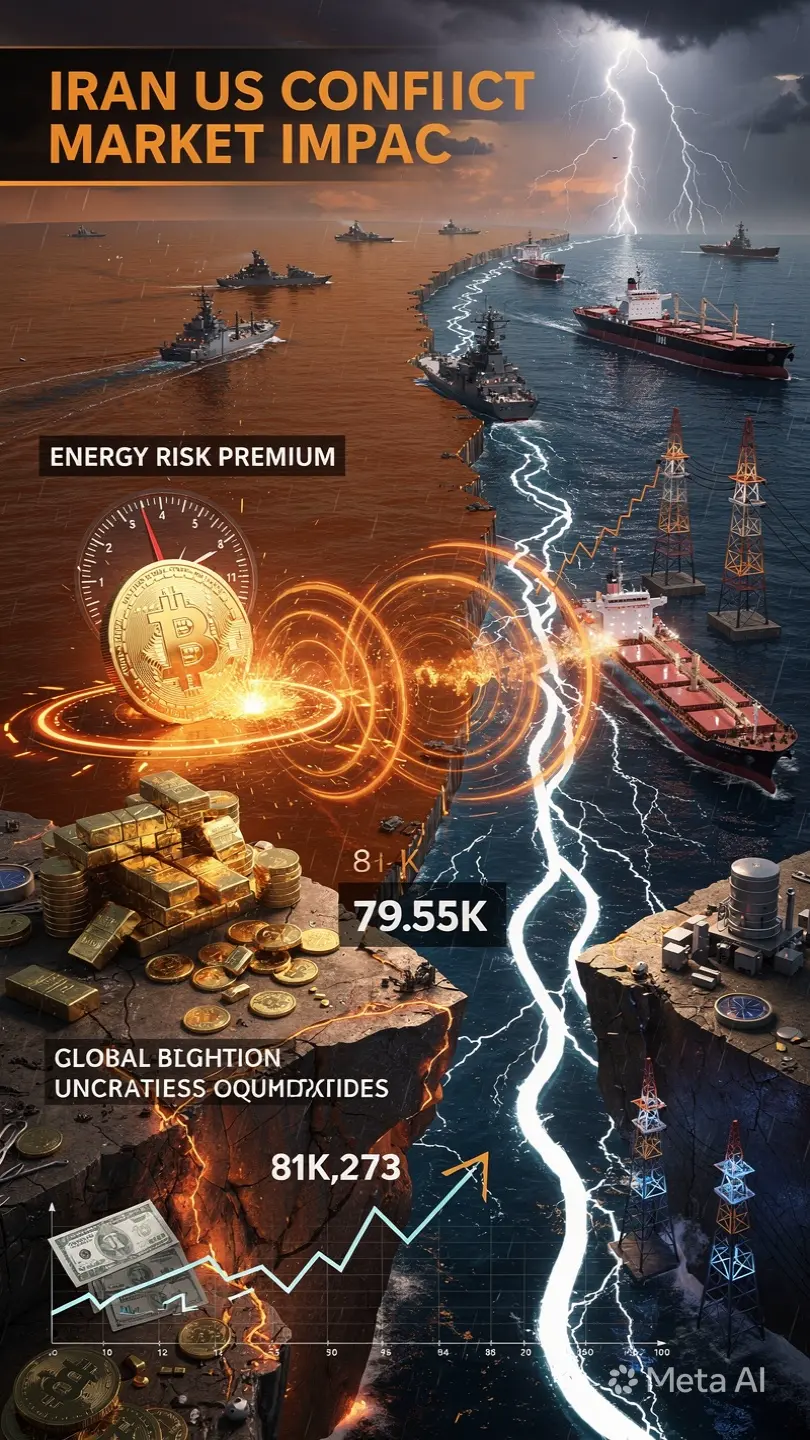
1. Short Term Volatility: Bitcoin is trading at 80273 after a volatile session. News driven moves pushed price to both 81000 and 79500 within hours. High speed headlines raise liquidations in derivatives. 2. Safe Haven Debate: Some buyers view Bitcoin as a hedge when trust in local money falls. Others sell crypto with other risk assets when fear rises. The result is sharp moves both ways until a clear trend forms. 3. Mining And Hash Rate: Energy cost is a key input for proof of work mining. If oil and power costs rise in some regions, miner margins tighten. This can slow hash rate growth or lead to coin sales by miners to cover costs. 4. Stablecoin Flows: Onchain data shows higher movement of stablecoins to trading venues. This often means capital is parked on the sidelines, ready to enter or exit fast based on news.
How The Market Could React Next
1. Headline Driven Trading: Price may react fast to new statements, military moves, or talks of de-escalation. Low liquidity periods can see larger gaps. 2. Correlation Shifts: Crypto has shown periods of both high and low link with stocks. During sharp risk events, the link to equities tends to rise for a short time. 3. Levels To Watch: For Bitcoin, the 79500 area was defended on the last dip. A hold above 80000 keeps buyers active. A daily close under 78000 would show sellers in control. For the total crypto market, the 2.3 trillion value area is a key zone many watch.
Points To Watch
1. Oil And Energy: Track crude price and shipping costs. A fast rise in energy often lifts cost forecasts and can weigh on growth assets. 2. Policy Response: Central banks watch energy driven price growth. If data shifts, rate outlooks shift. Rate outlooks drive liquidity, and liquidity drives risk assets. 3. Onchain Behavior: Watch coins moving to and from trading venues. Large inflows often come before sell pressure. Outflows to cold storage show long term holding. 4. Funding And Leverage: Funding rates across derivatives are near flat. A rise in negative funding with falling price shows shorts paying longs, often near short term lows. 5. News Verification: False or unconfirmed reports move price fast. Rely on several trusted sources before acting. Avoid reacting to single posts or rumors.
Risk Control Ideas
1. Use smaller position size during news heavy periods. 2. Place limit orders instead of market orders to avoid slippage. 3. Set clear exit rules before entering a trade. 4. Keep some capital in stable value to use on sharp dips if your plan allows. 5. Review exposure across the full portfolio, not only crypto.
Outlook
Escalation in the Iran US conflict adds risk premium to all markets. Crypto will likely see higher volatility with fast moves in both directions. Clear talks toward easing tension would help risk assets. Further escalation would keep buyers cautious.
Focus on verified data, manage risk, and avoid emotional moves during headline driven sessions.
#GateSquareMayTradingShare
#Gate广场五月交易分享
repost-content-media
  • Reward
  • 12
  • Repost
  • Share
ybaser:
To The Moon 🌕
View More
#IranUSConflictEscalates
US–Iran Conflict 2026:
The US–Iran conflict has evolved into one of the most important macroeconomic and geopolitical events of 2026. What began as diplomatic pressure, sanctions disputes, and failed nuclear negotiations has transformed into a large-scale confrontation involving military strikes, naval operations, cyber incidents, energy disruptions, and severe financial market volatility.
This is no longer just a Middle East political issue. It is now directly influencing oil prices, inflation expectations, central-bank decisions, global trade, gold demand, cryptocu
HighAmbition
#IranUSConflictEscalates
US–Iran Conflict 2026:
The US–Iran conflict has evolved into one of the most important macroeconomic and geopolitical events of 2026. What began as diplomatic pressure, sanctions disputes, and failed nuclear negotiations has transformed into a large-scale confrontation involving military strikes, naval operations, cyber incidents, energy disruptions, and severe financial market volatility.
This is no longer just a Middle East political issue. It is now directly influencing oil prices, inflation expectations, central-bank decisions, global trade, gold demand, cryptocurrency markets, equity performance, supply chains, and currency stability.
Every new headline now moves global markets within minutes. Traders, hedge funds, institutions, and central banks are all reacting to developments across the Gulf region because the conflict sits at the center of the global energy system.
THE ROOTS OF THE ESCALATION
Tensions intensified after renewed nuclear negotiations collapsed. The US demanded stricter controls, tighter verification systems, and broader regional security commitments, while Iran rejected several core conditions. Sanctions pressure increased throughout 2025, especially on banking channels, oil exports, and strategic infrastructure.
During mid-2025, Iranian-linked regional activity increased, shipping incidents rose across Gulf waters, oil-market fears began returning, and tanker insurance premiums jumped sharply.
By late-2025 and early-2026, the situation escalated dramatically. Military facilities and strategic infrastructure were targeted, missile and drone operations intensified, naval deployments increased, cyber warfare expanded, and maritime security deteriorated.
The conflict eventually shifted from indirect confrontation toward direct regional military escalation.
OVERNIGHT DEVELOPMENTS — WHY MARKETS REMAIN NERVOUS
Fresh overnight fighting again shocked financial markets. Explosions and air-defense activity were reported near strategic Gulf areas, naval tensions near the Strait of Hormuz intensified, tanker movement disruptions increased, missile interception systems were activated, and military responses from both sides raised fears of broader escalation.
Even temporary clashes now trigger immediate reactions across oil, gold, Bitcoin, equities, bond markets, and forex markets.
This is because investors understand that any disruption near Hormuz can rapidly impact global energy flows.
THE STRAIT OF HORMUZ — THE WORLD’S MOST IMPORTANT ENERGY CHOKEPOINT
The Strait of Hormuz remains the central risk point in the entire conflict.
Approximately 20-21 million barrels of oil move through Hormuz daily, around 20% of global oil trade depends on this route, and nearly one-third of seaborne crude exports pass through the area.
Even partial disruption creates massive global consequences.
Current impacts include tanker insurance spikes of 150-220%, shipping delays of 10-16 days, freight-cost increases of 25-45%, and increased fuel and operational costs globally.
Some shipping operators have already rerouted vessels entirely, increasing delivery times, supply-chain instability, and transportation inflation.
Worst-case market scenarios estimate Brent crude above $130-150, severe inflation acceleration, global recession fears, and major equity corrections.
OIL MARKET — THE CORE OF THE GLOBAL MACRO SHOCK
Oil remains the biggest macro driver of 2026.
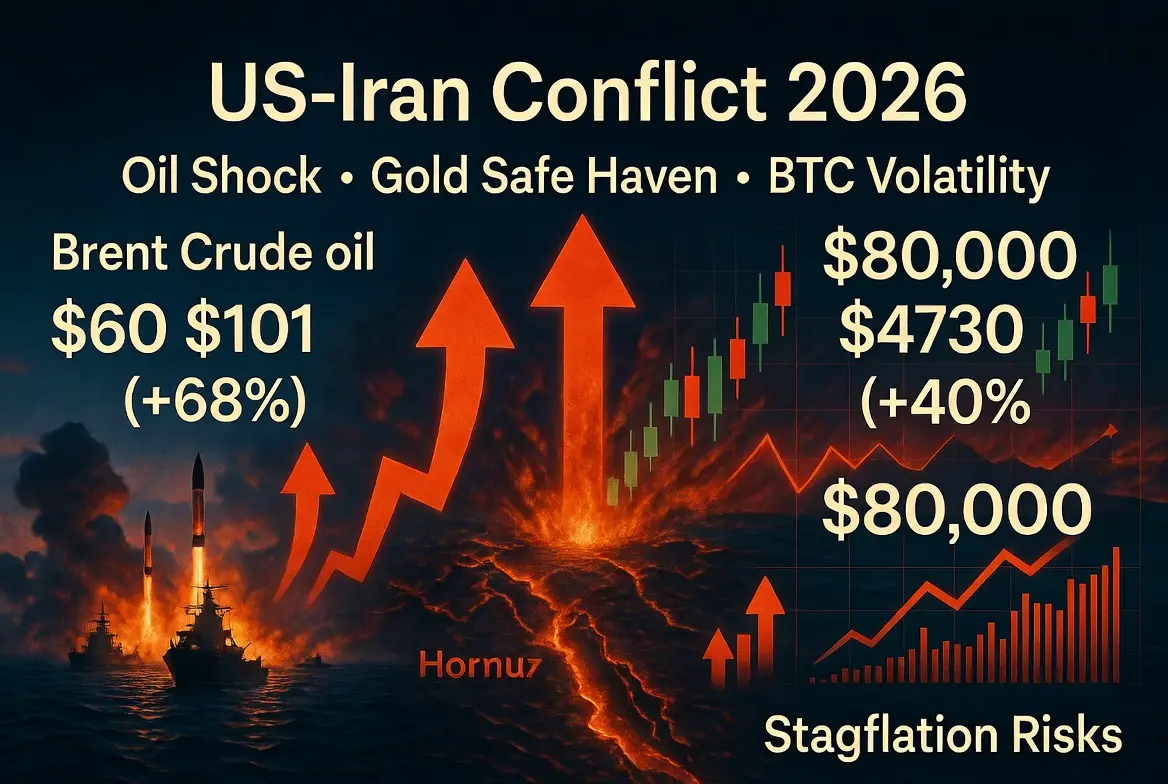
Current prices: WTI/XTI around $94 Brent crude around $100-102
Compared to pre-conflict averages, oil remains roughly 50-70% higher.
At peak escalation, Brent surged above $115 while WTI futures briefly approached $150-160 during panic pricing.
Oil volatility has become extreme. Daily moves of 5-10% are common as traders react instantly to military headlines and supply fears dominate sentiment.
Higher oil prices increase transportation costs, airline expenses, manufacturing costs, food distribution expenses, and global inflation pressure.
This creates a chain reaction across the world economy.
GLOBAL INFLATION PRESSURE
The oil surge is spreading inflation globally.
Energy-linked increases include: Jet fuel up 45-65% Diesel up 35-55% Marine shipping fuel up 40-70% Fertilizer costs up 30-50% Petrochemical feedstocks up 25-45%
Supply-chain consequences include rising shipping costs, rapidly increasing logistics expenses, more expensive food transportation, and shrinking manufacturing margins.
Consumer-level impact includes rising airline ticket prices, accelerating grocery inflation, and increasing industrial costs globally.
Economists increasingly warn about stagflation risks involving slower economic growth, persistent inflation, and tight financial conditions.
Global growth forecasts for 2026 have already been revised lower in several regions.
CENTRAL BANKS FACE A MAJOR PROBLEM
The conflict created a difficult environment for central banks.
If rates stay high, economic slowdown risks increase, credit conditions tighten, and liquidity weakens.
If rates are cut too early, inflation may surge further, oil-driven price pressure intensifies, and currency stability weakens.
Markets now face higher-for-longer uncertainty.
This explains why gold remains extremely strong, Bitcoin volatility remains elevated, and equity markets struggle after rallies.
GOLD — THE BIGGEST SAFE-HAVEN WINNER
Gold has become one of the strongest-performing macro assets of 2026.
Current Gold Price: Around $4,714
Earlier in 2026, gold traded near $3,300-3,400.
This means gold rallied roughly 35-40% during the conflict phase.
Drivers behind gold strength include geopolitical fear, inflation hedging, central-bank accumulation, safe-haven demand, and long-term currency concerns.
Institutional demand for gold increased sharply as ETF inflows accelerated, physical bullion demand surged, and sovereign accumulation expanded.
If tensions worsen, $5,000 gold scenarios become increasingly realistic.
If diplomacy improves, gold may cool temporarily toward lower consolidation zones.
BITCOIN — RESILIENT BUT EXTREMELY VOLATILE
Current BTC Price: $80,170
Bitcoin has experienced major volatility during the conflict including sharp selloffs during military escalation, rapid recoveries during ceasefire optimism, and high liquidation activity.
At one stage BTC dropped toward the low $70K range before recovering back toward $80K+.
This shows Bitcoin is behaving as part macro risk asset and part geopolitical hedge.
Bullish arguments include hedging against fiat uncertainty, alternative settlement networks, active institutional adoption, and continued ETF inflows.
Bearish arguments include heavy dependence on liquidity conditions, strong correlation with equities during panic, and sensitivity to macro tightening.
BTC key levels: Support around $79,200-80,000 Resistance around $81,300-82,000
If BTC breaks higher, $85K, $90K, and $95K become possible.
If support fails, $77K-76K becomes possible quickly.
Current trader behavior includes lower leverage, faster scalping, larger stablecoin allocations, and tighter stop-loss usage.
ALTCOINS CONTINUE UNDER PRESSURE
While Bitcoin remains relatively stable, ETH continues underperforming BTC, meme coins remain highly volatile, AI-themed tokens suffered sharp corrections, and small-cap liquidity weakened significantly.
Many altcoins remain 30-60% below local highs and highly sensitive to risk-off sentiment.
Capital rotation currently favors Bitcoin, gold, energy assets, and defensive positioning.
CRYPTO IN THE SANCTIONS AND GEOPOLITICAL ENVIRONMENT
Crypto increasingly became part of the geopolitical landscape itself.
Observed developments include growth in peer-to-peer settlement activity, increased cross-border transfers, and rising interest in decentralized payment channels.
At the same time, regulatory pressure increased, wallet monitoring intensified, and blockchain surveillance expanded.
This conflict accelerated debates around financial sovereignty, stablecoin regulation, CBDCs, and alternative settlement systems.
STABLECOINS — STABLE BUT TESTED
Major stablecoins largely maintained their pegs despite volatility.
However, inflation reduced real purchasing power while traders increasingly discussed commodity-backed alternatives and gold-linked digital assets.
Stablecoins still remain central to crypto liquidity, rapid portfolio rotation, and risk management strategies.
EQUITY MARKETS AND GLOBAL SENTIMENT
Global equity markets reacted negatively during major escalation phases.
Strong sectors included energy companies, defense industries, commodity producers, and gold miners.
Weak sectors included airlines, consumer discretionary, logistics firms, and manufacturing industries.
Investors increasingly shifted toward defensive assets, lower-risk positioning, and cash preservation.
MARKET PSYCHOLOGY — HEADLINE-DRIVEN VOLATILITY
Markets are currently moving based on missile headlines, naval incidents, diplomatic leaks, ceasefire rumors, and military deployments.
Algorithms and institutional trading systems react within seconds.
This creates sudden liquidations, violent intraday swings, and fast reversals.
For traders, emotional reactions have become extremely dangerous.
TRADING STRATEGIES IN THIS ENVIRONMENT
Professional traders are focusing on capital protection, reduced leverage, news monitoring, position scaling, and liquidity management.
Many portfolios now hold 30-50% stablecoins or cash alongside smaller trade sizes, faster trade execution, and defensive allocation strategies.
Current market rewards discipline, patience, flexibility, and risk management.
FINAL CONCLUSION
The US–Iran conflict has become one of the defining macroeconomic events of 2026.
It now directly impacts oil markets, inflation, gold, Bitcoin, global growth, interest-rate expectations, supply chains, and worldwide risk sentiment.
Oil at $94 confirms markets still fear prolonged instability.
Gold at $4,714 shows safe-haven demand remains extremely strong.
Bitcoin at $80,170 demonstrates resilience, but volatility remains elevated.
A diplomatic breakthrough could trigger relief rallies in crypto, lower oil prices, reduced inflation fears, and stronger risk appetite globally.
But further escalation risks higher inflation, slower growth, recession fears, and extreme market volatility.
For traders and investors, this is now a macro-driven, headline-sensitive environment where survival depends on discipline, adaptability, and strong risk management.
repost-content-media
  • Reward
  • Comment
  • Repost
  • Share
Load More