Written by: Sam @IOSG
In March 2025, the Ethereum Foundation (EF) announced a major leadership change: Executive Director Aya Miyagotchi stepped down as Executive Director to become Chairman of the Foundation; Meanwhile, Hsiao-Wei Wang and Tomasz Stańczak were appointed as new co-executive directors; Former EF Fellow Danny Ryan joins Etherealize.
In the face of fierce competition, Ethereum is facing a moment of transformation. This change is not only a personnel adjustment, but also a strategic game around the future direction of Ethereum. For a long time, Aya has promoted Ethereum to build an “infinite garden” with an idealized vision. However, with the intensification of market competition, high gas fees, network congestion and other problems, the community has raised many questions about its conservative resource allocation and cultural promotion strategies. There have even been extreme criticisms and attacks against Aya, prompting Vitalik Buterin to call for calm.
Against this backdrop, EF attempts to respond to external dissatisfaction by adjusting its leadership, while also striving to find a new balance between idealism and market reality. This article will explore the effectiveness of its strategic transformation to date from three dimensions: the changes in EF’s organizational structure, the positioning of Etherealize, and EF’s recent adjustments and future outlook.
Dual Leadership: A New Pattern of Authority and Responsibility
Aya term
Since 2018, Aya Miyaguchi has served as the Executive Director of the EF. Aya’s leadership coincides with Ethereum’s significant transition from proof of work to proof of stake.
At a strategic level, Aya advocates and implements guiding principles known as the “subtraction philosophy.” This principle requires the foundation to consciously avoid becoming a highly centralized power entity, distributing more opportunities and responsibilities throughout the community. At the same time, EF adheres to core values of openness, trustworthy neutrality, and decentralization, avoiding the pursuit of profit or adopting aggressive marketing strategies.
In terms of internal structural adjustments, Aya has led the establishment of several new teams and projects. Taking the EF Fellowship program launched in 2022 as an example, the foundation supports builders in emerging communities through this project, contributing to the vision of “the next billion.” In addition, new types of conferences such as Devconnect, which was introduced in 2021, also demonstrate EF’s new attempts in conference organization and community building.
EF architecture and recent changes
The Ethereum Foundation, as a non-profit organization, has evolved into a “team community” rather than a pyramid-like hierarchical structure. The foundation supports numerous semi-autonomous teams that operate independently in their areas of expertise while organically collaborating under shared values.
The organizational structure of EF can be divided into four major functional areas: Protocol Research and Development (PR&D), Ecosystem Development (EcoDev), Operational Support (Ops), and Privacy and Scalability Exploration (PSE). Each area has its own responsibilities while coordinating with external communities, research institutions, and development teams under the guidance of the “Protocol Guild” and “Protocol Support” teams.
The foundation plays a bridging role in coordinating cross-team collaboration, such as organizing client interoperability workshops, promoting network upgrades, and hosting global events like Devcon. At the same time, EF’s management always avoids micromanaging each project and instead encourages each team to work in an atmosphere of “self-directed and responsible.”
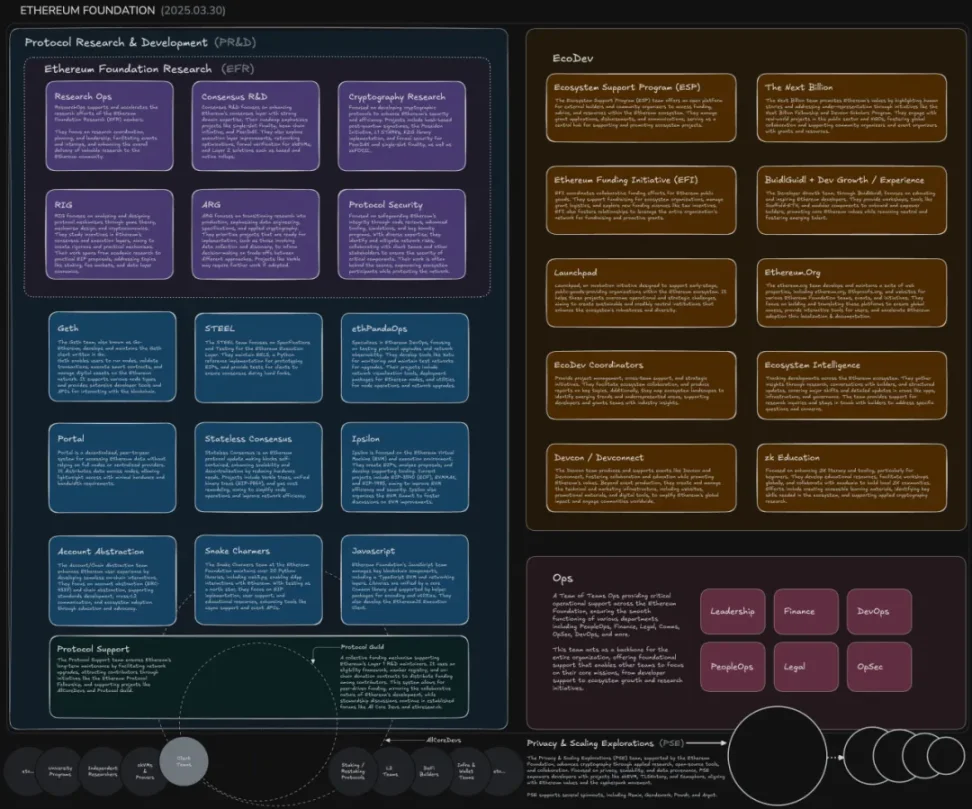
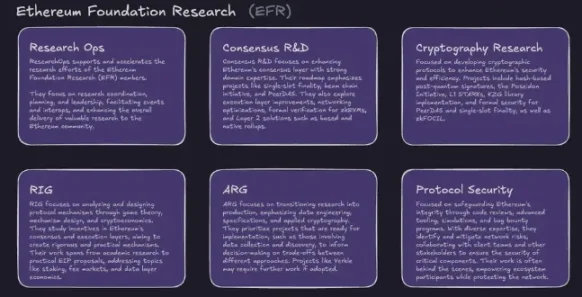
The research team responsible for the core protocol development also underwent significant changes from the end of 2024 to the beginning of 2025. The Ethereum Foundation’s Research Department (EFR) was reorganized in early 2025 from a single research team into five specialized groups: the Applied Research Group (ARG), the Consensus R&D Group, the Cryptography Group, the Protocol Security Group, and the Robust Incentives Group (RIG). This split arose from the foundation’s rapid expansion in the fields of cryptography and security, necessitating more specialized teams to focus on different research directions, thereby improving research and development efficiency and transparency. At the same time, long-term researchers Alex Stokes and Barnabé Monnot were appointed as co-leads of research, jointly directing the research direction.
The PSE team, as a key group focused on zero-knowledge proofs and privacy technology research, originated from the AppliedZKP team within the Ethereum Foundation and has now become an independent interdisciplinary “team community” model, operating in parallel with other semi-autonomous teams of the foundation. Through various forms such as workshops, summer camps, and experimental networks (like Alphanet and Testnet), it helps the Ethereum network evolve towards a balance of “privacy and scalability.” The establishment of PSE stems from the urgent need of the Ethereum Foundation for practical privacy and scalability technologies. In the past, research on zero-knowledge and MPC often remained at the academic level, and PSE was born to promote technological maturity in an “application-driven” manner, bridging the gap between research and engineering. In 2024, the team underwent a significant reorganization. A large number of original members left later that year, and the team almost achieved a “restart.”
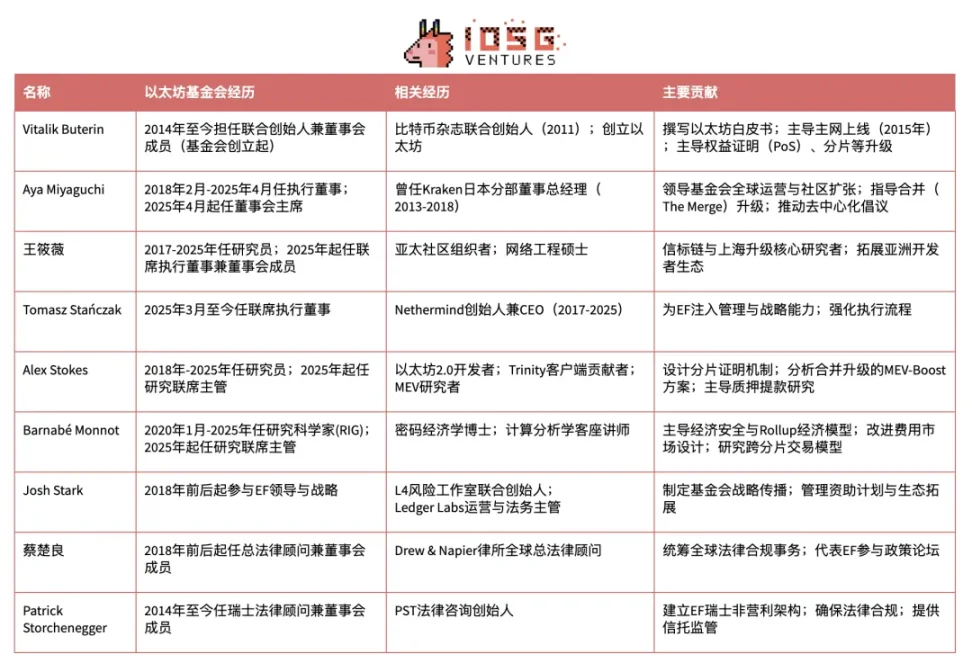
After the latest personnel changes, the management structure of EF is as follows: Aya has been appointed as the chairperson, responsible for promoting strategic cooperation and maintaining relationships, while reducing direct involvement in specific affairs; in terms of management, Hsiao-Wei Wang and Tomasz serve as co-executive directors, working collaboratively in a parallel manner to handle management tasks; in the research field, Barnabé Monnot and Alex Stokes will jointly serve as co-heads of research, while Tju Liang Chua continues to serve as EF’s general counsel, and Bastian and Josh Stark continue to take on the management and operational responsibilities of EF.
The current leadership of EF is as follows:
Hsiao-Wei Wang and Tomasz: The Dual Engine of Technology and Management
EF has introduced a dual leadership structure in this transformation, appointing two executive directors with strong technical backgrounds and extensive practical experience:
Hsiao-Wei Wang
Since joining EF in 2017, Wang Xiaowei has served as a core researcher. She graduated from National Chiao Tung University in Taiwan with a major in Network Engineering, possessing a solid technical foundation. She has deeply engaged in sharding and beacon chain-related technologies, playing a key role in The Merge in 2022. Now, as the Executive Director, Wang Xiaowei is not only responsible for guiding the R&D direction but also takes on the important task of promoting community building. Her appointment is seen as a pivotal turning point for Ethereum to regain its technological innovation and grassroots spirit.

Tomasz Stańczak
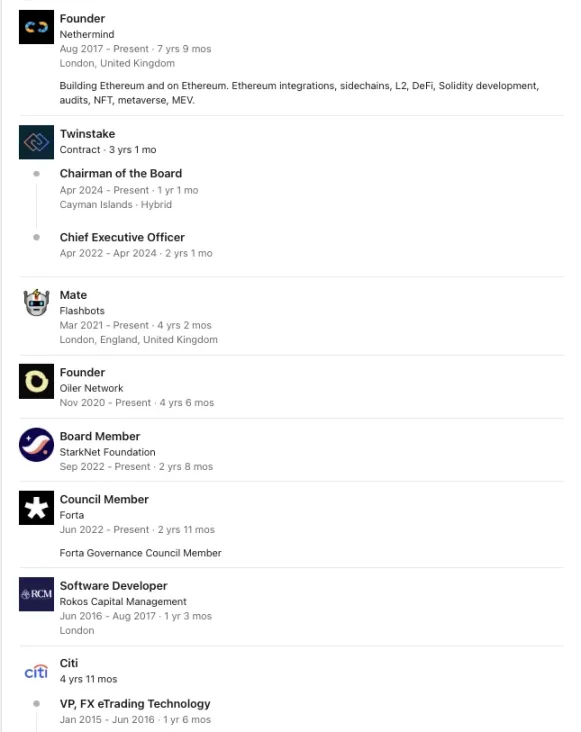
Tomasz is widely known for his leadership at Nethermind. After more than seven years of hard work, Nethermind is currently second only to Geth in the Execution client market, with a market share of about 35%. At the same time, Nethermind continues to expand its business areas, launch various products, and actively carry out collaborations and research to contribute to the Ethereum ecosystem. Tomasz has not only led Nethermind’s success in client development, but he has also actively explored cutting-edge topics such as MEV and PBS. Tomasz’s extensive experience at Nethermind brings management experience and strategic vision to EF.
The new architecture aims to achieve the following goals:
- Decentralized decision-making responsibility: Each of the two executive directors has independent decision-making authority, which not only reduces the risk of single points of failure but also allows stakeholders to choose their contact based on their preferences. For example, institutions or developers located in Europe can meet and communicate directly with Tomasz during his visit itinerary from April to July. At the same time, this also enables stakeholders to flexibly engage with different regional matters and control the pace of cooperation independently.
- Complementary advantages of technology and management: Wang Xiaowei’s in-depth research on Ethereum core innovations (such as the Beacon Chain, sharding technology, and ETH 2.0) forms a strong complement to Tomasz’s mature experience in organizational scaling and operational management.
Aya takes over as chair, Vitalik returns to research.
At the same time, former Executive Director Aya Miyagotchi has transitioned to the role of Chairperson, focusing more on external strategic partnerships and relationship management. After serving as Executive Director for seven years, Aya is now concentrating on strategic guidance and external communication, while daily operations management is fully overseen by Wang Xiaowei and Tomasz Stańczak.
According to Tomasz, one of the goals after the leadership change is to allow Vitalik to focus more on research and exploration, rather than on daily coordination or crisis response. Vitalik’s recent articles on RISC-V and zkVMs have opened up promising research directions, and his discussions on privacy have also helped the community realign with the core values of the EF. At the same time, while Vitalik’s proposals carry significant weight, they are more intended to spark discussions and advance difficult research areas; community reviews may significantly alter or even reject these proposals.
Community Response
After the announcement of the new appointments, the Ethereum community congratulated and welcomed Hsiao-Wei and Tomasz.
Georgios Konstantopoulos, the Chief Technology Officer of Paradigm, bluntly stated that Tomasz has reached a “new height”: he is smart and experienced, adept at grasping the nuances of technology, and possesses the ability to build and lead efficient large teams. It is widely believed in the community that Hsiao-Wei’s deep understanding of the protocol will ensure that the foundation’s technical direction is always in the hands of professionals. Sassal highly praised this appointment of co-executive director and views this leadership adjustment as a “significant transformation” to drive Ethereum into the next phase. Many builders optimistically anticipate that having a leader from the research field paired with a leader from the engineering and client teams will help achieve a good balance at the governance level.
Some community members expressed surprise at Danny Ryan’s failure to take on a major leadership role at EF. However, that same weekend, while EF announced its new co-executive director, Danny Ryan also announced his joining Etherealize as a co-founder. Even voices that had previously been critical, such as Evan Van Ness, later acknowledged Vitalik’s decision; he believed that although he had hoped to see Danny play a larger role in EF, the new co-executive director, with solid credentials and experience, had quelled the previous leadership controversies.
Overall, the discussions within the community around the transition period following Aya Miyaguchi’s departure were intense but ultimately converged into a constructive consensus. Community members recognized Aya’s contributions to the EF, and several key figures publicly expressed their gratitude towards her; meanwhile, there are high hopes for the new appointments of Hsiao-Wei Wang and Tomasz Stańczak, as well as expectations that the new leadership structure will address past shortcomings in communication and technical collaboration.
Ecological Reconstruction: The Rise of Etherealize
Previously, the community widely anticipated that Danny Ryan would directly take over the position of Executive Director of EF. However, unexpectedly, Danny Ryan did not return to EF but rejoined the Ethereum ecosystem as a co-founder of Etherealize. This choice also hints at another possibility: the formation of a new type of organization similar to EF, to address the shortcomings of EF and focus on the real implementation of Ethereum technology and business potential.
As Danny Ryan said: “Rather than talking about the vision of Ethereum, it’s better to show how institutions can effectively utilize Ethereum.” Guided by this philosophy, he chose Etherealize — a platform focused on the business expansion and marketing of the Ethereum ecosystem.
Core Mission
Etherealize is not just a marketing tool, but a multidimensional platform whose core mission is reflected in the following 4 aspects:
- Institutional Access and Productization: Just like BlackRock’s $1 billion on-chain U.S. Treasury bonds and Franklin Templeton’s mutual funds, Etherealize provides traditional financial institutions with “comprehensive support from conceptual design to on-chain deployment,” significantly reducing the trial-and-error costs for institutions.
- Integration of technology and market: Connect R&D with business development (BD), rapidly iterate zero-knowledge proofs, privacy modules, and cross-Rollup bridging solutions, and instantly validate and optimize in real customer environments.
- Policy Advocacy and Regulatory Dialogue: Deep involvement in policy roundtable meetings and Senate blockchain hearings, publishing a series of reports titled “Plain Language Interpretation of Regulatory Policies,” analyzing topics such as stablecoin legislation, tokenized securities rules, and market structure reform. The recently promoted “Regulatory Sandbox Certification Program” has attracted participation from Switzerland’s FINMA and Singapore’s MAS for co-construction.
- Feedback and Transparency: The Etherealize Data Dashboard tracks on-chain core metrics in real time (L2 Total Value Locked, Tokenized Asset Scale, Settlement Delays) and off-chain institutional dynamics (Compliance Certification Progress, Partner Growth). The monthly “Institutional Insights” report directly converts clients’ operational pain points into protocol layer optimization requirements.
dual-track architecture
Etherealize has officially been split into a dual legal entity structure to simultaneously promote market delivery and ecological governance.
Profitable entity Etherealize Inc. (a Class C company registered in Delaware) focuses on “providing end-to-end tokenization services, Layer 2 deployment solutions, and compliance toolchains for banks and asset management institutions”. Its core mission is to lower the on-chain barriers for traditional financial institutions through standardized infrastructure.
The Etherealize Foundation, a non-profit entity, focuses on “open R&D, privacy tool development, and policy advocacy to bridge the gap between the real world and Ethereum”, focusing on maintaining Ethereum’s trusted neutrality and regulatory adaptability.
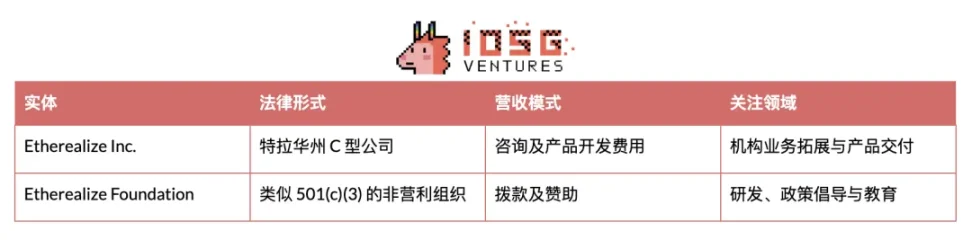
This dual-track model has driven Etherealize to achieve leapfrog development within the first three months of operation: the for-profit sector successfully launched the BlackRock and Franklin Templeton on-chain mutual fund project; the non-profit sector simultaneously held regulatory roundtable meetings and piloted privacy protection solutions based on zero-knowledge proofs. The synergy of “commercial closed loop + ecological foundation” is accelerating the institutionalization process of Ethereum.
Etherealize Origin
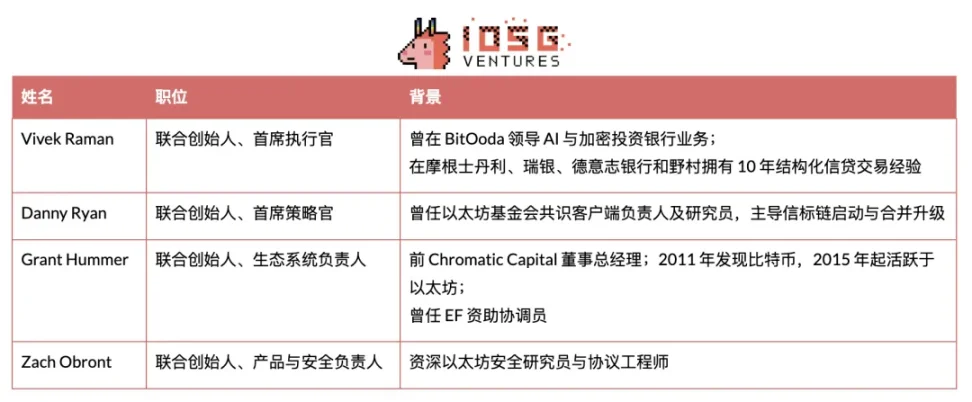
The concept of Etherealize originated on July 23, 2024, when the Ethereum ETF was launched. Grant Hummer observed that although the ETF launch marked Wall Street’s recognition of Ethereum, the actual adoption was far below expectations. This gap prompted him to collaborate with investor James Fickle to find a leader with both Wall Street experience and Ethereum knowledge, ultimately locking in Vivek Raman.
After receiving funding from Vitalik Buterin and the Ethereum Foundation, the team was officially established in January 2025 and quickly expanded from pure business development to delivery on the ground. Subsequently, Etherealize realized that in order to leverage Wall Street, it not only needed to spread its ideas but also to provide seamless access to physical tools. To this end, Vivek Raman brought in his close friend Zach Obront as a co-founder to reconstruct the technical foundation. Finally, Danny Ryan joined as the last co-founder in the role of Chief Strategy Officer.
2025 Strategic Blueprint
During an interview with Bankless and DeFi Dad, Danny Ryan shared the recent plans of Etherealize. Below is the core roadmap for 2025:
- Q2 Launch of institutional-level SDK, integrating custody interfaces, compliance review, and Gas fee optimization modules
- Launch of enterprise wallet pilot based on Noir zero-knowledge compiler in Q3
- Entering the Asia-Pacific and European markets in Q4, customizing regulatory adaptation solutions through partnerships with Singapore’s Digital Port, Switzerland’s Crypto Valley, and others.
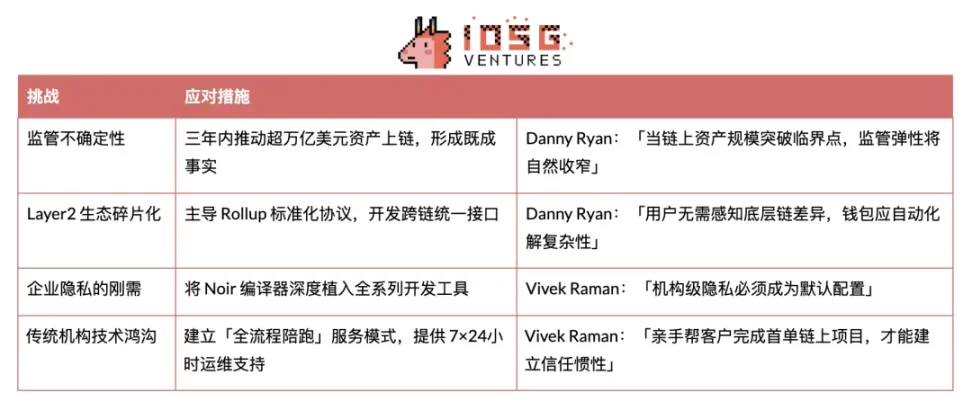
When asked about the project roadmap and future challenges, Danny and Vivek elaborated on the coping strategies:
Ethereum VS Solana: Institutional Rivalry Under Currents
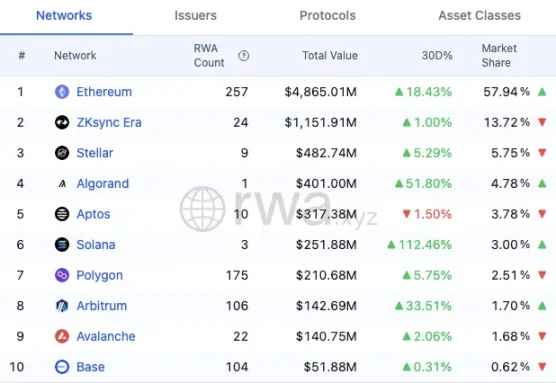
The traditional financial sector has long focused on Ethereum and its Layer 2 ecosystem, which, compared to Solana, has had its technology applications launched earlier and enjoys higher market acceptance. According to data from RWA.xyz, Ethereum and its Layer 2 ecosystem account for over 50% of the value in RWA.
In collaboration with traditional financial institutions, Ethereum has established numerous cooperation cases due to its early launch.
- Fidelity: Fidelity established Fidelity Digital Assets back in 2018, beginning its foray into digital assets and providing Bitcoin custody services. In 2019, Tom Jessop, head of its cryptocurrency division, expressed great interest in Ethereum, noting that the company has invested significant resources in the Ethereum space. Launch of Ethereum spot ETF (FETH) in 2024.
- JPMorgan: In 2016, JPMorgan launched Quorum, an open-source enterprise ledger based on Ethereum technology, supporting interbank information networks and projects like JPM Coin. In November 2022, in collaboration with the Singapore central bank on Project Guardian, the first DeFi cross-currency transaction was completed using the Polygon network.
- Goldman Sachs: In 2021, Goldman Sachs acted as a joint lead underwriter for the issuance of 100 million euros in digital bonds by the European Investment Bank (EIB) and utilized Ethereum smart contracts to tokenize securities and cash.
- HSBC: HSBC supports bond issuance, digital gold, and custody services through its HSBC Orion platform, utilizing distributed ledger technology, while achieving interoperability between private chains and public chains like Ethereum.
- UBS: In November 2024, UBS Asset Management launched the UBS USD Money Market Fund Token (uMINT), the first tokenized investment fund to be issued on the Ethereum network, to convert fund market fund shares into on-chain tokens. At the beginning of 2025, UBS showcased the results of a trial based on Ethereum’s layer 2 zkSync, which uses zero-knowledge proof technology to split transactions of some gold investment products, and migrates retail gold products to the zkSync “Validium” network.
In contrast, Solana collaborates less with traditional financial institutions. At the same time, RWA on Solana mainly focuses on stablecoins, with the proportion of non-stablecoin assets being lower than that of Ethereum. Currently, mainstream government bonds and other fund projects are as shown in the figure, with both the number and amount of related projects being quite limited; moreover, the types of projects are relatively singular, and large-scale commodity RWA projects, as well as areas like private credit and private equity, have not yet been covered.
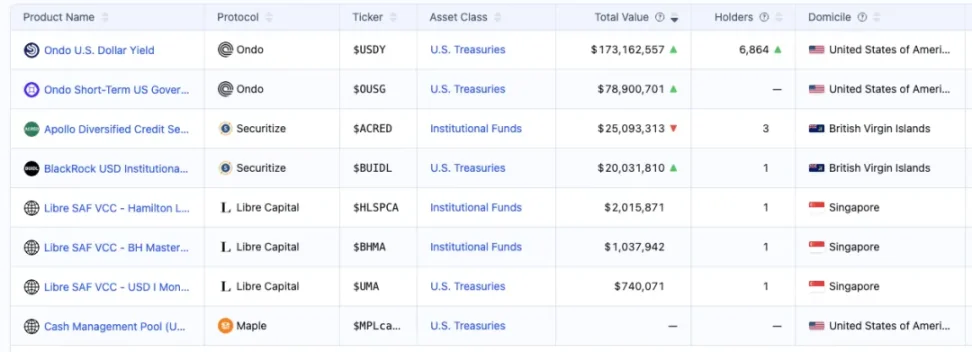
Currently, the Ethereum platform still leads in the value of RWA assets, and its Layer 2 ecosystem also supports a large number of RWA assets, far exceeding other public chain projects. Although 6 Ethereum ETFs have been approved in the market, Solana-related ETFs have yet to receive approval. However, this year mainstream institutions such as BlackRock’s BUIDL and Franklin Templeton’s BENJI have successively launched on Solana, intensifying competition. EF has also established a clear strategic layout to meet the challenges, and the establishment of Etheralize further highlights Ethereum’s proactive attitude in seeking institutional cooperation.
Summary
As _gabrielShapir0 pointed out in the comments: “Etherealize can basically be seen as the second EF, a cultural and strategic diversion that makes Ethereum more social and diverse.”
In fact, Etherealize marks a key political moment in the history of Ethereum — during which cultural divergences began to emerge. Therefore, the L0 future of Ethereum will place greater emphasis on social decentralization, as reflected in “client diversity.” As a result, various competing top-level strategic visions have emerged in the market, each focusing on different aspects from how to promote ETH to future development directions.
Etherealize adopts a dual-layer architecture, encompassing both profit-making entities and non-profit organizations, providing greater flexibility for its operations. Each part has its own responsibilities and collaborates effectively. Another major advantage is its technology-driven approach, focusing on the product itself rather than merely relying on business development. It is these qualities that make Etherealize an efficient platform dedicated to connecting with traditional financial institutions.
Recent Adjustments and Outlook for EF
Despite the challenges, Ethereum still has deep advantages that underpin its position in the crypto space – advantages that are often downplayed by its leadership, allowing negative criticism to obscure its core narrative. Systematically sorting out these advantages can help build an objective cognitive framework of Ethereum’s potential.
EF Silviculture Society: Diverse Consulting and Internal Innovation
EF has launched the Silviculture Society - an informal think tank composed of external experts aimed at providing cross-disciplinary advice and multi-perspective insights for the foundation. The think tank members come from various fields including technology, law, academia, and industry, participating on a voluntary basis for a one-year term. They submit confidential opinions to the EF Board through dedicated channels, exploring a flexible and diversified internal feedback mechanism.
doubt
- It may only be a superficial cultural experiment, making it difficult to improve decision-making efficiency.
- Short-term pro bono participation models may struggle to attract experts with long-term deep insights, affecting the sustainability and professionalism of the recommendations.
- It is still unclear how external suggestions can be effectively transformed into internal decisions, and the transparency and effectiveness of the feedback mechanism need to be tested.
Financial Strategy and Budget Management
In financial management, EF has launched a budget strategy of “spending 15% of remaining funds each year” to ensure the long-term sustainable operation of funds. According to publicly available data, EF’s treasury fiat asset has decreased from $1.294 billion in March 2022 to $784 million in October 2024, while the holdings priced in ETH have only decreased by about 11%. At the same time, EF’s annual expenditure has risen from $48 million in 2021 to $135 million in 2023, indicating an increasing investment in ecological support, R&D, and personnel salaries.
Doubt
- EF holds a large amount of ETH. If the price of ETH continues to be sluggish, although the decline in ETH holdings may be limited, a significant depreciation of assets when valued in USD may indicate potential risks to financial health.
- The “15% remaining funds” strategy is attractive, but it lacks clear implementation details. Over the past few years, the strategy has not been effectively enforced, resulting in a continuous increase in annual expenditures.
- The sharp increase in annual expenditure may reflect inefficiencies in resource allocation or indicate the ongoing rise in research and funding costs.
- The specific expenditure details and fund usage plan have not been fully disclosed, making it difficult to conduct a comprehensive assessment of the operational status.
- Despite the huge investment, the actual results have not yet met expectations, indicating a disconnect between internal management and market demand.
Entering DeFi and ecological innovation
EF announced an investment of 50,000 ETH to participate in DeFi projects and is entering the DeFi ecosystem through a newly established multi-signature wallet. At the same time, asset management tools such as EtherStrategy have emerged within the ecosystem, along with discussions on the new governance model “Second Foundation,” indicating that EF is exploring diverse innovative models to promote the continuous evolution of the ecosystem.
Questions and Doubts
- Jumping into DeFi and staking ETH at the same time could force EF to take a stand on sensitive issues such as future hard forks, which in turn could affect its positioning as a globally neutral platform.
- The market questions whether this expansion aligns with the positioning of nonprofit organizations, and whether it may lead to deviations in resource allocation and strategic focus, thereby affecting the overall stability of the ecosystem.
Social Media and Marketing
In response to criticism of a lack of presence on social media, EF has significantly increased its investment in major platforms. Since January of this year, EF has reactivated a number of official accounts to communicate internal reforms and strategic initiatives in a timely manner through a large number of original content and dynamic retweets. At the same time, key figures such as Vitalik Buterin have enhanced the brand image of Ethereum by changing their avatars and interacting frequently, reinforcing the concept of “Ethereum First” in conversations with traditional finance and policymakers.
doubt
- Active performance on social media may only be superficial public relations and cannot address issues of internal governance and actual outcomes.
- The actual effectiveness of market promotion and the depth of integration with traditional financial institutions and practical applications still have uncertainties.
EF Funding
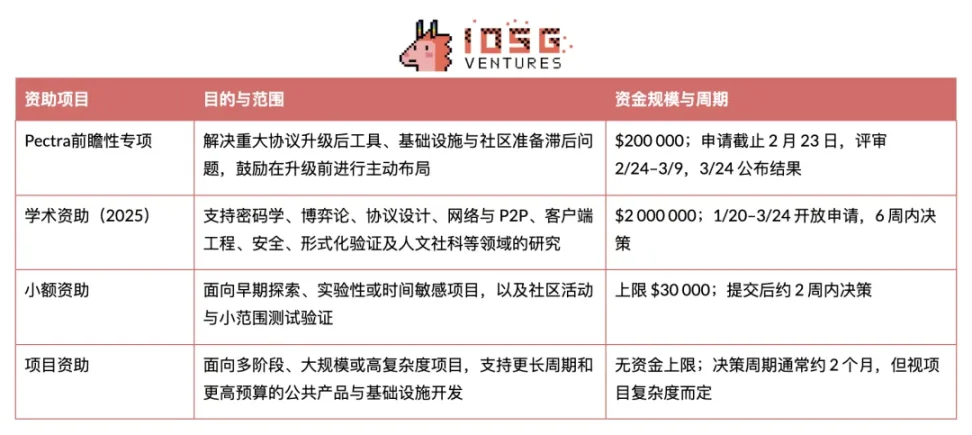
EF launched two rounds of timed, themed special funding in 2025 - Pectra Prospective Special and 2025 Academic Funding, both of which have now closed; meanwhile, ESP’s small grants (≤ $30,000, decision within approximately two weeks) and project funding (no funding limit, in-depth collaborative review) remain open year-round.
EF Strategic Outlook
After the management adjustments were settled, Vitalik was able to refocus on research; the EF also promptly synchronized with the community on the main directions for the next stage: firstly, the overall roadmap forwarded and supplemented by Tomasz, and secondly, the privacy roadmap proposed by Vitalik.
In terms of the overall route, simplify the roadmap to focus on three core areas:
- Enhance data processing capabilities through Blob-based scaling;
- Improve L1 throughput through directional protocol upgrades;
- Improve user experience by deepening L2 interoperability and focusing on the application layer.
At the same time, Tomasz emphasized that, in addition, secondary matters include:
- Always mint assets on L1
- Win real-world assets (RWA) and stablecoin market
- Improve communication and clarify community and user expectations.
- Significantly enhance security standards under a trillion-level economy
- Promote goal-driven R&D within the foundation
At the same time, Vitalik proposed his vision for the Ethereum privacy roadmap in the latest article “A maximally simple L1 privacy roadmap ()”, covering four key forms of privacy: on-chain payment privacy, partial anonymization of in-app activities, on-chain data reading privacy, and network layer anonymization.
The roadmap mainly is:
- Native integration of privacy tools such as Railgun and Privacy Pools into mainstream wallets, with “Hide Balance” and “Send from Hidden Balance” enabled by default;
- Promote the design of “one address per application” with privacy-protecting “spontaneous transactions” enabled by default;
- Implement FOCIL and EIP-7701 to simplify zero-replay, relay-free anti-censorship transactions;
- Introduce a TEE-based RPC privacy solution in the wallet in the short term, and gradually switch to a more cryptographically secure PIR in the future;
- The wallet can connect to multiple RPC nodes simultaneously (optional mixed network access) and promote light client support to reduce metadata leakage;
- Develop zero-knowledge proof aggregation protocol to compress the Gas cost of privacy transactions;
- Create a privacy-aware keystore wallet that allows users to seamlessly upgrade signature algorithms or verification logic between L1/L2 while maintaining confidentiality.
Conclusion
The Ethereum ecosystem is undergoing a paradigm shift from within. The introduction of a dual leadership structure has achieved the decentralization of decision-making responsibilities, complemented the advantages of technology and management, and allowed Viltaik to step back from operational practices to focus on cutting-edge research and lead Ethereum. A series of changes in EF, including the split of the research department, the appointment of new research co-chairs, the implementation of a pragmatic and efficiency-first approach, and active participation in DeFi and social media operations, are all positive changes that demonstrate a determination to seek transformation and breakthroughs in a fiercely competitive market.
The advent of Etherealize is an important milestone in the strategic transformation. In terms of connecting with traditional financial institutions, EF is often not the best choice due to organizational structure, positioning and history, and fails to meet the urgent needs of the market. Etherealize, which is designed for institutional clients, with a clear Wall Street service positioning and flexible organizational structure, effectively makes up for EF’s shortcomings and assists EF’s work without increasing its burden.
At this point, EF and Etherealize have brought organizational innovation and rejuvenation to Ethereum, enabling it to better cope with a more intense competitive environment. The next challenge is about the core challenges for Ethereum’s future: the positioning and narrative of ETH as an asset, the integration of the Ethereum ecosystem, and the enhancement of performance and experience, among others. These fundamental strategic issues are far beyond the scope of organizational adjustments or tactical improvements and will become a key test for the new generation of leadership.
Despite the challenges and doubts that still exist, these changes undoubtedly pave a path for Ethereum to explore new possibilities, marking a new era that is truly forward-looking.


