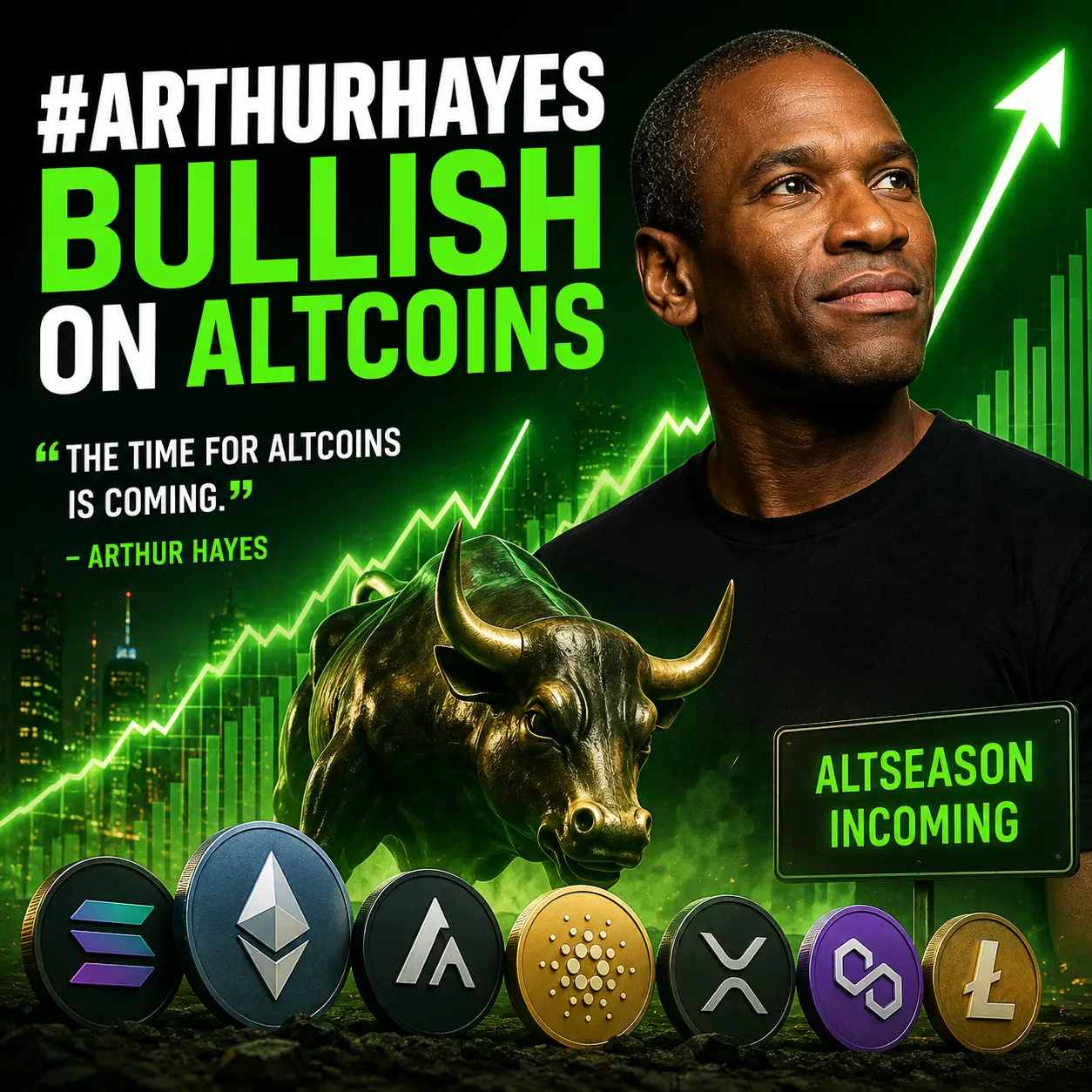
# ArthurHayesBullishOnAltcoins

5.68K
#ArthurHayesBullishOnAltcoins The current wave of discussion around reflects a broader shift in how crypto market participants are interpreting liquidity cycles, macroeconomic pressure, and capital rotation between Bitcoin and alternative digital assets. Rather than viewing altcoins as purely speculative side assets, the emerging thesis suggests they are becoming highly sensitive instruments that amplify global liquidity conditions and institutional risk appetite.
At the center of this narrative is Arthur Hayes, who has repeatedly emphasized that crypto markets are not isolated ecosystems. Ins
BTC0.57%
post-image
post-image
  • Reward
  • 16
  • Repost
  • Share
Lock_433:
To The Moon 🌕
View More
#ArthurHayesBullishOnAltcoins
Altcoin Supercycle Thesis 2026 — Hayes Narrative, Liquidity Cycles & The Next Market Expansion Phase The 2026 crypto market narrative is increasingly being shaped by a powerful and controversial thesis: the idea that altcoins will not die, but instead evolve through continuous cycles of destruction and rebirth, driven by liquidity expansion, technological innovation, and shifting institutional behavior.
This thesis was strongly reinforced at Consensus Miami 2026, where Arthur Hayes delivered one of his most aggressive macro and altcoin-focused arguments yet. His
  • Reward
  • Comment
  • Repost
  • Share
#ArthurHayesBullishOnAltcoins
#Gate广场五月交易分享
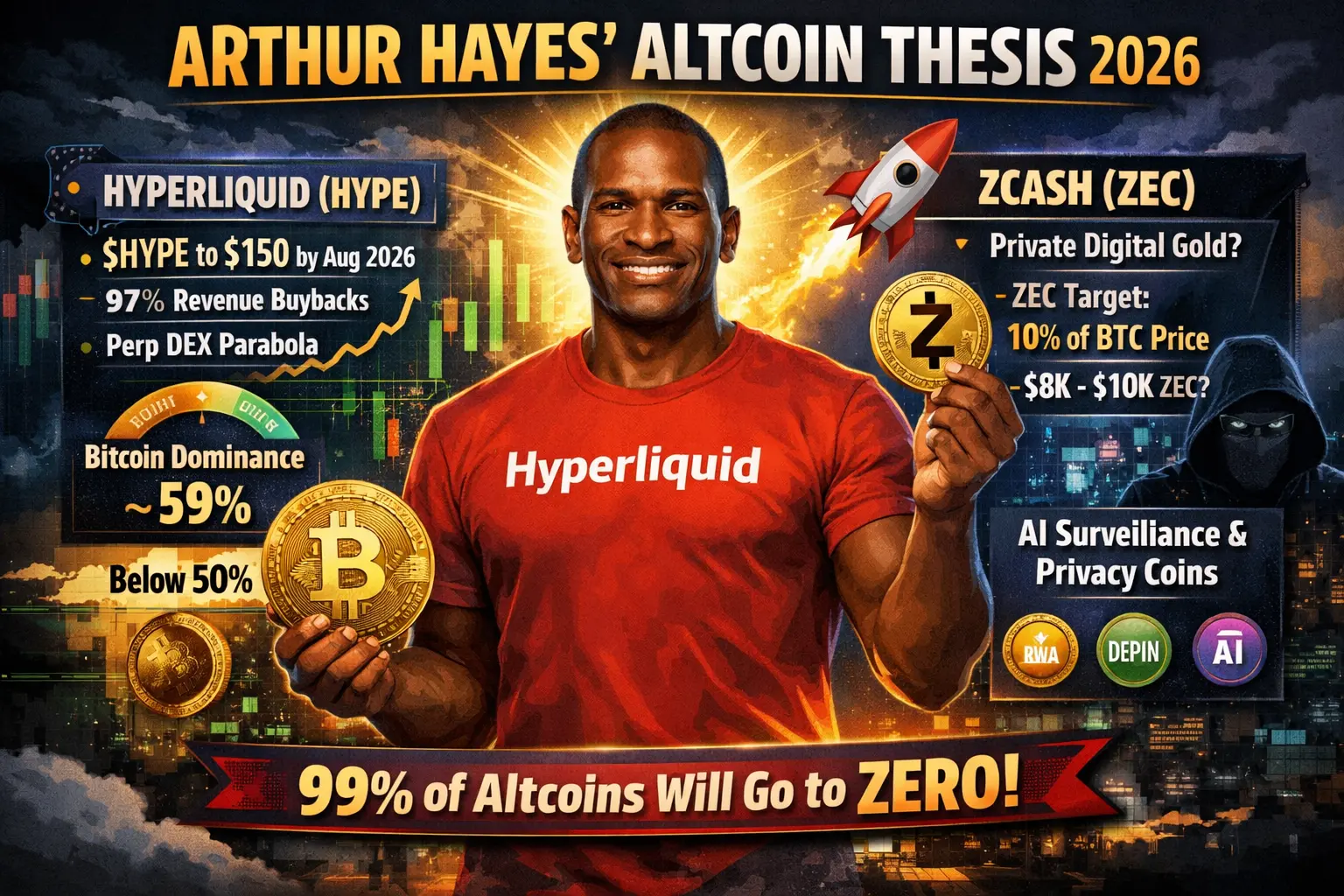
Arthur Hayes has a knack for making headlines with bold, math-backed predictions, and his appearance at Consensus 2026 was no exception. While the broader market remains skeptical about a "unified" altcoin season, Hayes is doubling down on a "survival of the fittest" model.
Here is a breakdown of his thesis and the current state of the market.
Hayes’ Top Picks: The Rationale
Hayes isn't just throwing darts; his picks for 2026 are rooted in protocol revenue and surveillance resistance.
Hyperliquid (HYPE): Hayes predicts a price of $150 by Augus
BTC0.57%
HYPE0.81%
ETH1.27%
post-image
post-image
post-image
  • Reward
  • 7
  • Repost
  • Share
MasterChuTheOldDemonMasterChu:
Buy the dip 😎
View More
#ArthurHayesBullishOnAltcoins
Altcoin Supercycle Thesis 2026 — Hayes Narrative, Liquidity Cycles & The Next Market Expansion Phase The 2026 crypto market narrative is increasingly being shaped by a powerful and controversial thesis: the idea that altcoins will not die, but instead evolve through continuous cycles of destruction and rebirth, driven by liquidity expansion, technological innovation, and shifting institutional behavior.
This thesis was strongly reinforced at Consensus Miami 2026, where Arthur Hayes delivered one of his most aggressive macro and altcoin-focused arguments yet. His
  • Reward
  • Comment
  • Repost
  • Share
#ArthurHayesBullishOnAltcoins
The current wave of discussion around reflects a broader shift in how crypto market participants are interpreting liquidity cycles, macroeconomic pressure, and capital rotation between Bitcoin and alternative digital assets. Rather than viewing altcoins as purely speculative side assets, the emerging thesis suggests they are becoming highly sensitive instruments that amplify global liquidity conditions and institutional risk appetite.
BTC0.57%
ybaser
#ArthurHayesBullishOnAltcoins
The current wave of discussion around reflects a broader shift in how crypto market participants are interpreting liquidity cycles, macroeconomic pressure, and capital rotation between Bitcoin and alternative digital assets. Rather than viewing altcoins as purely speculative side assets, the emerging thesis suggests they are becoming highly sensitive instruments that amplify global liquidity conditions and institutional risk appetite.
  • Reward
  • 9
  • Repost
  • Share
Ryakpanda:
Just charge forward 👊
View More
#ArthurHayesBullishOnAltcoins
#GateSquareMayTradingShare
Crypto markets are once again focusing on the altcoin sector after prominent market voices, including Arthur Hayes, expressed increasingly bullish views on the potential for a major altcoin expansion phase. As Bitcoin consolidates after periods of high volatility, attention is gradually shifting toward whether capital rotation into alternative cryptocurrencies could trigger a broader market rally similar to previous crypto cycles. Hayes’ comments have fueled speculation that the next stage of the market may not be driven solely by Bitc
MrFlower_XingChen
#ArthurHayesBullishOnAltcoins
#GateSquareMayTradingShare
Crypto markets are once again focusing on the altcoin sector after prominent market voices, including Arthur Hayes, expressed increasingly bullish views on the potential for a major altcoin expansion phase. As Bitcoin consolidates after periods of high volatility, attention is gradually shifting toward whether capital rotation into alternative cryptocurrencies could trigger a broader market rally similar to previous crypto cycles. Hayes’ comments have fueled speculation that the next stage of the market may not be driven solely by Bitcoin dominance, but by renewed investor appetite for higher-risk digital assets with stronger upside potential.
The core argument behind the bullish altcoin outlook is tied to liquidity conditions and market psychology. Historically, major altcoin rallies often begin after Bitcoin establishes relative stability following a strong upward move. Once investors believe Bitcoin has entered a consolidation or mature growth phase, capital frequently rotates into Ethereum and then into smaller-cap cryptocurrencies as traders search for higher returns. This pattern has repeated across several previous crypto cycles, where Bitcoin initially leads the market before speculative momentum expands throughout the broader digital asset ecosystem. Many analysts believe current market conditions are beginning to resemble the early stages of that rotation process.
Ethereum remains central to the altcoin narrative because it continues functioning as the foundation of decentralized finance, tokenization infrastructure, and smart contract ecosystems. While Bitcoin is often viewed primarily as a store-of-value asset, Ethereum’s broader utility creates different valuation dynamics tied to network activity, staking participation, and application development. Supporters of the bullish altcoin thesis argue that if Ethereum strengthens further, investor confidence could rapidly expand into Layer-2 ecosystems, AI-related blockchain projects, decentralized infrastructure networks, and other emerging sectors within crypto markets.
One major reason why some traders are becoming more optimistic about altcoins is the improving macro liquidity environment. Expectations that central banks may eventually ease restrictive monetary conditions have increased risk appetite across financial markets. High-liquidity environments historically benefit speculative sectors because investors become more willing to pursue aggressive growth opportunities. Altcoins, especially lower-cap assets, tend to react strongly when excess liquidity enters crypto markets due to their relatively smaller market capitalizations and thinner trading depth compared to Bitcoin. Even moderate inflows can therefore produce outsized price movements during bullish conditions.
Artificial intelligence narratives are also contributing significantly to renewed altcoin optimism. Several blockchain projects connected to decentralized computing, AI infrastructure, machine learning networks, and data marketplaces have gained increased attention from investors seeking exposure to the convergence between AI and crypto technologies. Market participants increasingly view AI-integrated blockchain ecosystems as one of the strongest long-term narratives in digital assets. This has created renewed interest in sectors beyond traditional payment tokens or speculative meme coins, with investors focusing more on utility-driven ecosystems that may benefit from broader technological adoption trends.
At the same time, the altcoin market remains highly selective compared to earlier bull cycles. Previous rallies often pushed nearly every token higher regardless of utility or development activity. Current investor behavior appears more cautious and research-driven after multiple severe market collapses over recent years. Traders are increasingly prioritizing projects with active developer ecosystems, strong community engagement, revenue generation models, and real-world use cases. This suggests that while speculative enthusiasm may return, the market structure could become more differentiated between fundamentally stronger projects and purely hype-driven assets.
Another key factor supporting bullish sentiment is the declining availability of liquid supply across several major cryptocurrencies. Staking systems, ecosystem lockups, treasury reserves, and long-term holder accumulation have reduced actively circulating supply in parts of the market. When liquidity tightens while investor demand increases, volatility can intensify rapidly. Some analysts believe this dynamic could amplify future altcoin rallies if broader market sentiment improves further and new retail participation enters the market.
Retail investor psychology is especially important in the altcoin sector because smaller cryptocurrencies are heavily influenced by momentum trading and social sentiment. During periods of optimism, retail traders often seek assets capable of generating faster percentage gains than Bitcoin. Social media trends, influencer commentary, online trading communities, and meme-driven narratives can significantly accelerate capital flows into specific sectors or tokens. However, this same speculative behavior also increases downside risk because sentiment can reverse extremely quickly during corrections.
Despite the growing bullish narrative, risks surrounding altcoins remain substantial. Altcoin markets are historically far more volatile than Bitcoin and frequently experience deeper drawdowns during market stress. Many projects still lack sustainable business models, meaningful adoption, or long-term financial stability. Regulatory uncertainty also remains a major concern because governments worldwide continue debating how alternative digital assets should be classified and regulated. Any aggressive regulatory action targeting exchanges, DeFi platforms, or token issuance models could quickly weaken investor confidence across the altcoin market.
Bitcoin dominance trends will likely play a major role in determining whether a true altcoin season develops. When Bitcoin dominance declines, it typically signals that investors are allocating a larger share of capital toward alternative cryptocurrencies. However, if Bitcoin continues attracting the majority of institutional inflows through ETFs and regulated investment vehicles, altcoins may struggle to outperform sustainably. Some analysts therefore believe the next altcoin cycle could differ significantly from earlier periods because institutional capital currently remains heavily concentrated around Bitcoin exposure rather than broader crypto diversification.
Decentralized finance ecosystems may also become increasingly important if altcoin momentum strengthens. DeFi platforms enable lending, staking, trading, and yield generation without traditional financial intermediaries, creating additional utility for many blockchain networks. Rising activity across DeFi protocols often increases demand for ecosystem-related tokens while attracting liquidity into smaller-cap digital assets. Stablecoin expansion and cross-chain infrastructure improvements are further strengthening the operational foundation of decentralized financial systems, potentially supporting future market growth.
The role of meme coins remains controversial within the bullish altcoin discussion. Some traders believe meme-driven speculation will once again dominate retail participation because viral narratives often attract rapid attention and liquidity. Others argue that the market is gradually maturing and shifting toward utility-focused projects rather than purely speculative tokens. In reality, both dynamics may coexist, with speculative meme activity driving short-term retail excitement while infrastructure-focused ecosystems attract longer-term institutional and developer interest.
Another important aspect of the bullish altcoin thesis involves the evolving relationship between traditional finance and blockchain technology. Tokenization of real-world assets, decentralized computing infrastructure, gaming ecosystems, and blockchain-based payment systems are gradually becoming integrated into broader financial and technological discussions. If adoption in these areas accelerates, altcoins connected to scalable infrastructure and specialized blockchain services could benefit from increased relevance beyond speculative trading alone.
However, market timing remains extremely difficult. Crypto markets are still heavily influenced by macroeconomic conditions, global liquidity cycles, and geopolitical developments. Sudden shifts in interest rate expectations, inflation trends, or financial market stress can rapidly reverse speculative momentum. Altcoin rallies are particularly vulnerable to liquidity contractions because smaller-cap assets typically depend more heavily on aggressive risk-taking behavior.
Ultimately, Arthur Hayes’ bullish outlook on altcoins reflects growing belief that the crypto market may be entering a new phase of expansion beyond Bitcoin itself. Whether this develops into a full-scale altcoin supercycle or remains a temporary speculative rotation will depend on liquidity conditions, investor confidence, regulatory clarity, and the ability of blockchain ecosystems to deliver sustainable adoption and real economic utility. While opportunities for explosive growth remain significant, the altcoin market continues to carry substantial volatility and risk, making the coming months potentially both highly profitable and extremely unpredictable for traders and investors alike.
#Gate13thAnniversaryLive
#WCTCTradingKingPK
#TopCopyTradingScout
repost-content-media
  • Reward
  • 3
  • Repost
  • Share
MasterChuTheOldDemonMasterChu:
Just charge forward 👊
View More
#ArthurHayesBullishOnAltcoins
Altcoin Supercycle Thesis 2026 — Hayes Narrative, Liquidity Cycles & The Next Market Expansion Phase The 2026 crypto market narrative is increasingly being shaped by a powerful and controversial thesis: the idea that altcoins will not die, but instead evolve through continuous cycles of destruction and rebirth, driven by liquidity expansion, technological innovation, and shifting institutional behavior.
This thesis was strongly reinforced at Consensus Miami 2026, where Arthur Hayes delivered one of his most aggressive macro and altcoin-focused arguments yet. His
post-image
  • Reward
  • 7
  • Repost
  • Share
MissCrypto:
2026 GOGOGO 👊
View More
#ArthurHayesBullishOnAltcoins
#GateSquareMayTradingShare
Crypto markets are once again focusing on the altcoin sector after prominent market voices, including Arthur Hayes, expressed increasingly bullish views on the potential for a major altcoin expansion phase. As Bitcoin consolidates after periods of high volatility, attention is gradually shifting toward whether capital rotation into alternative cryptocurrencies could trigger a broader market rally similar to previous crypto cycles. Hayes’ comments have fueled speculation that the next stage of the market may not be driven solely by Bitc
MrFlower_XingChen
#ArthurHayesBullishOnAltcoins
#GateSquareMayTradingShare
Crypto markets are once again focusing on the altcoin sector after prominent market voices, including Arthur Hayes, expressed increasingly bullish views on the potential for a major altcoin expansion phase. As Bitcoin consolidates after periods of high volatility, attention is gradually shifting toward whether capital rotation into alternative cryptocurrencies could trigger a broader market rally similar to previous crypto cycles. Hayes’ comments have fueled speculation that the next stage of the market may not be driven solely by Bitcoin dominance, but by renewed investor appetite for higher-risk digital assets with stronger upside potential.
The core argument behind the bullish altcoin outlook is tied to liquidity conditions and market psychology. Historically, major altcoin rallies often begin after Bitcoin establishes relative stability following a strong upward move. Once investors believe Bitcoin has entered a consolidation or mature growth phase, capital frequently rotates into Ethereum and then into smaller-cap cryptocurrencies as traders search for higher returns. This pattern has repeated across several previous crypto cycles, where Bitcoin initially leads the market before speculative momentum expands throughout the broader digital asset ecosystem. Many analysts believe current market conditions are beginning to resemble the early stages of that rotation process.
Ethereum remains central to the altcoin narrative because it continues functioning as the foundation of decentralized finance, tokenization infrastructure, and smart contract ecosystems. While Bitcoin is often viewed primarily as a store-of-value asset, Ethereum’s broader utility creates different valuation dynamics tied to network activity, staking participation, and application development. Supporters of the bullish altcoin thesis argue that if Ethereum strengthens further, investor confidence could rapidly expand into Layer-2 ecosystems, AI-related blockchain projects, decentralized infrastructure networks, and other emerging sectors within crypto markets.
One major reason why some traders are becoming more optimistic about altcoins is the improving macro liquidity environment. Expectations that central banks may eventually ease restrictive monetary conditions have increased risk appetite across financial markets. High-liquidity environments historically benefit speculative sectors because investors become more willing to pursue aggressive growth opportunities. Altcoins, especially lower-cap assets, tend to react strongly when excess liquidity enters crypto markets due to their relatively smaller market capitalizations and thinner trading depth compared to Bitcoin. Even moderate inflows can therefore produce outsized price movements during bullish conditions.
Artificial intelligence narratives are also contributing significantly to renewed altcoin optimism. Several blockchain projects connected to decentralized computing, AI infrastructure, machine learning networks, and data marketplaces have gained increased attention from investors seeking exposure to the convergence between AI and crypto technologies. Market participants increasingly view AI-integrated blockchain ecosystems as one of the strongest long-term narratives in digital assets. This has created renewed interest in sectors beyond traditional payment tokens or speculative meme coins, with investors focusing more on utility-driven ecosystems that may benefit from broader technological adoption trends.
At the same time, the altcoin market remains highly selective compared to earlier bull cycles. Previous rallies often pushed nearly every token higher regardless of utility or development activity. Current investor behavior appears more cautious and research-driven after multiple severe market collapses over recent years. Traders are increasingly prioritizing projects with active developer ecosystems, strong community engagement, revenue generation models, and real-world use cases. This suggests that while speculative enthusiasm may return, the market structure could become more differentiated between fundamentally stronger projects and purely hype-driven assets.
Another key factor supporting bullish sentiment is the declining availability of liquid supply across several major cryptocurrencies. Staking systems, ecosystem lockups, treasury reserves, and long-term holder accumulation have reduced actively circulating supply in parts of the market. When liquidity tightens while investor demand increases, volatility can intensify rapidly. Some analysts believe this dynamic could amplify future altcoin rallies if broader market sentiment improves further and new retail participation enters the market.
Retail investor psychology is especially important in the altcoin sector because smaller cryptocurrencies are heavily influenced by momentum trading and social sentiment. During periods of optimism, retail traders often seek assets capable of generating faster percentage gains than Bitcoin. Social media trends, influencer commentary, online trading communities, and meme-driven narratives can significantly accelerate capital flows into specific sectors or tokens. However, this same speculative behavior also increases downside risk because sentiment can reverse extremely quickly during corrections.
Despite the growing bullish narrative, risks surrounding altcoins remain substantial. Altcoin markets are historically far more volatile than Bitcoin and frequently experience deeper drawdowns during market stress. Many projects still lack sustainable business models, meaningful adoption, or long-term financial stability. Regulatory uncertainty also remains a major concern because governments worldwide continue debating how alternative digital assets should be classified and regulated. Any aggressive regulatory action targeting exchanges, DeFi platforms, or token issuance models could quickly weaken investor confidence across the altcoin market.
Bitcoin dominance trends will likely play a major role in determining whether a true altcoin season develops. When Bitcoin dominance declines, it typically signals that investors are allocating a larger share of capital toward alternative cryptocurrencies. However, if Bitcoin continues attracting the majority of institutional inflows through ETFs and regulated investment vehicles, altcoins may struggle to outperform sustainably. Some analysts therefore believe the next altcoin cycle could differ significantly from earlier periods because institutional capital currently remains heavily concentrated around Bitcoin exposure rather than broader crypto diversification.
Decentralized finance ecosystems may also become increasingly important if altcoin momentum strengthens. DeFi platforms enable lending, staking, trading, and yield generation without traditional financial intermediaries, creating additional utility for many blockchain networks. Rising activity across DeFi protocols often increases demand for ecosystem-related tokens while attracting liquidity into smaller-cap digital assets. Stablecoin expansion and cross-chain infrastructure improvements are further strengthening the operational foundation of decentralized financial systems, potentially supporting future market growth.
The role of meme coins remains controversial within the bullish altcoin discussion. Some traders believe meme-driven speculation will once again dominate retail participation because viral narratives often attract rapid attention and liquidity. Others argue that the market is gradually maturing and shifting toward utility-focused projects rather than purely speculative tokens. In reality, both dynamics may coexist, with speculative meme activity driving short-term retail excitement while infrastructure-focused ecosystems attract longer-term institutional and developer interest.
Another important aspect of the bullish altcoin thesis involves the evolving relationship between traditional finance and blockchain technology. Tokenization of real-world assets, decentralized computing infrastructure, gaming ecosystems, and blockchain-based payment systems are gradually becoming integrated into broader financial and technological discussions. If adoption in these areas accelerates, altcoins connected to scalable infrastructure and specialized blockchain services could benefit from increased relevance beyond speculative trading alone.
However, market timing remains extremely difficult. Crypto markets are still heavily influenced by macroeconomic conditions, global liquidity cycles, and geopolitical developments. Sudden shifts in interest rate expectations, inflation trends, or financial market stress can rapidly reverse speculative momentum. Altcoin rallies are particularly vulnerable to liquidity contractions because smaller-cap assets typically depend more heavily on aggressive risk-taking behavior.
Ultimately, Arthur Hayes’ bullish outlook on altcoins reflects growing belief that the crypto market may be entering a new phase of expansion beyond Bitcoin itself. Whether this develops into a full-scale altcoin supercycle or remains a temporary speculative rotation will depend on liquidity conditions, investor confidence, regulatory clarity, and the ability of blockchain ecosystems to deliver sustainable adoption and real economic utility. While opportunities for explosive growth remain significant, the altcoin market continues to carry substantial volatility and risk, making the coming months potentially both highly profitable and extremely unpredictable for traders and investors alike.
#Gate13thAnniversaryLive
#WCTCTradingKingPK
#TopCopyTradingScout
repost-content-media
  • Reward
  • Comment
  • Repost
  • Share
#ArthurHayesBullishOnAltcoins
#GateSquareMayTradingShare
Crypto markets are once again focusing on the altcoin sector after prominent market voices, including Arthur Hayes, expressed increasingly bullish views on the potential for a major altcoin expansion phase. As Bitcoin consolidates after periods of high volatility, attention is gradually shifting toward whether capital rotation into alternative cryptocurrencies could trigger a broader market rally similar to previous crypto cycles. Hayes’ comments have fueled speculation that the next stage of the market may not be driven solely by Bitc
MrFlower_XingChen
#ArthurHayesBullishOnAltcoins
#GateSquareMayTradingShare
Crypto markets are once again focusing on the altcoin sector after prominent market voices, including Arthur Hayes, expressed increasingly bullish views on the potential for a major altcoin expansion phase. As Bitcoin consolidates after periods of high volatility, attention is gradually shifting toward whether capital rotation into alternative cryptocurrencies could trigger a broader market rally similar to previous crypto cycles. Hayes’ comments have fueled speculation that the next stage of the market may not be driven solely by Bitcoin dominance, but by renewed investor appetite for higher-risk digital assets with stronger upside potential.
The core argument behind the bullish altcoin outlook is tied to liquidity conditions and market psychology. Historically, major altcoin rallies often begin after Bitcoin establishes relative stability following a strong upward move. Once investors believe Bitcoin has entered a consolidation or mature growth phase, capital frequently rotates into Ethereum and then into smaller-cap cryptocurrencies as traders search for higher returns. This pattern has repeated across several previous crypto cycles, where Bitcoin initially leads the market before speculative momentum expands throughout the broader digital asset ecosystem. Many analysts believe current market conditions are beginning to resemble the early stages of that rotation process.
Ethereum remains central to the altcoin narrative because it continues functioning as the foundation of decentralized finance, tokenization infrastructure, and smart contract ecosystems. While Bitcoin is often viewed primarily as a store-of-value asset, Ethereum’s broader utility creates different valuation dynamics tied to network activity, staking participation, and application development. Supporters of the bullish altcoin thesis argue that if Ethereum strengthens further, investor confidence could rapidly expand into Layer-2 ecosystems, AI-related blockchain projects, decentralized infrastructure networks, and other emerging sectors within crypto markets.
One major reason why some traders are becoming more optimistic about altcoins is the improving macro liquidity environment. Expectations that central banks may eventually ease restrictive monetary conditions have increased risk appetite across financial markets. High-liquidity environments historically benefit speculative sectors because investors become more willing to pursue aggressive growth opportunities. Altcoins, especially lower-cap assets, tend to react strongly when excess liquidity enters crypto markets due to their relatively smaller market capitalizations and thinner trading depth compared to Bitcoin. Even moderate inflows can therefore produce outsized price movements during bullish conditions.
Artificial intelligence narratives are also contributing significantly to renewed altcoin optimism. Several blockchain projects connected to decentralized computing, AI infrastructure, machine learning networks, and data marketplaces have gained increased attention from investors seeking exposure to the convergence between AI and crypto technologies. Market participants increasingly view AI-integrated blockchain ecosystems as one of the strongest long-term narratives in digital assets. This has created renewed interest in sectors beyond traditional payment tokens or speculative meme coins, with investors focusing more on utility-driven ecosystems that may benefit from broader technological adoption trends.
At the same time, the altcoin market remains highly selective compared to earlier bull cycles. Previous rallies often pushed nearly every token higher regardless of utility or development activity. Current investor behavior appears more cautious and research-driven after multiple severe market collapses over recent years. Traders are increasingly prioritizing projects with active developer ecosystems, strong community engagement, revenue generation models, and real-world use cases. This suggests that while speculative enthusiasm may return, the market structure could become more differentiated between fundamentally stronger projects and purely hype-driven assets.
Another key factor supporting bullish sentiment is the declining availability of liquid supply across several major cryptocurrencies. Staking systems, ecosystem lockups, treasury reserves, and long-term holder accumulation have reduced actively circulating supply in parts of the market. When liquidity tightens while investor demand increases, volatility can intensify rapidly. Some analysts believe this dynamic could amplify future altcoin rallies if broader market sentiment improves further and new retail participation enters the market.
Retail investor psychology is especially important in the altcoin sector because smaller cryptocurrencies are heavily influenced by momentum trading and social sentiment. During periods of optimism, retail traders often seek assets capable of generating faster percentage gains than Bitcoin. Social media trends, influencer commentary, online trading communities, and meme-driven narratives can significantly accelerate capital flows into specific sectors or tokens. However, this same speculative behavior also increases downside risk because sentiment can reverse extremely quickly during corrections.
Despite the growing bullish narrative, risks surrounding altcoins remain substantial. Altcoin markets are historically far more volatile than Bitcoin and frequently experience deeper drawdowns during market stress. Many projects still lack sustainable business models, meaningful adoption, or long-term financial stability. Regulatory uncertainty also remains a major concern because governments worldwide continue debating how alternative digital assets should be classified and regulated. Any aggressive regulatory action targeting exchanges, DeFi platforms, or token issuance models could quickly weaken investor confidence across the altcoin market.
Bitcoin dominance trends will likely play a major role in determining whether a true altcoin season develops. When Bitcoin dominance declines, it typically signals that investors are allocating a larger share of capital toward alternative cryptocurrencies. However, if Bitcoin continues attracting the majority of institutional inflows through ETFs and regulated investment vehicles, altcoins may struggle to outperform sustainably. Some analysts therefore believe the next altcoin cycle could differ significantly from earlier periods because institutional capital currently remains heavily concentrated around Bitcoin exposure rather than broader crypto diversification.
Decentralized finance ecosystems may also become increasingly important if altcoin momentum strengthens. DeFi platforms enable lending, staking, trading, and yield generation without traditional financial intermediaries, creating additional utility for many blockchain networks. Rising activity across DeFi protocols often increases demand for ecosystem-related tokens while attracting liquidity into smaller-cap digital assets. Stablecoin expansion and cross-chain infrastructure improvements are further strengthening the operational foundation of decentralized financial systems, potentially supporting future market growth.
The role of meme coins remains controversial within the bullish altcoin discussion. Some traders believe meme-driven speculation will once again dominate retail participation because viral narratives often attract rapid attention and liquidity. Others argue that the market is gradually maturing and shifting toward utility-focused projects rather than purely speculative tokens. In reality, both dynamics may coexist, with speculative meme activity driving short-term retail excitement while infrastructure-focused ecosystems attract longer-term institutional and developer interest.
Another important aspect of the bullish altcoin thesis involves the evolving relationship between traditional finance and blockchain technology. Tokenization of real-world assets, decentralized computing infrastructure, gaming ecosystems, and blockchain-based payment systems are gradually becoming integrated into broader financial and technological discussions. If adoption in these areas accelerates, altcoins connected to scalable infrastructure and specialized blockchain services could benefit from increased relevance beyond speculative trading alone.
However, market timing remains extremely difficult. Crypto markets are still heavily influenced by macroeconomic conditions, global liquidity cycles, and geopolitical developments. Sudden shifts in interest rate expectations, inflation trends, or financial market stress can rapidly reverse speculative momentum. Altcoin rallies are particularly vulnerable to liquidity contractions because smaller-cap assets typically depend more heavily on aggressive risk-taking behavior.
Ultimately, Arthur Hayes’ bullish outlook on altcoins reflects growing belief that the crypto market may be entering a new phase of expansion beyond Bitcoin itself. Whether this develops into a full-scale altcoin supercycle or remains a temporary speculative rotation will depend on liquidity conditions, investor confidence, regulatory clarity, and the ability of blockchain ecosystems to deliver sustainable adoption and real economic utility. While opportunities for explosive growth remain significant, the altcoin market continues to carry substantial volatility and risk, making the coming months potentially both highly profitable and extremely unpredictable for traders and investors alike.
#Gate13thAnniversaryLive
#WCTCTradingKingPK
#TopCopyTradingScout
repost-content-media
  • Reward
  • Comment
  • Repost
  • Share
#ArthurHayesBullishOnAltcoins
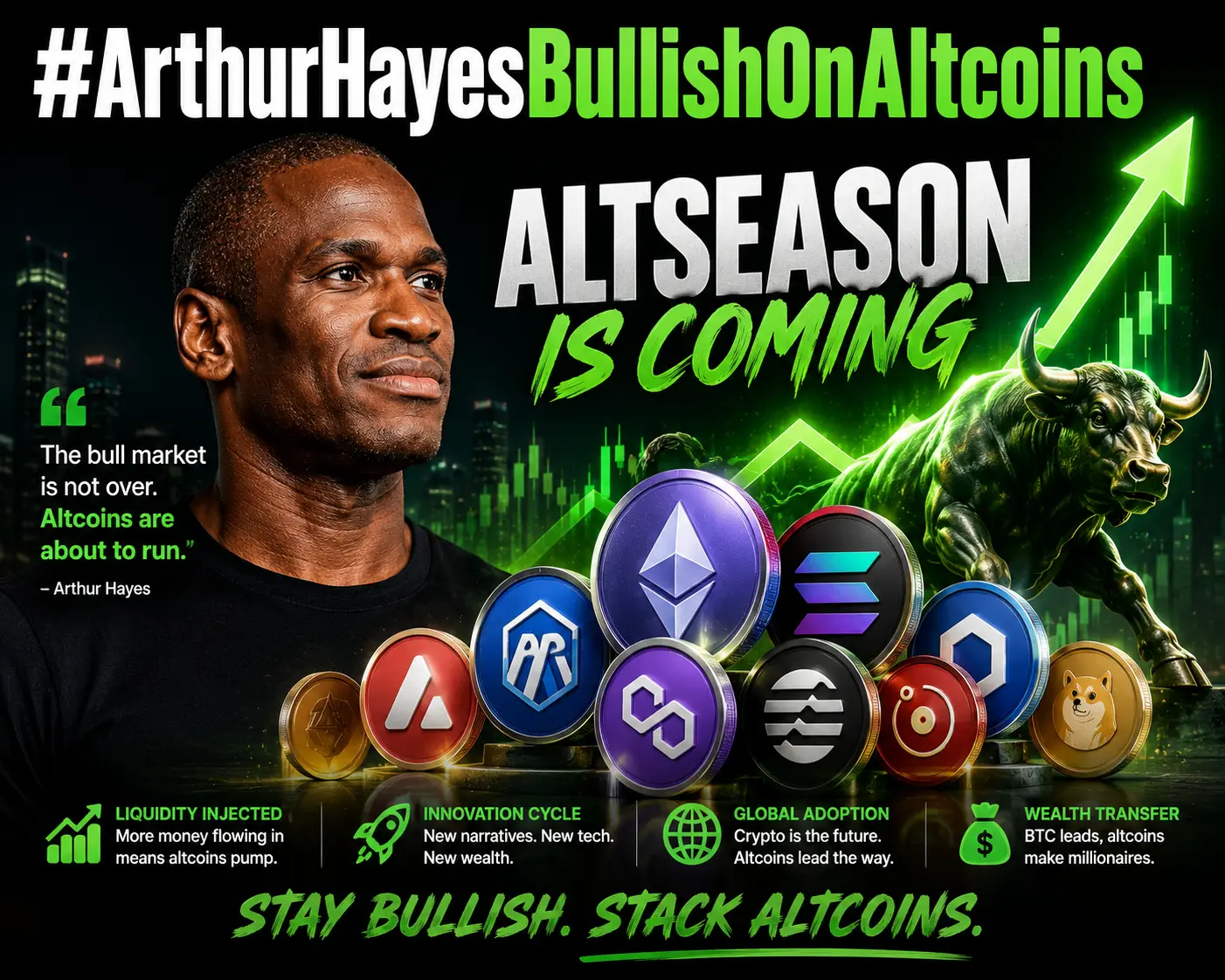
The crypto market is once again heating up, and one of the loudest voices sparking attention is Arthur Hayes. Known for his bold macro takes and aggressive trading outlook, Hayes has recently leaned bullish on altcoins, suggesting that the next major wave of crypto gains may not be led by Bitcoin alone, but by a broader altcoin expansion.
In simple street terms, the message is clear: Bitcoin may set the stage, but altcoins are where the real explosive moves could happen. Investors are now watching closely as liquidity conditions, macro signals, and institutional
BTC0.57%
post-image
post-image
  • Reward
  • 2
  • Repost
  • Share
ybaser:
To The Moon 🌕
View More
Load More