

Trade
Basic
Futures
Futures
Hundreds of contracts settled in USDT or BTC
TradFi
Gold
Trade global traditional assets with USDT in one place
Options
Hot
Trade European-style vanilla options
Unified Account
Maximize your capital efficiency
Demo Trading
Futures Kickoff
Get prepared for your futures trading
Futures Events
Participate in events to win generous rewards
Demo Trading
Use virtual funds to experience risk-free trading
Earn
Launch
CandyDrop
Collect candies to earn airdrops
Launchpool
Quick staking, earn potential new tokens
HODLer Airdrop
Hold GT and get massive airdrops for free
Launchpad
Be early to the next big token project
Alpha Points
Trade on-chain assets and enjoy airdrop rewards!
Futures Points
Earn futures points and claim airdrop rewards
Investment
Simple Earn
Earn interests with idle tokens
Auto-Invest
Auto-invest on a regular basis
Dual Investment
Buy low and sell high to take profits from price fluctuations
Soft Staking
Earn rewards with flexible staking
Crypto Loan
0 Fees
Pledge one crypto to borrow another
Lending Center
One-stop lending hub
VIP Wealth Hub
Customized wealth management empowers your assets growth
Private Wealth Management
Customized asset management to grow your digital assets
Quant Fund
Top asset management team helps you profit without hassle
Staking
Stake cryptos to earn in PoS products
Smart Leverage
New
No forced liquidation before maturity, worry-free leveraged gains
GUSD Minting
Use USDT/USDC to mint GUSD for treasury-level yields

More






The Real Figure: How Much Does Elon Musk Actually Make Every Millisecond?
When you think about Elon Musk’s daily earnings, the numbers become almost incomprehensible. But here’s something even more mind-bending: converting that daily income into smaller time intervals reveals just how astronomical his wealth generation really is. Unlike traditional executives who collect a regular paycheck, Musk’s earnings depend entirely on stock valuation and investment performance, meaning what he makes in any given period fluctuates dramatically based on market conditions.
With a net worth that has fluctuated between $400 billion and $500 billion in recent years, understanding how much does Elon Musk make requires looking beyond simple daily calculations. His wealth isn’t generated through salary—it’s accumulated through equity stakes, stock options, and strategic investments across his various ventures.
The Breakdown: Calculating Musk’s Earnings Across Time Scales
Musk doesn’t receive a conventional paycheck from his companies. Instead, his wealth is almost entirely tied to his ownership stakes and stock options in Tesla, SpaceX, and other holdings. This arrangement means his “earnings” are highly volatile and directly tied to market performance.
To illustrate how much Musk’s wealth grows, consider 2024: his net worth increased by approximately $203 billion throughout the year, reaching a record $486.4 billion by year-end. Breaking this down into smaller increments reveals staggering numbers. On a daily basis, this translated to roughly $584 million per day. Push the math further, and you’re looking at approximately $24 million per hour. Compress it further still: $405,000 per minute, or about $6,750 every second. When you scale it down to milliseconds—one thousandth of a second—Musk’s theoretical earnings reach an almost surreal $6.75 per millisecond.
However, Musk’s wealth fluctuates considerably. By late 2025, his net worth had decreased by approximately $48.2 billion year-to-date, bringing his average daily wealth change down to around $191 million per day. This dramatic swing underscores a critical point: unlike people with stable salaries, Musk’s “income” is entirely dependent on market sentiment and the performance of his companies’ stock prices.
Tesla’s current valuation plays a massive role in these calculations. With a market capitalization of $1.28 trillion and Musk controlling approximately 21% of the company, significant portions of his wealth rise or fall with Tesla’s stock movements. Additionally, Musk was recently approved for a potential $1 trillion stock option package to be distributed over the next decade if he meets specific performance targets—a move that could dramatically reshape his compensation structure.
Why the Traditional Salary Model Doesn’t Apply
What makes Musk’s wealth different from conventional corporate leadership is that he doesn’t actually earn a salary in the traditional sense. As Tesla’s CEO and majority shareholder, his compensation is entirely performance-based. The company only allocates bonus payments when Tesla’s market capitalization and financial performance hit predetermined milestones.
This structure explains why his “daily earnings” are so difficult to pin down. Some years his net worth surges by hundreds of billions; other years see substantial declines. The volatility is inherent to the system—his wealth directly mirrors the market’s appetite for his companies’ stock.
The Business Empire Driving the Wealth
Musk’s ability to accumulate such staggering wealth stems from a track record of founding and scaling successful companies. His early ventures set the stage for later triumphs: Zip2, his first company providing software licensing services to newspapers, sold to Compaq for $307 million. PayPal, which he helped create, sold to eBay for $180 million.
Tesla represents the crown jewel of Musk’s holdings. Founded in 2003, the company manufactures all-electric vehicles while also developing clean energy generation and storage systems. With Musk retaining roughly 21% ownership and a market valuation exceeding $1.2 trillion, Tesla’s performance directly impacts his net worth calculations.
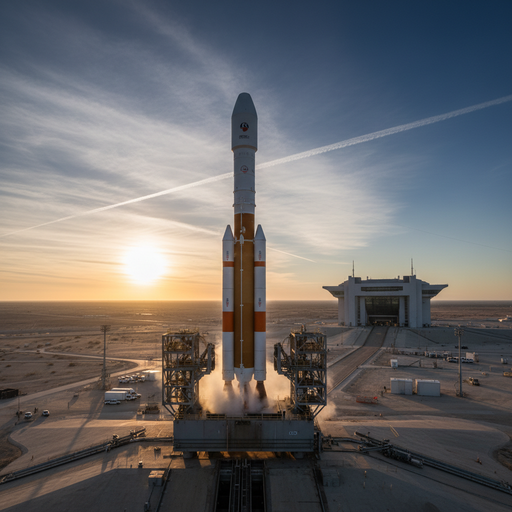
SpaceX further diversifies his wealth. Founded in 2002 as a private company, SpaceX has conducted over 600 launches, including an impressive 160 missions in 2025 alone. Though it’s not publicly traded, current estimates value the aerospace enterprise at approximately $400 billion. SpaceX’s operational success and valuation growth contribute substantially to Musk’s overall wealth.
Combined, these businesses and his strategic investments create a wealth-generation machine that operates at a scale most humans can barely comprehend. When you translate his income into milliseconds, the absurdity of the disparity between Musk’s earnings and average global income becomes starkly apparent.
The question of how much does Elon Musk make ultimately depends on the time frame you’re measuring—but whether calculated daily, hourly, or per millisecond, the answer underscores the extraordinary concentration of wealth in the modern economy.