


Futures
Hundreds of contracts settled in USDT or BTC
TradFi
Gold
One platform for global traditional assets
Options
Hot
Trade European-style vanilla options
Unified Account
Maximize your capital efficiency
Demo Trading
Futures Kickoff
Get prepared for your futures trading
Futures Events
Join events to earn rewards
Demo Trading
Use virtual funds to experience risk-free trading
Launch
CandyDrop
Collect candies to earn airdrops
Launchpool
Quick staking, earn potential new tokens
HODLer Airdrop
Hold GT and get massive airdrops for free
Launchpad
Be early to the next big token project
Alpha Points
Trade on-chain assets and earn airdrops
Futures Points
Earn futures points and claim airdrop rewards





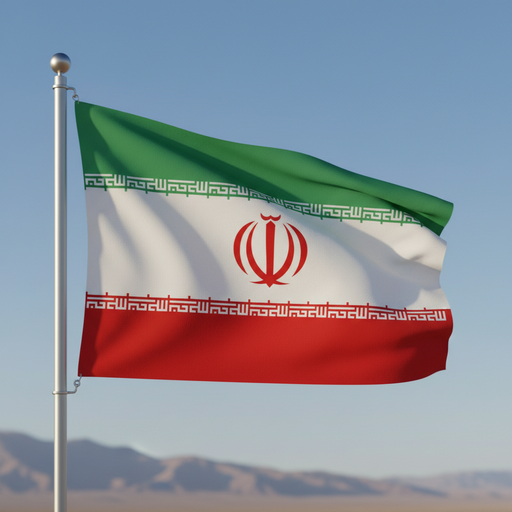
2025: The 20 Largest Economies in the World Show New Global Dynamics
The configuration of the global economic power in 2025 presents a complex reality: while traditional powers maintain prominent positions, emerging economies are gaining significant ground on the international stage. The Gross Domestic Product (GDP) continues to be the main gauge to measure this strength, revealing not only numbers but also geopolitical trends and investment opportunities.
Who dominates the top of the economic ranking?
According to the International Monetary Fund (IMF), the ranking of the world’s leading economies shows a clear concentration: United States remains far ahead in first place with a GDP of US$ 30.34 trillion, consolidating its position through a robust consumer market, technological leadership, and a sophisticated financial system. Following closely, China with US$ 19.53 trillion remains the second-largest economy, driven by its industrial structure, massive export volume, and strategic investments in infrastructure and technology.
The gap between these two powers and the other countries is considerable. Germany ranks third with a GDP of US$ 4.92 trillion, followed by Japan (US$ 4.39 trillion) and India (US$ 4.27 trillion), marking the beginning of a second tier of developed and emerging economies.
Rise of emerging economies in the top 10
What draws attention in the current scenario is the growing presence of emerging markets among the 20 largest economies in the world. Brazil returned to the top 10 in 2023 and solidified its position in 2024 with an approximate GDP of US$ 2.179 trillion, reflecting a 3.4% economic growth. India is moving toward competing for increasingly higher positions, while Indonesia is also gaining economic relevance.
Brazil’s performance is tied to its traditional sectors: agriculture, energy, mining, and commodities, along with a growing domestic consumption. These factors ensure that the country maintains significant influence in global economic discussions and international capital flows.
Wealth distribution: beyond total GDP
A deeper analysis reveals that GDP per capita offers a different perspective. While the absolute ranking places the United States and China at the top, per capita indicators show different realities: Luxembourg leads with a GDP per capita of US$ 140.94 thousand annually, followed by Ireland (US$ 108.92 thousand) and Switzerland (US$ 104.90 thousand).
Brazil, despite its strong position in total GDP, has an approximate GDP per capita of US$ 9,960, highlighting that the size of the economy does not directly translate into an equitable income distribution among its inhabitants.
The 20 largest economies in the world: complete data
The influence of G20 on the global economy
The G20, a group comprising the 19 largest economies plus the European Union, accounts for impressive percentages of global economic power: 85% of the global GDP, 75% of international trade, and approximately two-thirds of the world population. This means that decisions made by these 20 members — including the United States, China, Brazil, India, Germany, Japan, and others — resonate throughout the international economic architecture.
Global GDP: a portrait of unequal wealth distribution
The global GDP in 2025 reached approximately US$ 115.49 trillion. Divided among a population of 7.99 billion people, this results in an average global GDP per capita of about US$ 14,45 thousand. However, this average masks very different realities: while some nations enjoy high productivity per inhabitant, others face significant challenges in their economic development.
What to expect in the coming years
The dynamics observed in the 2025 ranking suggest that the balance of economic power will continue to transform. The rise of Asian economies, especially India and Indonesia, the recovery of emerging markets like Brazil, and the sustained strength of traditional powers point to a multipolar world from an economic perspective. Investors and analysts closely monitor these numbers, as they indicate business opportunities, currency risks, and capital flow trends in the years ahead.