


Futures
Hundreds of contracts settled in USDT or BTC
TradFi
Gold
Trade global traditional assets with USDT in one place
Options
Hot
Trade European-style vanilla options
Unified Account
Maximize your capital efficiency
Demo Trading
Futures Kickoff
Get prepared for your futures trading
Futures Events
Participate in events to win generous rewards
Demo Trading
Use virtual funds to experience risk-free trading
Launch
CandyDrop
Collect candies to earn airdrops
Launchpool
Quick staking, earn potential new tokens
HODLer Airdrop
Hold GT and get massive airdrops for free
Launchpad
Be early to the next big token project
Alpha Points
Trade on-chain assets and enjoy airdrop rewards!
Futures Points
Earn futures points and claim airdrop rewards
Investment
Simple Earn
Earn interests with idle tokens
Auto-Invest
Auto-invest on a regular basis
Dual Investment
Buy low and sell high to take profits from price fluctuations
Soft Staking
Earn rewards with flexible staking
Crypto Loan
0 Fees
Pledge one crypto to borrow another
Lending Center
One-stop lending hub
VIP Wealth Hub
Customized wealth management empowers your assets growth
Private Wealth Management
Customized asset management to grow your digital assets
Quant Fund
Top asset management team helps you profit without hassle
Staking
Stake cryptos to earn in PoS products
Smart Leverage
New
No forced liquidation before maturity, worry-free leveraged gains
GUSD Minting
Use USDT/USDC to mint GUSD for treasury-level yields





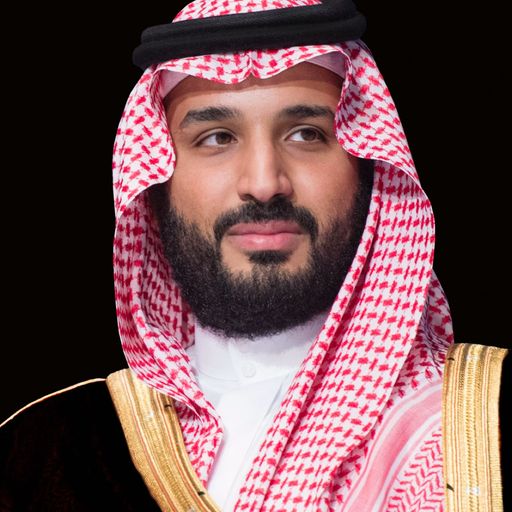

The Satoshi Puzzle: Why Does Elon Musk Point to Nick Szabo?
The identity of Bitcoin’s creator remains one of the most tantalizing mysteries in crypto. For over 15 years, Satoshi Nakamoto has stayed hidden behind a pseudonym, and countless theories have emerged about who this person might be. Recently, Elon Musk—often a vocal figure on tech and crypto matters—made a bold claim: he believes Nick Szabo is the intellectual architect behind Bitcoin’s foundational ideas.
But who exactly is Nick Szabo, and what makes him the prime suspect in this ongoing investigation?
The Man Behind the Theory
Nick Szabo isn’t a random name pulled from thin air. He’s a seasoned cryptographer with serious credentials. In 1989, Szabo earned his degree in computer science from the University of Washington, later supplementing this with a law degree from George Washington University Law School. This unique combination of technical expertise and legal knowledge would become central to his work in the crypto space.
Before Bitcoin even existed, Szabo was pioneering similar concepts. In 1998, he created BitGold—a project that attempted to address inefficiencies in traditional finance through cryptographic methods. Though BitGold never achieved full completion, many observers view it as a direct precursor to what Bitcoin would later accomplish. Szabo himself attributed his inspiration to solving real problems he perceived in the existing financial system.
The Linguistic Evidence
Here’s where things get interesting. In 2014, researchers at Aston University Centre for Forensic Linguistics conducted a detailed study of Bitcoin’s white paper, comparing writing patterns and linguistic markers. Their conclusion? The evidence pointed toward Nick Szabo. Several factors supported this finding: the white paper was formatted using LaTeX, an open-source document preparation system that Szabo also uses for his own publications. Additionally, specific phrases and terminology patterns found throughout Bitcoin’s white paper mirrored language frequently used in Szabo’s published work.
Elon Musk acknowledged this complexity, stating: “Obviously I don’t know who created bitcoin… but it seems as though Nick Szabo is probably more than anyone else responsible for the evolution of those ideas.”
Szabo’s Denial and the Decentralization Philosophy
Interestingly, Nick Szabo has repeatedly denied being Satoshi Nakamoto. In 2014, he responded to the accusations directly, saying “I’m afraid you got it wrong doxing me as Satoshi, but I’m used to it.” This consistent refusal to claim credit has added another layer to the mystery—whether it’s a genuine denial or a deliberate choice to protect Bitcoin’s decentralized ethos remains debatable.
The anonymity of Bitcoin’s creator may actually be intentional. Consider Ethereum’s Vitalik Buterin, who actively works to minimize his influence over the protocol despite his co-creator status. Maintaining distance between the creator’s identity and the technology might be a philosophical choice to reinforce the principle of decentralization.
Nick Szabo’s Lasting Contributions
Regardless of whether Szabo is actually Nakamoto, his contributions to crypto are undeniable. He coined the term “smart contracts,” a concept that fundamentally shaped how blockchain platforms like Ethereum operate. His intellectual fingerprints are visible throughout the landscape of modern cryptocurrency.
Today, Szabo maintains an active Twitter presence with over 300,000 followers, where he continues to engage with crypto discussions and developments. Whether he’s the man behind Bitcoin’s creation or simply one of its key intellectual predecessors, Nick Szabo’s role in shaping blockchain technology cannot be dismissed.
The Satoshi mystery may never be fully solved, but the investigation into figures like Nick Szabo reveals how foundational ideas in crypto didn’t emerge in a vacuum—they evolved through the work of talented cryptographers who saw problems worth solving.