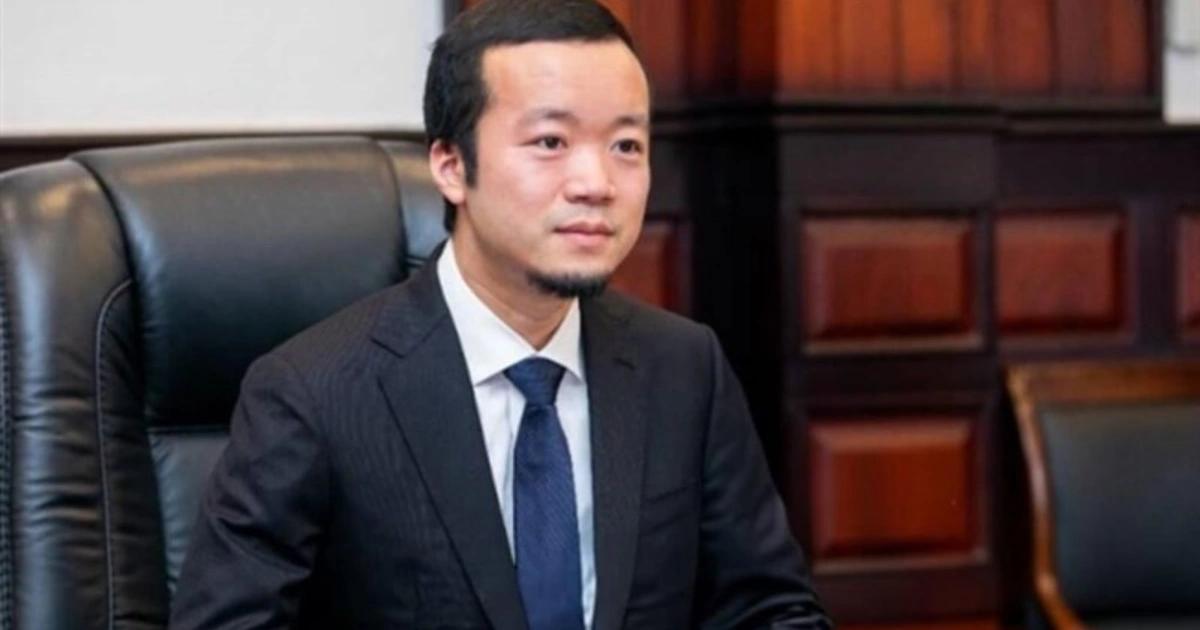
Taipei District Prosecutors Office announced yesterday (4th) that they have concluded the investigation into the Prince Group’s cross-border money laundering case in Cambodia, charging 62 individuals and 13 companies. Among them, 9 are in custody, and assets including luxury homes, cars, and financial accounts worth over NT$5.5 billion have been seized. Prosecutors found that the group laundered over NT$10.7 billion through online gambling platforms, underground remittance, and overseas companies.
U.S. Charges and Sanctions as Key Turning Points
Prosecutors stated that the Prince Group, led by Chen Zhi, has long engaged in fraud and online gambling crimes in Cambodia, establishing a large international corporate network for money laundering. In October 2025, U.S. federal prosecutors filed criminal charges against Chen Zhi and others in the Eastern District of New York. The U.S. Department of the Treasury’s Office of Foreign Assets Control (OFAC) also sanctioned nine companies and three nationals associated with the Prince Group in Taiwan.
Following the announcement, the Taipei Prosecutors Office proactively assigned cases and launched joint investigations across departments, marking a significant breakthrough in dismantling this transnational criminal organization.
Nine Years of Money Laundering totaling NT$10.7 Billion: International Business Operations
Investigations revealed that the Prince Group had established multiple companies in Taiwan since 2016, gradually building a corporate-style criminal structure. These companies appeared to be involved in technology, customer service, or gaming-related businesses but were actually providing technical and operational support for online gambling platforms, laundering proceeds from scams through fund flows.
In addition to gambling platforms, the group built a vast network of overseas companies. Prosecutors indicated that the group set up over 250 offshore companies across 18 countries, using fictitious contracts and cross-border remittances to transfer funds, masking the true source of the money with complex corporate structures.
In the final stages of fund transfer, the group combined cryptocurrencies with underground remittance services. Prosecutors pointed out that the group developed a virtual asset tool called “OJBK Wallet,” which exchanged cryptocurrencies for cash through underground remittance channels, then transferred the funds into Taiwan. These funds were subsequently used to purchase luxury homes, cars, and various luxury goods, serving as tools for capital storage and value transfer.
Luxury Homes as Money Laundering Hubs: Heping Dayuan Luxury Community
One of the most notable cases involves the luxury community “Heping Dayuan” in Taipei. Prosecutors stated that Chen Zhi directed members to establish eight shell companies and purchase luxury homes under fake shareholder names to funnel criminal proceeds into Taiwan. The case involves 11 luxury homes and 48 parking spaces. The funds were first transferred through a parent company established in Singapore and then disguised through fictitious leasing or loan agreements.
Taipei Prosecutors Seize 24 Properties and 35 Supercars Worth Over NT$5 Billion
The seized assets include:
- 24 properties valued at approximately NT$3.98 billion.
- 35 supercars and luxury vehicles valued at about NT$1.1 billion.
- 337 bank accounts with a total balance of around NT$440 million.
Additionally, a large number of luxury bags, cigars, and other high-end goods were confiscated. Some of the luxury cars and goods have been auctioned off, raising over NT$438 million.
Prosecutors Seek Maximum Penalties for Chen Zhi
Prosecutors stated that the Prince Group operates as a corporate-style transnational crime enterprise, laundering large amounts of fraud and gambling proceeds into Taiwan, severely disrupting financial order and damaging Taiwan’s international reputation. Therefore, they are seeking the maximum statutory penalties for key members. Chen Zhi, the group’s leader, faces the highest possible sentence; a senior officer in Taiwan, surnamed Lee, is facing over 20 years and a fine of NT$250 million; the fund management supervisor faces over 18 years, with several other key members sentenced to 10-16 years.
Currently, three defendants remain at large and have been issued arrest warrants. Investigations into other related criminal activities are ongoing.
- This article is reprinted with permission from: 《Chain News》
- Original Title: “Taipei Prosecutors Conclude Prince Group Case: Seize NT$5.5 Billion Luxury Homes and Cars, Seek Maximum Penalties for Chen Zhi”
- Original Author: Neo
Disclaimer: The information on this page may come from third parties and does not represent the views or opinions of Gate. The content displayed on this page is for reference only and does not constitute any financial, investment, or legal advice. Gate does not guarantee the accuracy or completeness of the information and shall not be liable for any losses arising from the use of this information. Virtual asset investments carry high risks and are subject to significant price volatility. You may lose all of your invested principal. Please fully understand the relevant risks and make prudent decisions based on your own financial situation and risk tolerance. For details, please refer to
Disclaimer.
Related Articles
A judge ruled that the JENNER meme coin issued by socialite Jenners from the Kardashian family is not a security, dismissing the lawsuit.
The U.S. District Court for the Central District of California ruled that the $JENNER meme coin issued by socialite Jenna, of the Kardashian family, does not meet the definition of a security, dismissing investors’ lawsuit. The judge said the plaintiffs failed to prove the features of a common enterprise and can bring other claims in state court.
ChainNewsAbmedia5h ago
Korean Counterfeit Gang Sells Fake Diplomas for Cryptocurrency, Starting at $200
A Korean counterfeit gang is selling forged documents via Telegram, accepting cryptocurrency and digital gift cards. They offer fake diplomas, licenses, and other legal documents, highlighting the role of cryptocurrency in facilitating anonymous transactions for illicit services. Arrests for forgery have nearly doubled in South Korea from 2021 to 2023.
GateNews9h ago
Hong Kong Police Warn of 'AI Quantitative Trading' Crypto Scam, Woman Loses HK$7.7 Million
Hong Kong police revealed a cryptocurrency fraud where a woman lost HK$7.7 million to scammers posing as investment experts via Telegram, promising high returns through AI trading. The police warned the public of the risks associated with cryptocurrency investments.
GateNews13h ago
Galaxy Research Chief: U.S. OFAC Sanctions List Involves 518 Bitcoin Addresses
The U.S. Treasury's OFAC sanctions list includes 518 Bitcoin addresses that have significantly engaged in crypto transactions, currently holding about 9,306 BTC valued at $707 million, highlighting the relationship between cryptocurrency and financial regulation.
GateNews19h ago
Chainalysis Details 'Shadow Crypto Economy' Exposure as Grinex Suspends Operations
Grinex’s shutdown is intensifying scrutiny of crypto laundering tactics, as fund movements suggest behavior inconsistent with typical enforcement actions. Chainalysis analysis highlights patterns that raise questions about whether the activity aligns with a conventional external hack or
Coinpedia04-18 16:51
SEC Crypto Shift Clarifies Rules Without Blanket Approval
The SEC has adopted a more lenient stance on crypto regulation, allowing some interfaces to operate without broker-dealer registration, but has not given blanket approval for the industry. Recent guidance clarifies how crypto assets are categorized, emphasizing that federal securities laws apply mainly to digital securities. Enforcement activity has decreased as the agency focuses on fraud and market integrity.
CryptoFrontier04-18 16:01


