Morgan Stanley spot Bitcoin ETF, Ethereum ETF, and Solana ETF applications filed simultaneously, represent far more than just another set of S-1 forms—they signal a profound strategic shift in how traditional finance engages with digital assets.
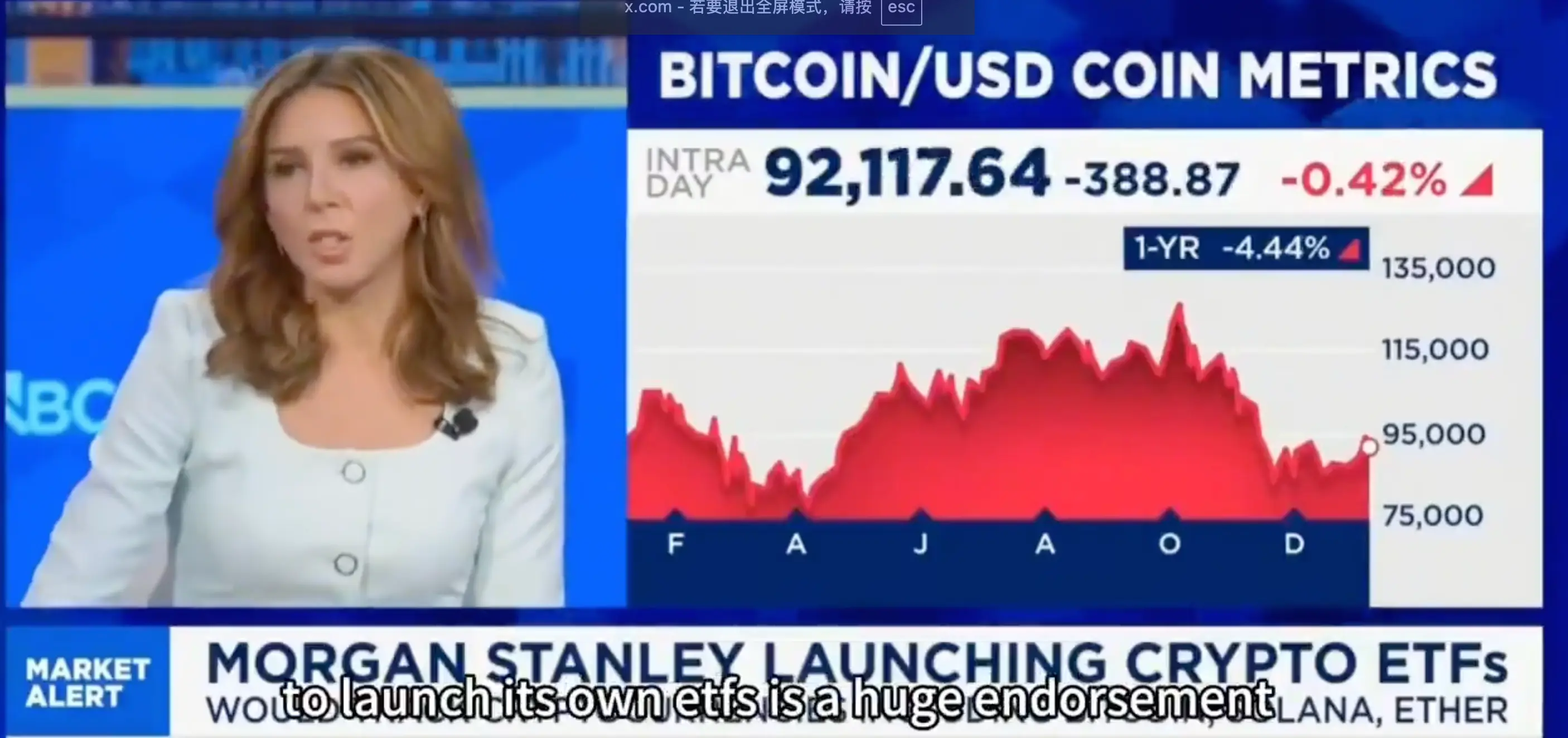
(Sources: CNBC)
While many view this as routine expansion, the move from passive distribution to active product issuance marks a turning point for Wall Street crypto ETF signal. In this analyst insight, we unpack the three underlying logic changes driving Morgan Stanley spot Bitcoin ETF (alongside ETH and SOL variants), the implications for institutional adoption, and why this could redefine crypto as a mainstream asset class in 2026.
From Passive Recommendation to Active Issuance: Morgan Stanley Spot Bitcoin ETF Strategy Evolves
In 2024, Morgan Stanley limited its role to allowing advisors to recommend third-party products like BlackRock’s Bitcoin ETF. The January 6 filings for proprietary trusts—Morgan Stanley Bitcoin Trust, Morgan Stanley Ethereum Trust, and Morgan Stanley Solana Trust—indicate a clear upgrade in ambition.
By launching self-branded vehicles, Morgan Stanley gains direct control over underlying assets, pricing mechanisms, and management fees. This transition elevates the firm from distributor to full participant, capturing greater economics while signaling deep conviction.
- Previous Role: Advisor recommendations only (passive channel).
- New Position: Self-issued trusts with custody and operational oversight.
- Economic Incentive: Retain fees and branding premium.
- Commitment Level: Viewed as an “all-in” declaration to clients and regulators.
Solana’s Institutional Coronation Via Morgan Stanley Solana ETF
The inclusion of a Morgan Stanley Solana ETF filing stands out as the biggest alpha in the trio. Prior SOL ETF applications came primarily from mid-tier or crypto-native players like VanEck.
Morgan Stanley—a multi-trillion-dollar asset manager—entering the fray effectively removes lingering doubts about Solana’s regulatory risk and network stability for traditional allocators. This Wall Street crypto ETF signal anoints SOL as the third “institution-grade” asset alongside BTC and ETH.
- Prior Applicants: Smaller or specialized firms.
- Morgan Stanley Impact: Legitimizes SOL for conservative portfolios.
- Hierarchy Established: BTC → ETH → SOL as tier-one crypto exposures.
- Risk Perception Shift: From speculative to strategic allocation.
Positive Feedback Loops Activated by Morgan Stanley Spot Bitcoin ETF Filings
The simultaneous applications trigger reinforcing dynamics:
Capital Flows: Pensions, sovereign funds, and wealth platforms can now access BTC, ETH, and SOL through Morgan Stanley’s compliant, branded channels—flattening entry barriers for trillions in traditional capital.
Regulatory Pressure: SEC scrutiny differs markedly for a systemically important bank versus niche issuers. Morgan Stanley’s weight increases approval odds and may force clearer guidelines.
Market Structure: Combined with existing ETF success, these filings accelerate crypto’s migration from “alternative” to “core” portfolio status.
- Liquidity Injection: Long-term, structural rather than speculative.
- Adoption Acceleration: Lowers friction for fiduciary-grade allocations.
- Pricing Implication: May not front-run immediately but supports sustained re-rating.
Why This Is the Most Important Wall Street Crypto ETF Signal of 2026
Morgan Stanley spot Bitcoin ETF (and parallel ETH/SOL) filings transcend incremental news—they reflect Wall Street’s recognition that digital assets are no longer optional. The shift to proprietary products demonstrates confidence in maturity, utility, and longevity sufficient for self-branded offerings.
In 2026, crypto moves from peripheral experimentation to mandated mainstream exposure for diversified portfolios.
In summary, Morgan Stanley spot Bitcoin ETF, Ethereum ETF, and Solana ETF applications on January 6 mark a pivotal Wall Street crypto ETF signal: from passive endorsement to active ownership. By legitimizing Solana, controlling economics, and unlocking traditional channels, the filings initiate powerful feedback loops that could cement BTC, ETH, and SOL as standard allocations. While short-term price reactions vary, the long-term structural impact on adoption and liquidity appears profound. Monitor SEC comment periods and flow data for confirmation—always reference official filings and regulated sources when evaluating cryptocurrency investments.
Disclaimer: The information on this page may come from third parties and does not represent the views or opinions of Gate. The content displayed on this page is for reference only and does not constitute any financial, investment, or legal advice. Gate does not guarantee the accuracy or completeness of the information and shall not be liable for any losses arising from the use of this information. Virtual asset investments carry high risks and are subject to significant price volatility. You may lose all of your invested principal. Please fully understand the relevant risks and make prudent decisions based on your own financial situation and risk tolerance. For details, please refer to
Disclaimer.
Related Articles
BTC breaks through 73000 USDT, up 2.32% over the past 24 hours
Gate News message, April 9, market data shows that BTC has broken through 73,000 USDT, currently trading at 73,052.1 USDT, with a 24-hour gain of 2.32%.
GateNews7m ago
BTC Breaks Through 73000 USDT
Gate News bot 消息,Gate 行情显示,BTC 突破 73000 USDT,现价 73000 USDT。
CryptoRadar21m ago
Bernstein: The quantum threat to Bitcoin is real but manageable, with a 3–5 year upgrade window—not an end-of-the-world countdown.
A Wall Street brokerage report by Bernstein says that the threat quantum computing poses to Bitcoin can be controlled within 3 to 5 years, with the primary risk concentrated in 1.7 million old wallets. Although Google Quantum AI's breakthrough has accelerated the risk timeline, the main quantum threat affects private key security, while the SHA hashing mechanism used by Bitcoin mining remains secure. The industry needs to speed up the transition to post-quantum cryptography and is expected to complete it within the next few years.
動區BlockTempo25m ago
Bitcoin Whale Sends $20M in BTC to Binance, Hinting at Possible Sale
A bitcoin whale transferred 300 BTC worth over $20 million to Binance, prompting speculation about a potential sale. Despite this move, the wallet still holds 200 BTC, currently valued around $13.8 million, suggesting the owner may face losses.
CryptoNewsFlash2h ago
Solo Bitcoin Miner Hits $210K Block Reward in Rare CKpool Win
A solo Bitcoin miner using CKpool secured a rare success, solving a block and earning 3.139 BTC worth about $210,000, despite running a modest setup of 230 TH/s, which has a 1-in-28,000 chance of success daily.
CryptoNewsFlash2h ago


