Trade
Basic
Futures
Futures
Hundreds of contracts settled in USDT or BTC
TradFi
Gold
Trade global traditional assets with USDT in one place
Options
Hot
Trade European-style vanilla options
Unified Account
Maximize your capital efficiency
Demo Trading
Futures Kickoff
Get prepared for your futures trading
Futures Events
Participate in events to win generous rewards
Demo Trading
Use virtual funds to experience risk-free trading
Earn
Launch
CandyDrop
Collect candies to earn airdrops
Launchpool
Quick staking, earn potential new tokens
HODLer Airdrop
Hold GT and get massive airdrops for free
Launchpad
Be early to the next big token project
Alpha Points
New
Trade on-chain assets and enjoy airdrop rewards!
Futures Points
New
Earn futures points and claim airdrop rewards
Investment
Simple Earn
Earn interests with idle tokens
Auto-Invest
Auto-invest on a regular basis
Dual Investment
Buy low and sell high to take profits from price fluctuations
Soft Staking
Earn rewards with flexible staking
Crypto Loan
0 Fees
Pledge one crypto to borrow another
Lending Center
One-stop lending hub
VIP Wealth Hub
Customized wealth management empowers your assets growth
Private Wealth Management
Customized asset management to grow your digital assets
Quant Fund
Top asset management team helps you profit without hassle
Staking
Stake cryptos to earn in PoS products
Smart Leverage
New
No forced liquidation before maturity, worry-free leveraged gains
GUSD Minting
Use USDT/USDC to mint GUSD for treasury-level yields

More


Teknoloji
Web3 gelişmeye devam ettikçe, oracle'lar, Katman 2 çözümleri, çoklu imza cüzdanları, yazıtlar ve hesap soyutlamaları da dahil olmak üzere çeşitli yeni teknolojiler ortaya çıkmıştır. Bu yeni teknolojileri anlamak ve bunlara hakim olmak, katılımcıların sektör trendlerinden daha iyi yararlanmalarını ve zenginlik fırsatlarını ortaya çıkarmalarını sağlayacaktır.
Articles (344)
Beginner
2026 Top-10 Telegram Bot List: The Shift from Trading Tools to AI Agents
By 2026, Telegram's active user count will exceed 1 billion, marking a pivotal moment as the Bot sector transitions from traditional automation tools to agentic AI. AlphaTON's $46 million investment has significantly enhanced AI computing capabilities, accelerating Bot innovation across the TON ecosystem. This article delivers a comprehensive analysis of the top 10 crypto project Bots—such as STON.fi and TradeWiz AI—equipping you with key insights into the emerging trends shaping Web3 interactions.
2026-01-20 05:52:40
Beginner
What Is a Crypto Nonce? Definition, Function, and In-Depth Analysis of Its Applications in Blockchain
Nonce stands for "Number used once," and is a cornerstone of modern cryptography and blockchain technology. Whether securing online payments via SSL/TLS protocols or enabling Bitcoin's Proof-of-Work mining mechanism, the nonce is vital for maintaining communication uniqueness and preventing malicious replay attacks. This guide offers an in-depth exploration of how nonces function and why they are indispensable to digital security.
2026-01-19 04:02:19
Intermediate
Gate Research: Application and backtesting of momentum indicators in the crypto market
This report provides an in-depth analysis of momentum investing within the Bitcoin (BTC) market, examining how classical technical indicators perform under varying trend and volatility conditions. Beginning with the theoretical foundations of momentum and its behavioral finance interpretations, the report systematically reviews the structural logic, signal mechanisms, and analytical functions of MACD, Bollinger Bands, ADX/DMI, and RSI. Using actual BTC price movements, it illustrates how these indicators reflect trend formation, momentum decay, volatility expansion, and potential reversal signals. Backtesting results over a full year show that different indicators produce highly divergent outcomes when exposed to the same market environment: trend-following and oversold-reversal strategies tend to struggle during weak or choppy market phases, while volatility-breakout methods, particularly Bollinger Band strategies, demonstrate higher win rates and more stable drawdown behavior.
2025-12-12 08:41:00

Intermediate
McKinsey's groundbreaking report: 13 cutting-edge technologies defining the next five years.
The article offers an in-depth evaluation of these technologies across four key dimensions: innovation, market attention, capital investment, and application maturity. It further supports its analysis with concrete examples and data, highlighting trends like the rapid expansion of the AI agent market and the commercial deployment within the future mobility industry.
2025-11-26 10:24:59

Intermediate
Plasma Deep Dive: High‑Performance Layer 1 Blockchain Designed for Stablecoins
A comprehensive analysis of the architecture and application scenarios of the Plasma blockchain, exploring how it leverages a native Bitcoin bridge, zero-fee stablecoin channels, and a customizable gas model to build the next-generation Layer 1 infrastructure tailored for global payments.
2025-08-19 10:30:47
Intermediate
xStocks and the New Wave of US Stock Tokenization: The Rise, Challenges, and Prospects of On-Chain Securities
An in-depth analysis of the xStocks platform and the trend of US stock tokenization, exploring technical architecture, regulatory challenges, and global market impact, revealing how on-chain securities are reshaping traditional financial investment methods and trading ecosystems.
2025-07-16 05:27:20

Intermediate
Breakthrough in multimodal video generation technology, what opportunities does Web3 AI have?
This article analyzes the breakthroughs in multimodal video generation technology (such as Byte's EX-4D, Google Veo, etc.) and discusses their profound impact on the creator economy and Web3 AI.
2025-07-09 10:18:15

Intermediate
How You Get Hacked A Crypto Users Guide to Exploits
This article provides a detailed analysis of common attack methods targeting cryptocurrency users, including phishing, malware, and social engineering attacks. It also reveals how these attacks operate and spread through real-world case studies.
2025-06-05 01:24:34

Intermediate
Why Gen AI Is Banking’s Next True Platform Shift
The article provides a detailed analysis of how the global banking industry is practically applying generative AI, ranging from low-key deployments of internal productivity tools, cautious experiments with customer-facing applications, to bold innovative practices by a few trailblazers.
2025-06-03 05:41:56

Intermediate
Technology vs. Sovereignty: Cosmos Quietly Adopted by Central Bank Digital Currencies
The article provides a detailed analysis of the technical characteristics of Cosmos, including how it supports the customized needs of sovereign blockchains and compares it with other technological routes such as mBridge.
2025-06-03 03:36:13
Intermediate
PayFi: The DeFi Settlement Infrastructure Connecting the Crypto World with Real-World Payments
Explore how PayFi builds an on-chain settlement network connecting stablecoin issuers, DeFi protocols, and payment merchants through a modular architecture. This article outlines its core mechanisms, technical framework, and representative application scenarios, analyzing how it enhances on-chain payment efficiency, reduces trading costs, and enables cross-chain liquidation, bridging real-world payments and the crypto ecosystem.
2025-05-22 08:48:42

Advanced
A local-node-favoring delta to the scaling roadmap
Vitalik Buterin has proposed modifying Ethereum's scaling roadmap, championing the 'stateless clients' concept to simultaneously address performance, privacy, and verifiability challenges. The article provides an in-depth analysis of future evolution paths for data storage optimization, privacy preservation mechanisms, and on-chain access paradigms.
2025-05-21 05:52:14

Intermediate
How to Position for Ethereum's Privacy L2 Game-Changer Aztec?
The article explores how Aztec uses zero-knowledge proof technology to achieve privacy protection, analyzing a new approach for balancing privacy and transparency in blockchain technology.
2025-05-21 02:51:45
Intermediate
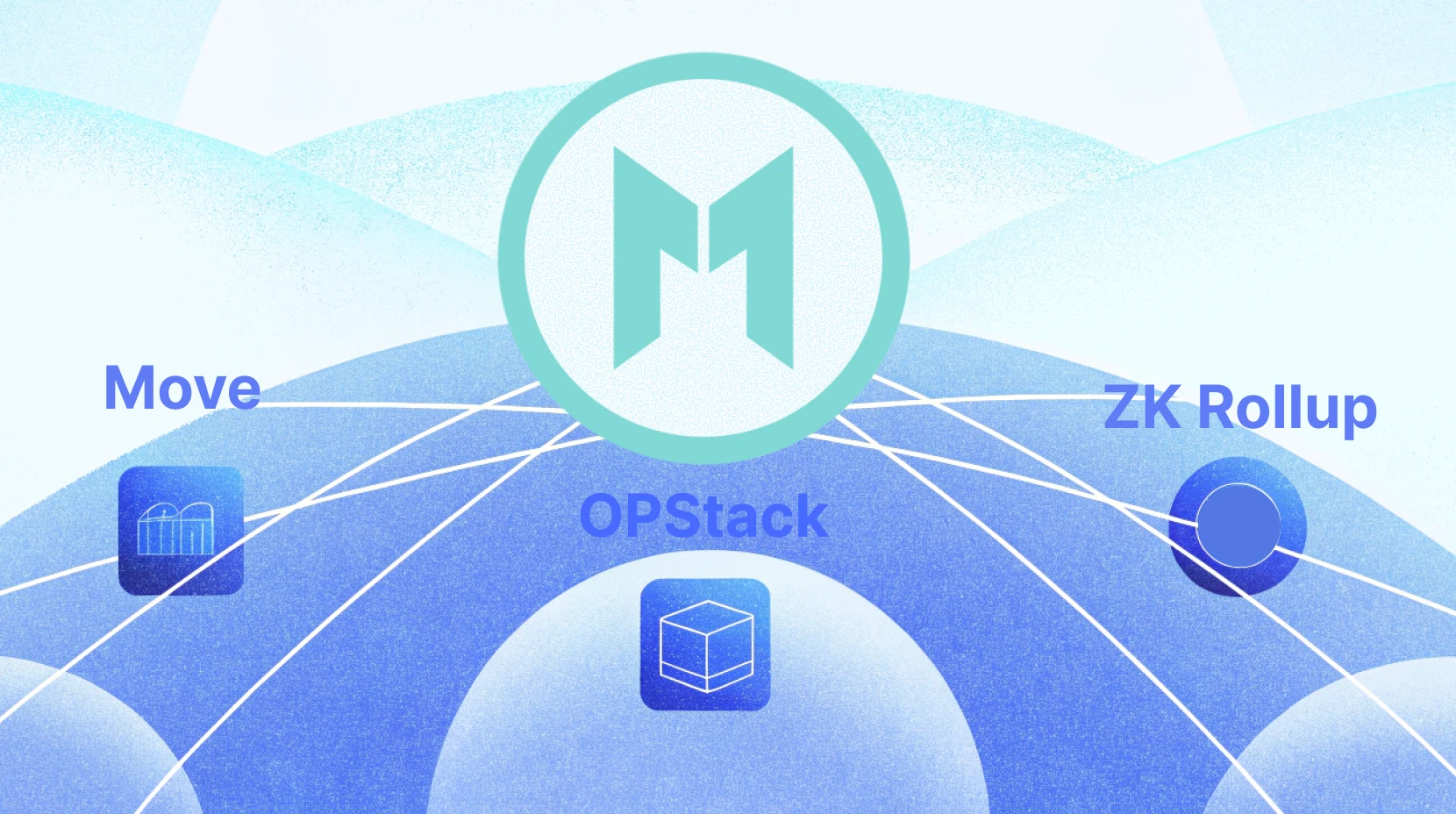
Mango Network Ecosystem Expansion: Architectural Complementarity and Technical Implementation
As the first public chain infrastructure that supports Multi-VM architecture, Mango Network breaks the liquidity fragmentation problem between different blockchain networks by integrating cutting-edge technologies such as Move, OPStack, and ZK Rollup.
2025-05-20 02:23:31
Intermediate
Deep Analysis of Miden: A High-Performance Zero-Knowledge Virtual Machine Architecture Based on STARK
In-depth analysis of polygon labs' miden virtual machine architecture: explore how it applies STARK zero-knowledge proof technology to deliver a high-performance, scalable, and privacy-centric ZK-Rollup solution, helping advance Web3 infrastructure to the next stage.
2025-05-16 01:07:18

Your Gateway to Crypto World, Subscribe to Gate for a New Perspective