As DeFi infrastructure evolves from single protocol models into aggregated trading gateways, tokenomics is also shifting from liquidity driven design to user behavior driven design. Trading frequency, route selection, and the movement of assets themselves are becoming the platform’s most important sources of value.
Against this backdrop, Genius aggregates trading capabilities and liquidity sources across multiple blockchain networks to offer a unified interface and execution logic; meanwhile, GENIUS structures its token design around the idea that trading itself is a form of contribution. From an industry positioning standpoint, it not only inherits the incentive framework of traditional DeFi, but also introduces more complex distribution and lockup mechanisms, creating a balance between user growth, behavior filtering, and long term value capture.
GENIUS Token Allocation Structure: The Seasonal Airdrop Mechanism
GENIUS uses a phased airdrop model for token distribution, with a total supply of 1 billion tokens. About 21% is allocated to user incentives and split across three stages, Season 1, Season 2, and Season 3, with each phase accounting for roughly 7%.
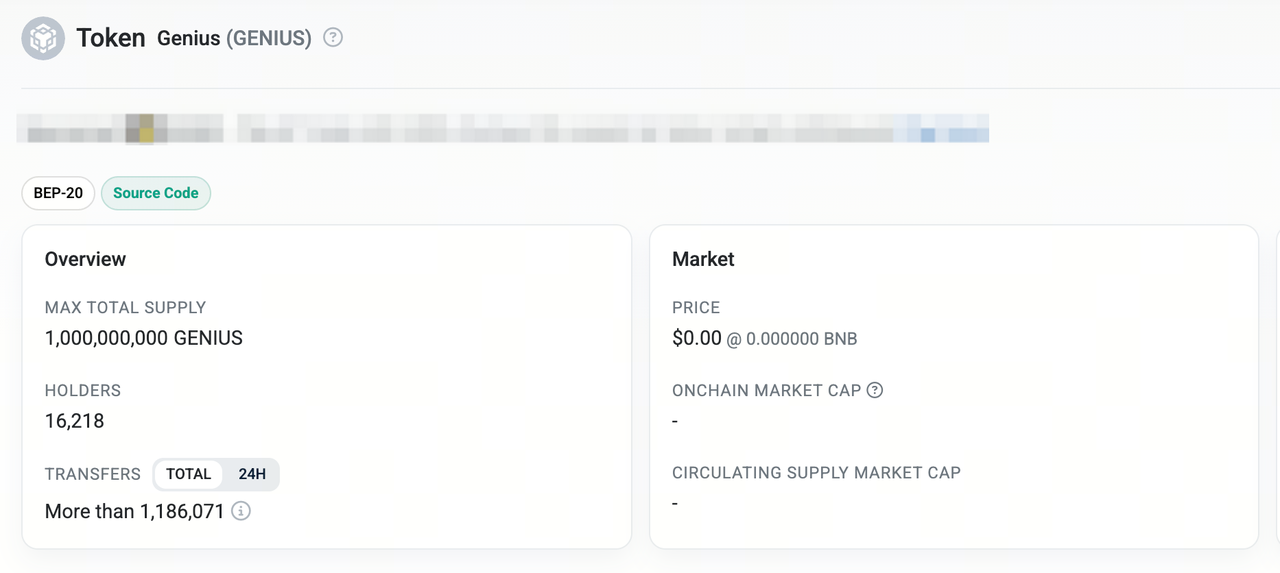
Meanwhile, tokens allocated to Genius’s development team, Shuttle Labs, and its investors are locked for at least one year.
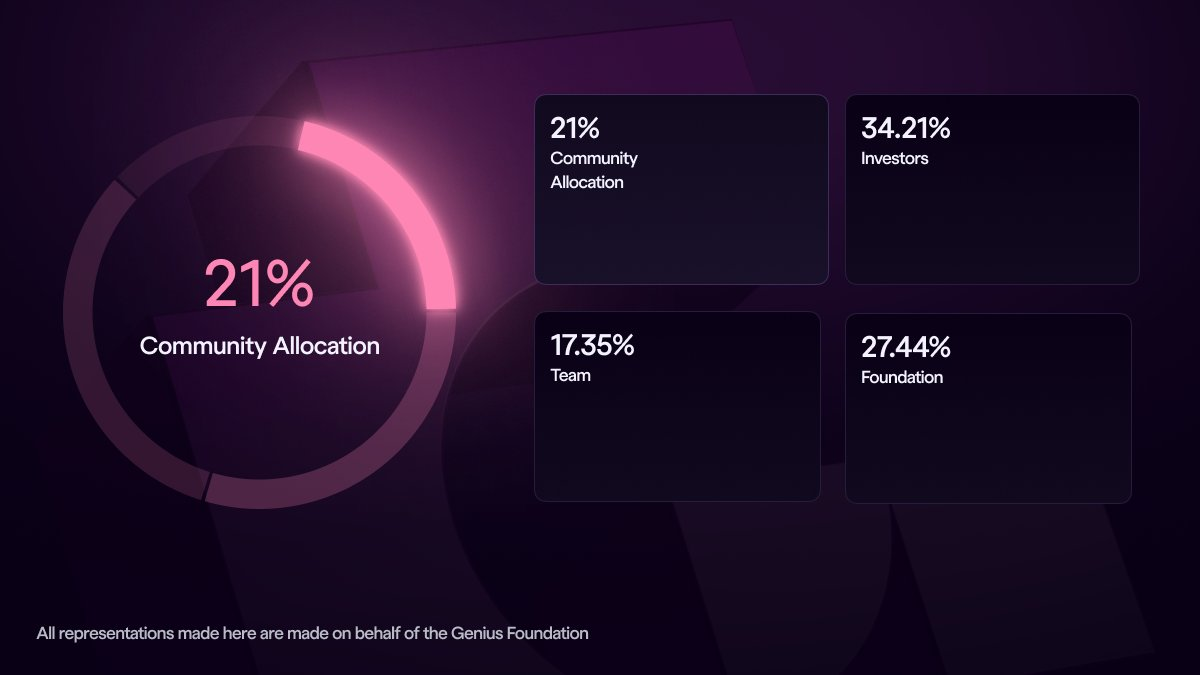
The core purpose of this phased design is to control the pace of token release so that user growth stays aligned with product development. Different stages may correspond to different product features or user behaviors, allowing incentives to be distributed with greater precision.
In Season 1, the total airdrop amounted to roughly 70 million tokens and mainly targeted early participants. In addition, Season 2 runs from April 10 to August 10. During this period, Genius Points are earned through daily competitions and distributed weekly, with priority given to real traders, suppression of non organic activity, and an emphasis on rewarding users who contribute meaningful trading volume to the platform.
GENIUS introduces a built in choice mechanism in its airdrop design, meaning users can choose between different claim methods at the time of the TGE, or token generation event.
The first option is immediate claiming. Users can withdraw their tokens within a certain time window after the TGE, but they must accept a relatively high burn cost. In practice, this gives users immediate liquidity, but reduces the total number of tokens they ultimately receive.
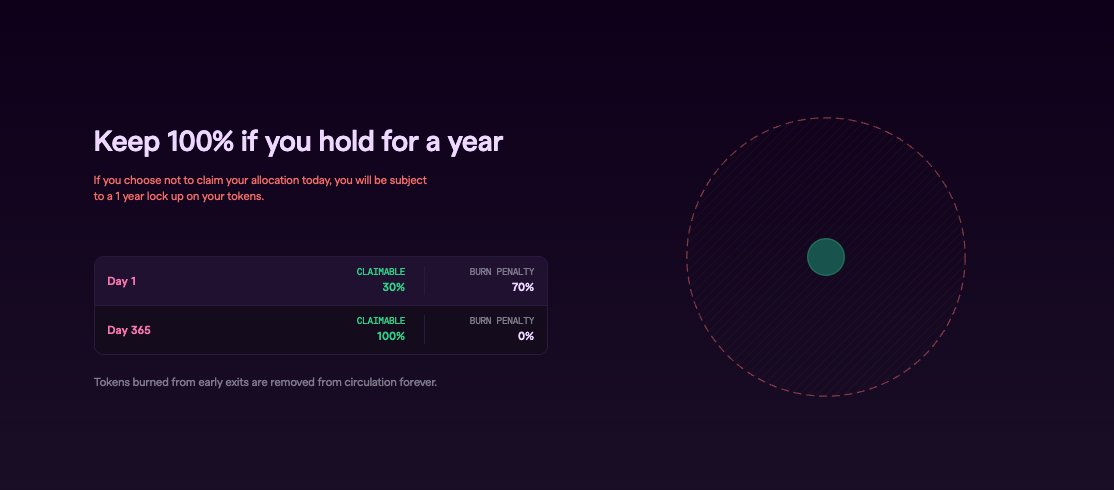
The second option is locked claiming. Users choose to lock their tokens for a set period before unlocking them later, and under this path, no burn penalty applies. This design encourages long term holding and delays tokens from entering the circulating market.
Mechanically, these two paths correspond to short term liquidity needs and long term participation in value.
The Incentive Game: How User Choices Affect Token Supply
The key to this airdrop design is the introduction of a game structure. When users choose to claim immediately, a large number of tokens are burned, reducing the amount of circulating supply in the market. When users choose to lock their tokens instead, supply is released later. Both behaviors affect how tokens are distributed across the market.
At its core, this is a self selection model, where users decide for themselves how to participate, while the system uses its rules to guide different types of users into different paths. Short term participants tend to prefer liquidity, while long term participants secure their full allocation through locking.
In this way, the protocol can regulate supply and screen users without relying on hard restrictions.
Trading Incentives: A Behavior Driven Growth Model
Beyond the airdrop, GENIUS still centers its incentive framework on trading behavior.
Actions taken within the trading terminal, such as asset swaps, route selection, or interaction frequency, are recorded and converted into the basis for rewards. This behavior equals contribution model allows the platform to reward real users, not just capital providers.
Compared with traditional liquidity mining, this approach places greater emphasis on actual product usage and therefore helps drive real activity on the trading terminal.
The Points System and Delayed Distribution Mechanism
In some phases, GENIUS uses a points system as an intermediate layer for token distribution. User behavior is first converted into points, which are then turned into token rewards based on the relevant rules.
The advantage of this design is flexibility. The platform can dynamically adjust the reward structure based on user behavior data, while also avoiding the selling pressure that can result from releasing tokens too early.
The points system also makes it possible to segment users more precisely, for example by distinguishing high frequency traders from regular users, which supports more differentiated incentives.
Value Capture: How the Trading Terminal Creates a Closed Loop
GENIUS primarily captures value through trading activity itself.
When users trade through the terminal, the system takes part in route selection and liquidity sourcing, and this process may generate fees or other forms of value flow. By linking that value to the token mechanism, the platform can create a transmission path from trading behavior to token demand.
Combined with lockups and burn mechanisms, the system can also regulate the supply side, keeping token circulation aligned, at least to some extent, with user behavior and forming a closed loop.
How It Differs from Traditional DeFi Incentive Models
Compared with traditional DeFi projects, the GENIUS token model has several notable features.
First, it expands the target of incentives from liquidity providers to trading users themselves, allowing more everyday users to participate. Second, its airdrop mechanism introduces choice and game dynamics rather than relying on a single distribution model. Finally, it uses lockups and burn mechanisms to adjust token supply dynamically.
These design choices make it better suited to trading gateway products rather than single protocol systems.
Conclusion
GENIUS combines trading incentives, phased airdrops, and supply adjustment mechanisms in its tokenomics model. Through the choice structure of immediate claiming versus locked release, it pushes users to weigh short term needs against long term participation.
This model is not only used for user growth, it also influences token circulation through burn and lockup mechanisms, creating a dynamic relationship between user behavior and token supply. In the context of a multi chain trading terminal, this design helps build a more stable incentive system and a clearer path for value transmission.
FAQs
Why is the GENIUS airdrop divided into multiple Seasons?
Phased airdrops help control the pace of token release and align incentives with different stages of product development.
This mechanism is designed to reduce short term selling pressure while also lowering circulating supply through user choice.
What is the purpose of locked claiming?
The lockup mechanism encourages long term participation and delays tokens from entering the market, which helps stabilize the supply structure.
How is GENIUS’s incentive mechanism different from traditional liquidity mining?
Traditional models mainly reward capital providers, while GENIUS places more emphasis on trading behavior itself.
What is the core advantage of this token model?
Its main strength lies in combining user behavior with supply adjustment, using incentives and game mechanics to create a more sustainable growth structure.