

Trade
Basic
Futures
Futures
Hundreds of contracts settled in USDT or BTC
TradFi
Gold
Trade global traditional assets with USDT in one place
Options
Hot
Trade European-style vanilla options
Unified Account
Maximize your capital efficiency
Demo Trading
Futures Kickoff
Get prepared for your futures trading
Futures Events
Participate in events to win generous rewards
Demo Trading
Use virtual funds to experience risk-free trading
Earn
Launch
CandyDrop
Collect candies to earn airdrops
Launchpool
Quick staking, earn potential new tokens
HODLer Airdrop
Hold GT and get massive airdrops for free
Launchpad
Be early to the next big token project
Alpha Points
Trade on-chain assets and enjoy airdrop rewards!
Futures Points
Earn futures points and claim airdrop rewards
Investment
Simple Earn
Earn interests with idle tokens
Auto-Invest
Auto-invest on a regular basis
Dual Investment
Buy low and sell high to take profits from price fluctuations
Soft Staking
Earn rewards with flexible staking
Crypto Loan
0 Fees
Pledge one crypto to borrow another
Lending Center
One-stop lending hub
VIP Wealth Hub
Customized wealth management empowers your assets growth
Private Wealth Management
Customized asset management to grow your digital assets
Quant Fund
Top asset management team helps you profit without hassle
Staking
Stake cryptos to earn in PoS products
Smart Leverage
New
No forced liquidation before maturity, worry-free leveraged gains
GUSD Minting
Use USDT/USDC to mint GUSD for treasury-level yields

More



The US-Iran conflict escalates! Asia-Pacific markets continue to decline, with Japanese and South Korean stocks once again becoming the "hardest hit" areas.
Cailian Press, March 4 (Editor: Bian Chun) On Wednesday, Asia-Pacific markets generally opened lower, continuing the decline triggered by the escalation of the Middle East conflict. Like the previous trading day, Japanese and South Korean stock markets once again became the “hardest hit” areas of selling.
The South Korean and Japanese stock markets continued their sharp decline from the previous day. South Korea’s KOSPI index opened down 3.4%, with the decline once widening to 6%. As of the report, it was down nearly 4%. The previous day, the KOSPI closed down 7.24%, the largest single-day drop since August 5, 2024, at 5,791.91 points.
The Bank of Korea said it will closely monitor excessive fluctuations in exchange rates and interest rates. Volatility in forex, interest rates, and stock markets may continue.
The Nikkei 225 index opened 1.4% lower, with the decline once expanding to nearly 3%. As of the report, it was down 2%. The previous day, the Nikkei 225 closed down 3.1% at 56,279.05 points.
Australia’s benchmark stock index, the S&P/ASX 200, opened down 1.81%, and as of the report, the decline had widened to over 1.5%. The previous day, affected by Middle East geopolitical tensions and hawkish comments from the Reserve Bank of Australia, the index closed down more than 1%.
Concerns over the ongoing escalation of the US-Iran conflict caused significant volatility in the US stock markets overnight. The S&P 500 index fell as much as 2.5 during trading, the Nasdaq dropped about 2.7%, and the Dow Jones Industrial Average plunged over 1,200 points at one point, a decline of about 2.6%.
At the close, the Dow fell 403.51 points, or 0.83%, to 48,501.27; the Nasdaq dropped 232.17 points, or 1.02%, to 22,516.69; the S&P 500 declined 64.99 points, or 0.94%, to 6,816.63.
In Asian markets on Wednesday, international oil prices continued their upward trend. As of the report, U.S. crude futures rose over 1%, Brent crude futures increased 0.6%, reaching $81.96 per barrel. The blockade of the Strait of Hormuz by Iran has driven oil prices higher.
According to Xinhua News Agency, citing Iran’s Fars News Agency on March 3, Iran’s Islamic Revolutionary Guard Corps Navy Deputy Commander Mohammad Akbari Zadeh stated that the Strait of Hormuz is now fully under Iranian naval control, with more than a dozen oil tankers hit by shells in the strait.
Akbari Zadeh said the Revolutionary Guard Navy has repeatedly warned that the Strait of Hormuz is in a state of war, and any ships could be hit by shells or drones. However, more than a dozen oil tankers ignored the warnings and were hit and burned. He emphasized that after Iran announced a ban on navigation through the Strait of Hormuz, oil tankers, merchant ships, and fishing boats could no longer pass through the strait.
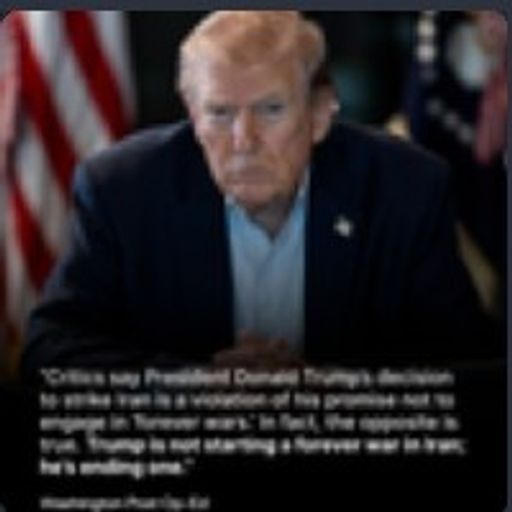
U.S. President Donald Trump posted on social media Tuesday that the U.S. would provide insurance for oil tankers passing through the Strait of Hormuz. If necessary, the U.S. Navy would begin escorting oil tankers through the strait as soon as possible. He stated, “In any case, the United States will ensure the free flow of energy to the world.”
Trump’s remarks somewhat restrained the rise in oil prices. After his statement, international oil prices retreated slightly from earlier in the day but still closed significantly higher.
On Tuesday, Brent crude futures rose $3.66, or 4.7%, to $81.40 per barrel, the highest settlement since January 2025. U.S. crude oil futures increased $3.33, or 4.7%, to $74.56 per barrel, the highest settlement since June.