

Trade
Basic
Futures
Futures
Hundreds of contracts settled in USDT or BTC
TradFi
Gold
Trade global traditional assets with USDT in one place
Options
Hot
Trade European-style vanilla options
Unified Account
Maximize your capital efficiency
Demo Trading
Futures Kickoff
Get prepared for your futures trading
Futures Events
Participate in events to win generous rewards
Demo Trading
Use virtual funds to experience risk-free trading
Earn
Launch
CandyDrop
Collect candies to earn airdrops
Launchpool
Quick staking, earn potential new tokens
HODLer Airdrop
Hold GT and get massive airdrops for free
Launchpad
Be early to the next big token project
Alpha Points
Trade on-chain assets and enjoy airdrop rewards!
Futures Points
Earn futures points and claim airdrop rewards
Investment
Simple Earn
Earn interests with idle tokens
Auto-Invest
Auto-invest on a regular basis
Dual Investment
Buy low and sell high to take profits from price fluctuations
Soft Staking
Earn rewards with flexible staking
Crypto Loan
0 Fees
Pledge one crypto to borrow another
Lending Center
One-stop lending hub
VIP Wealth Hub
Customized wealth management empowers your assets growth
Private Wealth Management
Customized asset management to grow your digital assets
Quant Fund
Top asset management team helps you profit without hassle
Staking
Stake cryptos to earn in PoS products
Smart Leverage
New
No forced liquidation before maturity, worry-free leveraged gains
GUSD Minting
Use USDT/USDC to mint GUSD for treasury-level yields

More




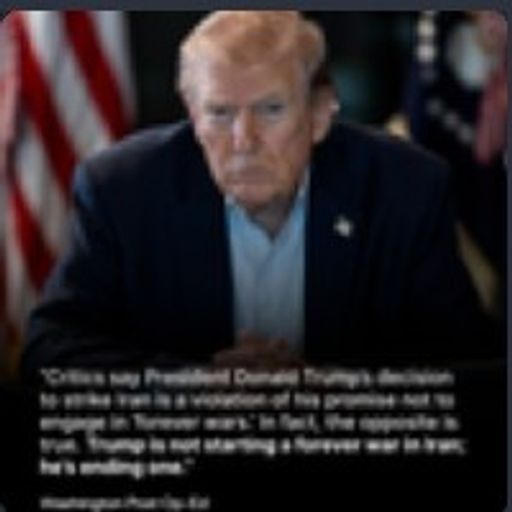
How will Iran's war flames scorch the Federal Reserve, and can they also heat up Bitcoin?
When Tehran’s night sky is torn apart by air defense fire and oil tankers in the Strait of Hormuz are engulfed in flames, the global financial markets also experienced a nerve-wracking “stress test” this past weekend. On February 28, the large-scale airstrikes launched by the U.S. and Israel against Iran not only claimed the life of Iran’s Supreme Leader Khamenei but also instantly ignited the already fragile global geopolitical tinder.
Six days into the conflict, the situation has not calmed but instead shows dangerous signs of becoming long-term and expanding. U.S. President Trump has explicitly stated that military operations “could last far beyond four to five weeks.” Behind this “new Middle East war,” a core issue concerning global investors’ wallets is surfacing: when the U.S. is once again mired in war, what will the Federal Reserve do? And can Bitcoin, dubbed “digital gold,” survive this chaos and be reborn from the ashes?
● As of March 3, the fighting has far exceeded the initial “limited strikes.” The Israeli military announced it has mobilized about 110,000 reservists and launched 2,500 munitions at Iranian targets. Iran has vowed to retaliate; its Islamic Revolutionary Guard Corps has used the “Khoramshahr-4” ballistic missile to strike Israeli targets on home soil and has announced the closure of the global energy choke point—the Strait of Hormuz—and warned it will target any ships attempting passage.
● The intensity of this conflict is spiraling out of control. The U.S. Central Command admitted that six U.S. soldiers have been killed, and three F-15E fighters were “mistakenly” shot down in Kuwait. More worryingly, the fire has spilled over into Lebanon, with Israel launching dual-front operations and conducting large-scale airstrikes against Hezbollah targets across Lebanon.
● In response to Israel’s fierce offensive, Lebanese Prime Minister has issued a rare order to “immediately ban” all Hezbollah military activities and demanded the group surrender its weapons. This highlights the helplessness and struggle of small nations caught in the power play of larger ones. The Trump administration’s goals are becoming clearer: not only to destroy Iran’s missile capabilities, navy, and nuclear facilities but also to cut off its support for regional proxy armed groups. This is a high-stakes gamble to reshape Middle Eastern geopolitics.
For Federal Reserve officials in Washington, the rising smoke in Middle Eastern deserts is turning into dark clouds over economic forecasts.
● Just days ago, Minneapolis Fed President Kashkari expressed “confidence” in the economic outlook, expecting inflation to decline and allowing the Fed to cut rates in 2026. However, with the outbreak of war, his tone has shifted 180 degrees.
● “We need to judge how long this shock will last and how big its impact will be. Will it resemble a prolonged conflict like Russia-Ukraine, or a short-term intense event like Hamas attacking Israel? Different paths will have different effects on monetary policy,” Kashkari admitted. War has pushed the outlook for monetary policy into “complete ambiguity.”
This is the dilemma the Fed faces—what Arthur Hayes calls the “war crossroads”:
● One side is the “stagflation” specter. War pushes up oil prices. Iran’s threat to close the Strait of Hormuz has caused European natural gas prices to surge over 50% intraday, and Brent crude futures briefly soared above $82 per barrel. Energy prices are the inflation engine; if oil remains high, the Fed’s efforts over the past two years to combat inflation could be undone. To curb inflation, the Fed needs to maintain high interest rates or even hike further.
● The other side is the “recession” risk. War undermines confidence. Historical data clearly shows that large-scale military conflicts severely damage business and consumer confidence, dragging down economic growth.
○ After 9/11 in 2001, the Fed quickly cut rates to stabilize markets;
○ During the Gulf War in 1990, the Fed also cut rates. To support the economy and provide cheap financing for the war effort, the Fed needed to lower rates and print money.
● Within this contest, disagreements have emerged inside the Fed. New York Fed President Williams, in a speech on March 3, insisted that if inflation slows as expected, further rate cuts are reasonable, and his speech even made no mention of the Iran war. This deliberate omission may reflect internal struggle.
● For investors, historical experience may be more instructive: as Hayes outlines, from George H. W. Bush to George W. Bush, Obama, and now Trump, when “American peace” requires huge costs, the Fed ultimately bows to the Treasury and Pentagon, financing wars with cheaper, abundant money.
When the war first erupted, Bitcoin’s performance resembled a high-risk asset rather than “digital gold.”
● In the initial hours of missile strikes, Bitcoin and Ethereum prices experienced a “free fall.” BTC plunged $2,500 in 45 minutes, breaking below $63,000, with over $200 million in long positions wiped out. The market’s first reaction was panic and liquidity seeking, and 24/7 crypto trading became the best outlet for fear.
● However, the story reversed afterward. By March 4, Bitcoin had quickly rebounded above $68,000, nearly recouping all losses since the outbreak. This “V-shaped” reversal is significant.
● On one hand, it indicates the market is beginning to reassess Bitcoin’s role amid extreme geopolitical conflict. VanEck CEO noted that during heightened financial uncertainty, when traditional markets are closed or liquidity dries up, cryptocurrencies are becoming important tools for cross-border capital transfer and safe-haven seeking. Some financial centers in the Middle East are also friendly toward digital assets, making them potential safe harbors for capital flows.
● On the other hand, Bitcoin’s movement remains closely tied to macro liquidity. If the Fed, as history suggests, is forced to loosen monetary policy due to war, the influx of dollars will push up all dollar-denominated assets, including Bitcoin. In short, war is a fiscal drain, and fiscal drain ultimately turns into a flood of money. Bitcoin’s capped supply (21 million coins) makes it an ideal hedge against this monetary over-issuance.
● Looking back at the Gulf War in 1990 and the Afghanistan War in 2001, the Fed began easing after conflicts erupted. The logic was to use low interest rates to offset recession risks from oil shocks and to provide a loose monetary environment for government war financing.
● Today’s situation is very similar. The Trump administration faces a prolonged attrition war with Iran and carries enormous national debt and domestic inflation pressures. As Hayes states, if the Fed refuses to provide cheaper funds for this “national rebuilding” (aimed at regime change in Iran), it would be seen as “unpatriotic.”
● Therefore, although short-term oil price increases may suppress rate cut expectations, in the longer term, the longer the war drags on, the larger the U.S. fiscal deficit becomes, and the more likely the Fed will be forced to print money.
● For Bitcoin, this means a potential huge catalyst. Although its performance this year has lagged behind gold’s 70% surge and has been questioned as “digital gold,” its high volatility makes it more resilient during liquidity floods. When the Fed’s printing presses run at full speed again, capital will likely flow into higher-beta assets like Bitcoin rather than into already high-priced gold.
The explosions over Tehran echo the brutal game of great powers and mark the starting point for global asset re-pricing.
In this unpredictable conflict, investors should watch two key indicators: first, whether oil tankers can pass safely through the Strait of Hormuz, which determines short-term inflation; second, whether Fed officials will “dovish” again due to the economic costs of war, which influences long-term liquidity.
For Bitcoin, every panic sell-off may be building momentum for future monetary easing narratives. When the “cost of American peace” finally translates into numbers on the Fed’s balance sheet, those digital coins dug out from the system may truly shine.