

Trade
Basic
Futures
Futures
Hundreds of contracts settled in USDT or BTC
TradFi
Gold
Trade global traditional assets with USDT in one place
Options
Hot
Trade European-style vanilla options
Unified Account
Maximize your capital efficiency
Demo Trading
Futures Kickoff
Get prepared for your futures trading
Futures Events
Participate in events to win generous rewards
Demo Trading
Use virtual funds to experience risk-free trading
Earn
Launch
CandyDrop
Collect candies to earn airdrops
Launchpool
Quick staking, earn potential new tokens
HODLer Airdrop
Hold GT and get massive airdrops for free
Launchpad
Be early to the next big token project
Alpha Points
Trade on-chain assets and enjoy airdrop rewards!
Futures Points
Earn futures points and claim airdrop rewards
Investment
Simple Earn
Earn interests with idle tokens
Auto-Invest
Auto-invest on a regular basis
Dual Investment
Buy low and sell high to take profits from price fluctuations
Soft Staking
Earn rewards with flexible staking
Crypto Loan
0 Fees
Pledge one crypto to borrow another
Lending Center
One-stop lending hub
VIP Wealth Hub
Customized wealth management empowers your assets growth
Private Wealth Management
Customized asset management to grow your digital assets
Quant Fund
Top asset management team helps you profit without hassle
Staking
Stake cryptos to earn in PoS products
Smart Leverage
New
No forced liquidation before maturity, worry-free leveraged gains
GUSD Minting
Use USDT/USDC to mint GUSD for treasury-level yields

More






Blacklisting Russian paramilitaries will not work on its own
The writer is a professor at Arizona State University and author of ‘Putin’s Sledgehammer’
Four years after Russia’s full-scale invasion of Ukraine, the US is still debating how to categorise the paramilitary networks that help finance and sustain Vladimir Putin’s war effort. The recently introduced Holding Accountable Russian Mercenaries Act (Harm) suggests that Congress is finally ready to move beyond a narrow focus on the Wagner Group and confront the broader ecosystem that replaced it. Lawmakers should act quickly, but they should also be clear-eyed about what a new designation can and cannot achieve.
The Kremlin’s model has evolved. Wagner’s successors, such as Africa Corps, now operate within structures linked to Russia’s defence ministry even as they maintain deniability. Across the Sahel, paramilitary protection for mining concessions continues to generate revenue streams that move through opaque trading routes and, according to investigators and industry analysts, refining hubs in the Gulf. In 2023, the US Treasury sanctioned a Dubai-based company for its alleged role in Wagner’s “gold selling scheme”. A separate follow-on US government advisory on the African gold trade explicitly noted Wagner’s role and potential downstream risks for refinement hubs in the United Arab Emirates and Switzerland. At sea, shadow-fleet tankers carrying sanctioned crude sit at the intersection of logistics firms and private security and intelligence networks.
Harm’s reporting requirements would compel US agencies to map command structures, funding chains and extractive ventures. Developing an intelligence picture of how these networks operate helps build the evidentiary scaffolding needed to pressure commercial intermediaries and strengthen accountability for abuses. Some form of designation is also overdue. Wagner itself already carries a US transnational organised crime label, yet many successor entities and affiliated paramilitary formations do not. Closing that gap and expanding US sanctions to include Africa Corps matters.
The Kremlin has reorganised its paramilitary apparatus under new names and the law must keep pace. Congress should also look beyond the most visible successors and examine affiliates such as Rusich or emerging spin-offs like Wagner Legion Istra, whose commanders have faced allegations of atrocities. But branding these networks with a foreign terrorist organisation (FTO) designation is not a silver bullet.
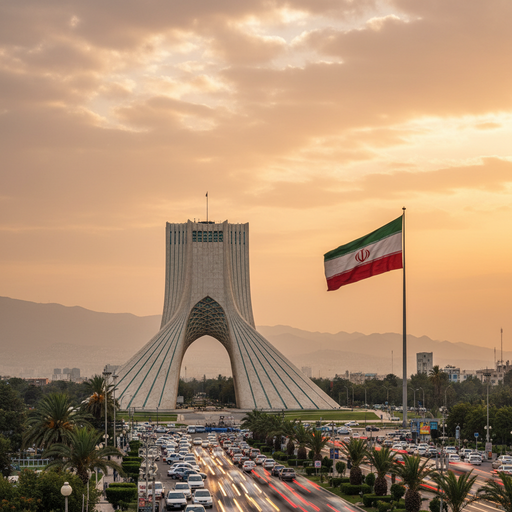
The US decision to designate Iran’s Islamic Revolutionary Guard Corps as an FTO in 2019 is a useful precedent. The move expanded criminal liability and signalled resolve, but its practical economic impact was uneven because the IRGC was already heavily sanctioned. Many companies had already withdrawn from Iranian markets, limiting the deterrent effect. The case shows that terrorism designations can sharpen legal exposure without changing the behaviour of a state security apparatus.
Russia’s paramilitary ecosystem presents a similar dilemma. Framing these networks primarily as a terrorism issue risks recasting a state-directed system as a non-state problem, despite investigators documenting chains of direction and co-ordination. US agencies already pursue sanctions evasion, hybrid operations and financial networks tied to these groups.
But real, practical leverage is likely to come from sustained pressure on intermediaries. By forcing agencies to map chains of command, funding flows and operational co-ordination, Congress is pushing to build the evidence needed to link alleged abuses on the ground to the structures that direct them. In conflicts where deniability has long shielded Moscow, exposing command relationships matters as much as any new designation. Secondary sanctions aimed at commodity traders, maritime insurers, air transport providers and logistics brokers could reinforce that effort by disrupting the financial arteries that keep these operations solvent.
In Europe, arson plots, infrastructure disruptions and suspected sabotage incidents have heightened fears that operatives tied to this broader ecosystem are testing western response thresholds. Attribution remains contested, but the overlap between commercial networks and deniable attacks is becoming harder to ignore.
Russia’s paramilitary model is a hydra-headed threat and FTO designation alone will not stop it. Laws must target the commercial enablers behind these networks and reinforce the case that these formations function as instruments of state power. The Kremlin has built a system that converts minerals, shipping routes and security contracts into geopolitical leverage. It will take sustained pressure on the financial and logistical architecture that sustains that system to weaken it.