

Trade
Basic
Futures
Futures
Hundreds of contracts settled in USDT or BTC
TradFi
Gold
Trade global traditional assets with USDT in one place
Options
Hot
Trade European-style vanilla options
Unified Account
Maximize your capital efficiency
Demo Trading
Futures Kickoff
Get prepared for your futures trading
Futures Events
Participate in events to win generous rewards
Demo Trading
Use virtual funds to experience risk-free trading
Earn
Launch
CandyDrop
Collect candies to earn airdrops
Launchpool
Quick staking, earn potential new tokens
HODLer Airdrop
Hold GT and get massive airdrops for free
Launchpad
Be early to the next big token project
Alpha Points
Trade on-chain assets and enjoy airdrop rewards!
Futures Points
Earn futures points and claim airdrop rewards
Investment
Simple Earn
Earn interests with idle tokens
Auto-Invest
Auto-invest on a regular basis
Dual Investment
Buy low and sell high to take profits from price fluctuations
Soft Staking
Earn rewards with flexible staking
Crypto Loan
0 Fees
Pledge one crypto to borrow another
Lending Center
One-stop lending hub
VIP Wealth Hub
Customized wealth management empowers your assets growth
Private Wealth Management
Customized asset management to grow your digital assets
Quant Fund
Top asset management team helps you profit without hassle
Staking
Stake cryptos to earn in PoS products
Smart Leverage
New
No forced liquidation before maturity, worry-free leveraged gains
GUSD Minting
Use USDT/USDC to mint GUSD for treasury-level yields

More



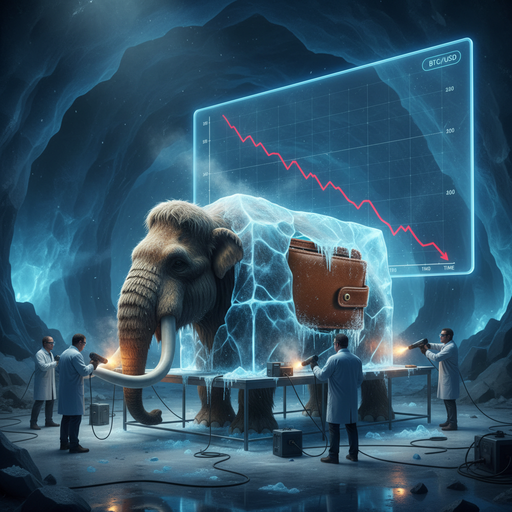



Why the Treasury General Account (TGA) Is the Real Driver Behind Crypto and Stock Market Crashes
Bitcoin has plummeted 46% from its all-time high. The Magnificent 7 tech stocks—Apple, Microsoft, Nvidia, Amazon, Meta, Alphabet, and Tesla—are down 12-15% year-to-date. Investors are pointing to quantum computing fears, aggressive Federal Reserve policy, or renewed regulatory crackdowns. But they’re all missing the actual culprit: the TGA.
The Treasury General Account—the US government’s primary cash reserve account—is accumulating massive amounts of liquidity that would otherwise be circulating through financial markets. As the TGA balance swells, money drains from the broader economy. Less capital in circulation means lower asset prices across risk-on categories like cryptocurrency and growth stocks. This isn’t speculation or technical analysis—it’s straightforward liquidity mechanics.
Understanding the TGA: The Hidden Hand on Market Liquidity
The US Treasury maintains a checking account with the Federal Reserve. That account is the Treasury General Account, commonly referred to as the TGA. Think of it as the government’s main cash reservoir.
Current TGA Status (February 2026):
Here’s the critical part: when the government deposits money into the TGA, that cash is removed from the banking system and the broader economy. It’s not circulating, not being lent out, and not available for investment.
Where This $147 Billion Came From:
How TGA Accumulation Affects Market Liquidity
The relationship between TGA balances and market performance follows a straightforward pattern:
When the TGA grows (money leaving the economy):
When the TGA shrinks (money returning to the economy):
This isn’t coincidental correlation—it’s causal. The TGA is literally a valve controlling how much money flows in and out of the markets.
The Data Tell the Story: TGA vs. Market Performance
Current Bitcoin Performance:
The timing is unmistakable. As the TGA surged from $775B to $922B in recent weeks, Bitcoin dropped nearly 50%, and tech stocks fell 12-15%.
Historical Precedent (2021):
Why This Happens: The Tax Cycle Explained
The accumulation of funds in the TGA isn’t random. It follows the government’s fiscal calendar:
January-April (The Drainage Phase):
May-December (The Recovery Phase):
We are currently in the drainage phase. That’s why the TGA is at $922 billion and climbing toward its projected peak.
The Turning Point: What Treasury Projections Tell Us
The TGA won’t rise indefinitely. Historical data shows clear peaks and troughs:
Historical TGA Context:
Projected TGA Peak: ~$1.025 trillion (late April 2026)
At this peak, the tax collection phase reaches its maximum. Then, the seasonal reversal begins. Refunds start flowing, government spending accelerates, and the TGA begins its descent.
The Catalyst for Recovery: Tax Refunds and the Refund Season Bounce
Around March-April, the government distributes approximately $150 billion in tax refunds to individual filers. This is the single largest liquidity injection of the year.
What Happens During Refund Season:
This pattern repeats annually with remarkable consistency:
Why Smart Money Follows the TGA, Not the Headline
Financial markets obsess over Fed interest rates, inflation data, and geopolitical headlines. But sophisticated investors track the TGA because it directly impacts available capital.
2026 Market Movement Explained by TGA Mechanics:
The narrative explanations—“quantum computing will break cryptography,” “the Fed is tightening,” “regulations are cracking down”—are all technically true but miss the primary driver. They’re noise. The TGA is the signal.
The Investment Framework: What to Watch and When
Near-Term (March 2026):
Medium-Term (Late April-May 2026):
Long-Term (June-December 2026):
Smart Money Strategy:
The Bottom Line: Liquidity, Not Fear
The current market decline isn’t driven by quantum computing concerns or excessive Fed hawkishness. It’s a direct result of the US government accumulating roughly $150 billion in its Treasury General Account, removing that capital from economic circulation.
This process will continue through late April 2026, when the TGA is projected to peak near $1.025 trillion. Following that peak, tax refund season will reverse the flow, injecting $150+ billion back into the economy by May 2026.
Markets will follow this liquidity cycle, as they always do. The TGA is currently draining the system. By late spring, it will begin refilling it. Until then, constrained liquidity will keep pressure on risk assets. After that, the cycle reverses.
This isn’t panic-worthy. It’s seasonal. And it’s predictable—if you’re watching the TGA instead of the headlines.