

Trade
Basic
Futures
Futures
Hundreds of contracts settled in USDT or BTC
TradFi
Gold
Trade global traditional assets with USDT in one place
Options
Hot
Trade European-style vanilla options
Unified Account
Maximize your capital efficiency
Demo Trading
Futures Kickoff
Get prepared for your futures trading
Futures Events
Participate in events to win generous rewards
Demo Trading
Use virtual funds to experience risk-free trading
Earn
Launch
CandyDrop
Collect candies to earn airdrops
Launchpool
Quick staking, earn potential new tokens
HODLer Airdrop
Hold GT and get massive airdrops for free
Launchpad
Be early to the next big token project
Alpha Points
Trade on-chain assets and enjoy airdrop rewards!
Futures Points
Earn futures points and claim airdrop rewards
Investment
Simple Earn
Earn interests with idle tokens
Auto-Invest
Auto-invest on a regular basis
Dual Investment
Buy low and sell high to take profits from price fluctuations
Soft Staking
Earn rewards with flexible staking
Crypto Loan
0 Fees
Pledge one crypto to borrow another
Lending Center
One-stop lending hub
VIP Wealth Hub
Customized wealth management empowers your assets growth
Private Wealth Management
Customized asset management to grow your digital assets
Quant Fund
Top asset management team helps you profit without hassle
Staking
Stake cryptos to earn in PoS products
Smart Leverage
New
No forced liquidation before maturity, worry-free leveraged gains
GUSD Minting
Use USDT/USDC to mint GUSD for treasury-level yields

More


Trending Topics
View More75.77K Popularity
4.32K Popularity
1.62K Popularity
1.96K Popularity
6.02K Popularity



Pin
Gate Square | 2/5 Today's Hot Topic: #BuyTheDipOrWaitNow?
🎁 [Community Perk] Post with the topic or #BTC, 10 lucky users * $100 position Voucher.
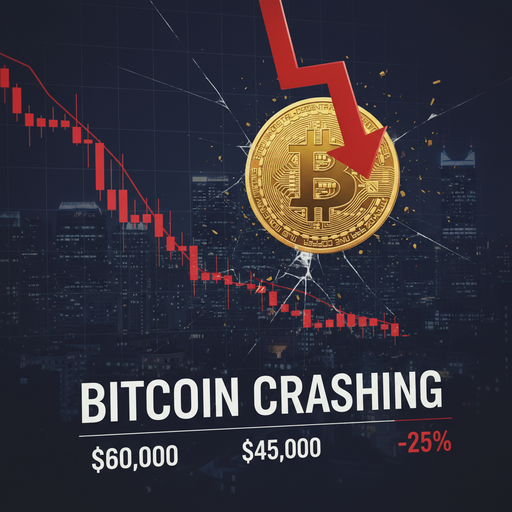
Market volatility continues as BTC breaks below the $74,000 key support level, with altcoins pulling back in sync. Are you buying the dip in batches or waiting for a better entry point?
💬 Today’s Discussion:
1️⃣ Bottom Signals: Where do you see BTC’s bottom — $70,000 or lower?
2️⃣ Market Drivers: Which recent macroeconomic news or rumors are influencing the market?
3️⃣ Dark Horses: Are there any resilient or outperforming tokens worth watching?
ShTap to Trade in Gate Square, Win up to 50 GT & Merch!
Click the trading widget in Gate Square content, complete a transaction, and take home 50 GT, Position Experience Vouchers, or exclusive Spring Festival merchandise.
Click the registration link to join
https://www.gate.com/questionnaire/7401
Enter Gate Square daily and click any trading pair or trading card within the content to complete a transaction. The top 10 users by trading volume will win GT, Gate merchandise boxes, position experience vouchers, and more.
The top prize: 50 GT.
 using Chinese services on 45-day cycles.
Most hackers move larger amounts ($1-10M). Private key compromises caused 88% of Q1 losses. North Korean operatives infiltrate companies as IT contractors, gaining insider access for both immediate theft and long-term intelligence gathering.
Trust Wallet & Cetus
Trust Wallet's December browser extension hack affected $7M in user funds, which the company fully reimbursed. Version 2.68 users needed immediate updates.
Cetus Protocol lost $220-223M in May through an integer overflow vulnerability. Attackers used flash loans to manipulate liquidity calculations, creating fake tokens that appeared massively over-collateralized. They drained 46 pools in 15 minutes before Sui validators froze $162M.
Balancer V2
November's Balancer V2 exploit drained $128M across multiple chains. Two flaws enabled the attack: weak access controls let attackers spoof transactions, while a rounding bug created precision errors. Hackers chained 65 micro-swaps, compounding errors to manipulate prices by 10%.
Ethereum lost $99M alone, with Arbitrum, Base, Polygon, Optimism, and Berachain also hit. Over 20 Balancer forks inherited the bug.
Social engineering on the rise
North Korean tactics evolved beyond simple phishing. Attackers now impersonate executives and investors, plant fake IT workers inside crypto firms, and hijack verified accounts.
AI tools accelerate these campaigns by scanning code repositories for vulnerabilities and replicating exploits across chains within hours. Fake Coinbase support operations alone stole over $100M. Infrastructure exploits averaged $30M each.
October Crash, Part 1
October 10 marked crypto's largest liquidation event: $19.3B vanished in 14 hours, with $3.21B gone in the first 60 seconds. 1.6M traders were liquidated. Two simultaneous shocks hit (Trump's 100% China tariff announcement and MSCI's consultation on excluding digital asset treasuries), giving markets no time to process.
Order book depth collapsed 85%, with BTC spreads exploding from 0.02 to 26.43 basis points (1,321x increase).
October Crash, Part 2
The crisis centered on Binance, where USDe collateral liquidity evaporated. While other exchanges traded normally, Binance prices crashed, triggering market-wide liquidations. Oracle manipulation turned a $60M sell-off into a $9.6B cascade.
Recursive USDe leverage allowed 10x stacked positions on manipulatable prices. The deleveraging wiped $65B in open interest. Binance's API and UI failures prevented traders from adding collateral or buying dips.
Market Failures & Notable Mentions
Binance's stablecoin issues looked widespread but were platform-specific. The exchange compensated users $283M while competitors operated normally.
Other major 2025 breaches included Phemex ($73M), UPCX ($70M), and Bitget ($100M). Bitget's incident involved traders gaming a faulty automated trading bot.
Lessons Learned
Smart contract audits improved, but attackers adapted. Bybit fell to supply chain compromise, not code flaws. The October crash exposed exchange infrastructure gaps. Both Cetus and Balancer had passed multiple audits yet were still exploited.
Effective security requires real-time transaction monitoring, supply chain validation, assuming any insider could be compromised, and resilient market infrastructure that withstands stress, not just choosing one defensive layer.