As the blockchain industry develops, market attention is gradually shifting from purely on-chain assets toward the digitization of real world assets, RWA. Traditional financial assets, such as bonds, funds, bills, and real estate income rights, are being mapped on-chain and are becoming an important driver of the next stage of crypto finance growth. The core value of RWA lies in its ability to give traditional assets greater liquidity, lower settlement costs, and broader global accessibility, which is why it has drawn significant attention from institutional investors and blockchain protocols.
However, traditional public blockchains still show clear limitations when handling RWA scenarios, including limited transaction performance, insufficient compliance support, and a lack of financial modules adapted to institutional needs. Against this backdrop, high performance Layer1 networks such as Pharos (PROS), which focus on RWA and institutional finance requirements, are becoming an important infrastructure direction for the market.
What Is Pharos (PROS)?
As a high performance Layer1 blockchain network built for RWA and institutional grade financial applications, Pharos’ core goal is to provide underlying infrastructure support for on-chain real finance, or RealFi. The network focuses on bringing real assets on-chain, supporting cross chain asset flows, and enabling the deployment of financial grade applications, so that real world assets can be issued, transferred, and settled more efficiently on-chain.

Compared with traditional public blockchains, Pharos places greater emphasis on performance and compliance capabilities in financial scenarios. It not only pursues high throughput and low latency, but also seeks to meet institutional requirements for asset security, regulatory compatibility, and business scalability through modular design.
As of April 2026, Pharos Network had raised a total of $52 million, including a $44 million Series A round and an $8 million seed round. Participating investors include a subsidiary of Sumitomo Corporation, crypto native institution SNZ Holding, Chainlink, Flow Traders, Lightspeed Faction, Hack VC, and others.
What Are the Key Features of Pharos’ Technical Architecture?
Pharos’ underlying architecture is optimized around financial application scenarios, with a focus on improving network performance and supporting the circulation needs of complex assets. One of its core technologies is a parallel execution mechanism, which improves overall throughput by allowing multiple transactions to be processed at the same time. This design is especially important for RWA scenarios, because the on-chain circulation of real financial assets often requires higher frequency and lower latency processing capabilities.
At the same time, Pharos adopts a modular architecture design, separating execution, consensus, and application functions into different layers so developers can deploy application modules suited to financial business needs with greater flexibility. This modular approach improves network scalability and leaves room for more compliance and financial tools to be introduced in the future. For infrastructure that needs to support institutional grade asset circulation, this technical architecture offers strong long term adaptability.
How Does Pharos Support Bringing RWA Assets on-chain?
Bringing RWA assets on-chain requires more than basic transaction functions. It also requires support for complex needs such as asset issuance, compliance verification, and liquidity management. One of Pharos’ design priorities is to provide underlying support for these requirements. Through its high performance execution environment, Pharos can provide more efficient issuance and settlement capabilities for real assets such as bonds, bills, and funds, thereby lowering the technical barriers for traditional financial assets to move on-chain.
In addition, Pharos also emphasizes a compliance friendly network design. Real financial assets are usually subject to regulatory requirements, so on-chain infrastructure must support identity verification, permission control, and audit capabilities. Pharos aims to provide institutions and asset issuers with an on-chain environment that better matches real world needs through scalable financial modules. This capability, oriented toward compliance and institutional applications, is an important feature that distinguishes it from traditional Layer1 networks.
What Is the Role of the PROS Token?
PROS is the core utility token of the Pharos network and plays an important role in the operation of the entire ecosystem. First, PROS can be used to pay on-chain transaction fees, which is a basic function for maintaining network operations and resource allocation.
Beyond that, PROS can also be used for network governance and ecosystem incentives. Holders can participate in protocol governance decisions, including parameter adjustments and the direction of ecosystem development. At the same time, PROS may also be used to incentivize developers, validator nodes, and liquidity participants, helping drive ecosystem expansion. As more RWA and financial applications are deployed on the Pharos network, PROS will become an important carrier connecting network value with ecosystem growth.
What Are the Main Directions of Pharos’ Ecosystem Development?
Pharos’ ecosystem development mainly revolves around RWA, stablecoins, payment networks, and on-chain financial protocols. RWA protocols are its most central ecosystem direction. In the future, bonds, income certificates, and other real assets may all be mapped and circulated on-chain through Pharos. Through these applications, Pharos can create on-chain liquidity for real assets and expand the scale of the on-chain financial market.
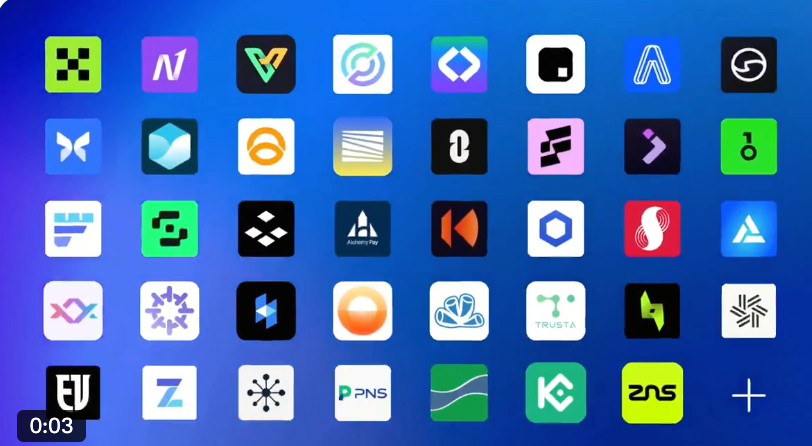
Stablecoins and payment networks are also important development directions. Its high performance and low latency network architecture gives it the potential to support payment scenarios, and payment scenarios are an important gateway for RWA liquidity. In addition, as cross chain interoperability improves, Pharos may have the opportunity to connect with the broader DeFi ecosystem and form a complete financial network covering asset issuance, trading, and settlement.
What Are the Limitations and Risks of Pharos?
Although Pharos has a clear position in RWA infrastructure and high performance financial Layer1 development, it remains an early stage project and still faces certain uncertainties.
First, ecosystem implementation risk is one of its main challenges. The development of the RWA sector depends not only on underlying technology, but also on the participation of asset issuers, institutional capital, and financial protocols. If ecosystem partnerships progress slowly, Pharos’ technical advantages may be difficult to translate quickly into actual network value.
Second, market competition should not be overlooked. Several projects are already active in the RWA infrastructure sector, including platforms focused on asset issuance and public blockchain networks that emphasize compliant finance. In addition, RWA businesses naturally involve regulatory and compliance risks, and policy changes in different regions may affect the speed of asset onboarding and the level of institutional participation.
Pharos vs Plume: Comparing the Differences Between RWA Public Blockchains
Pharos and Plume both focus on infrastructure for bringing RWA, real world assets, on-chain, but their development directions are clearly different.
| Comparison Dimension |
Pharos (PROS) |
Plume |
| Project Positioning |
High performance Layer1 infrastructure for RWA and institutional finance |
Ecosystem network for RWA asset issuance and circulation |
| Core Advantages |
Parallel execution architecture, modular design, high throughput performance |
RWA asset issuance support and strong ecosystem collaboration capability |
| Ecosystem Focus |
Financial infrastructure, payments, on-chain clearing |
Asset issuance, protocol integration, liquidity access |
| Target Users |
Institutional capital, financial protocols, RWA infrastructure developers |
Asset issuers, DeFi protocols, end users |
In simple terms, Pharos focuses on building a high performance financial infrastructure base, while Plume pays more attention to connectivity and circulation at the RWA asset ecosystem layer. The two approach the RWA sector from different directions, underlying performance and ecosystem collaboration, and together help advance the development of the RWA market.
Conclusion
Pharos (PROS) is a high performance Layer1 network focused on RWA and institutional grade financial scenarios. Its core goal is to provide scalable, compliance friendly, and efficient infrastructure support for bringing real financial assets on-chain. Through its parallel execution architecture, modular design, and underlying capabilities optimized for financial business, Pharos is attempting to build the next generation blockchain network for RealFi.
As the RWA market continues to expand, on-chain finance is placing increasingly high demands on underlying infrastructure. The emergence of Pharos reflects the trend of public blockchain infrastructure evolving toward more finance specific design. If it can continue attracting real assets and financial applications in the future, Pharos has the potential to become one of the important underlying networks in the RWA sector.
FAQs
How Is Pharos Different from a Regular Layer1?
Unlike a regular Layer1, Pharos is more focused on the needs of financial scenarios. It is especially optimized for RWA asset issuance, institutional capital flows, and compliance support, making it more suitable as the underlying network for bringing real financial assets on-chain.
What Is the PROS Token Used For?
PROS is mainly used to pay network fees, participate in governance, and support ecosystem incentives. It is an important utility token that supports the operation and ecosystem expansion of the Pharos network.
What Is Pharos’ Core Development Direction?
Pharos focuses on RWA, stablecoins, payment networks, and on-chain financial protocols, with the goal of building a complete on-chain real finance infrastructure ecosystem.







