For users of the Telegram Mini App, TON Wallet, or EVM-based apps, the core value of TAC is its ability to abstract away cross-chain complexity, allowing users to seamlessly invoke Solidity contracts within the TON ecosystem.
This process typically involves six components: TON Adapter, cross-chain messaging, the Sequencer network, TAC EVM Layer, Solidity contract execution, and user interaction pathways.
TAC's Overall Operating Mechanism
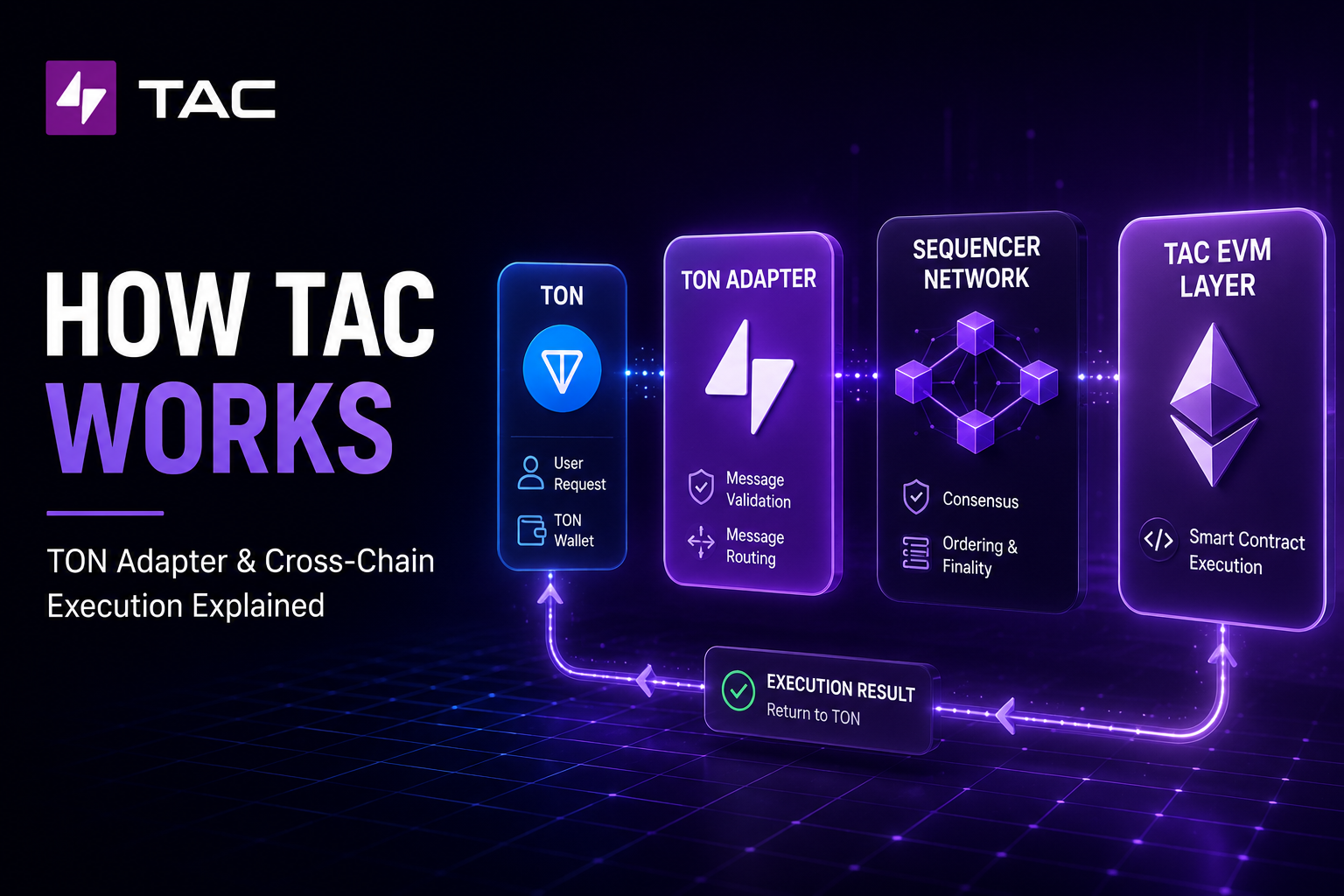
TAC operates as a cross-chain execution framework connecting TON users to EVM contracts, with the primary goal of enabling Telegram’s frontend to call Solidity applications on the TAC EVM Layer. According to TAC’s official documentation, it functions as an EVM Layer 1 optimized for Telegram, bridging Ethereum dApps and Telegram users through a dedicated TON cross-chain layer.
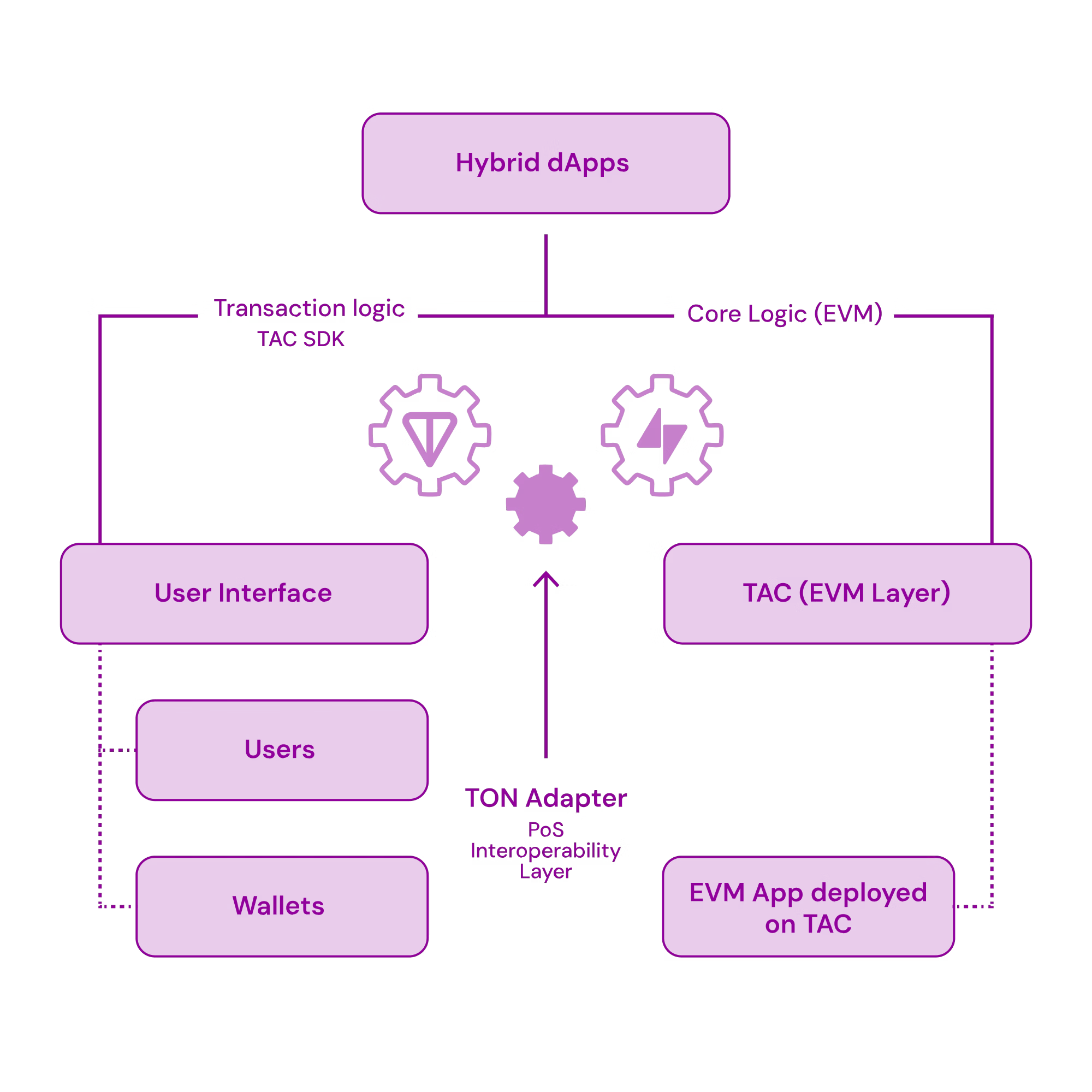
From an architectural perspective, users do not directly switch to the EVM network; instead, they initiate actions within the Telegram Mini App or TON Wallet. The process begins when users submit trade, swap, lending, or other app requests. The Hybrid dApp leverages the TAC SDK to convert these requests into cross-chain messages. The TON Adapter then receives and verifies the messages, with the Sequencer network handling sorting and consensus. Ultimately, the TAC EVM Layer executes the relevant Solidity contract and returns the results to the TON interface.
This separation of user experience from contract execution is crucial. Users remain within the TON or Telegram interface, while developers can build applications using familiar EVM tools. For the broader ecosystem, this reduces user migration friction and lowers the technical barriers for EVM projects entering the Telegram environment.
The Role of TON Adapter in the System
TON Adapter is the key cross-chain messaging component in TAC, responsible for transmitting, verifying, and coordinating application-level messages between TON and the TAC EVM Layer. Unlike traditional cross-chain bridges focused solely on asset transfer, TON Adapter serves as a messaging system for application interaction and EVM contract invocation.
In practice, users initiate requests within TON Wallet or Telegram apps. TON Adapter receives these messages from the TON side and routes them to the distributed Sequencer network. The system validates each message based on content, signature, and status, then directs valid messages to the TAC EVM Layer. The results of EVM contract execution are returned to the user interface.
Structurally, TON Adapter sits between TON and TAC EVM, acting as the critical intermediary for cross-chain execution. This design means developers do not need to create complex cross-chain communication logic for every application, but can rely on a unified component for message transmission, validation, and execution coordination.
How Cross-Chain Messages Are Verified and Executed
Cross-chain messaging is fundamental to TAC’s Hybrid dApp architecture, transforming user actions on TON into instructions that the TAC EVM Layer can process and execute. TAC documentation notes that this messaging system enables secure communication between TON users and EVM Smart Contracts through message creation, validation, and execution.
The process unfolds as follows: users submit actions on the frontend, such as calling DeFi Futures or performing app tasks. The Hybrid dApp generates a message containing user intent, target contract, and execution parameters. TON Adapter and the Sequencer network then verify the source, format, and conditions of the message. Validated messages are sent to the TAC EVM Layer, triggering the corresponding Solidity contract.
| Process Step |
User Action |
System Action |
Outcome |
| Initiate Request |
Operate in TON Wallet or Telegram app |
Generate cross-chain message |
User intent recorded |
| Message Reception |
Await app processing |
TON Adapter receives message |
Request enters cross-chain layer |
| Verification and Sorting |
No manual intervention required |
Sequencer verifies and sorts |
Message ready for execution |
| Contract Execution |
View results |
TAC EVM executes Solidity contract |
App status updated |
| Result Return |
Confirm results on frontend |
System syncs execution outcome |
User completes interaction |
This table illustrates that TAC’s cross-chain process is not simply about asset movement—it establishes a comprehensive workflow centered on user intent, message validation, and contract execution. The value lies in packaging complex cross-chain operations into familiar application interactions for users.
How the Sequencer Network Achieves Consensus
The Sequencer network serves as TAC’s verification and sorting layer for cross-chain execution, processing messages from TON Adapter and ensuring they are delivered to the TAC EVM Layer in the correct order. Essentially, the Sequencer network coordinates cross-chain message consensus.
Operationally, TON Adapter receives user requests and passes them to the Sequencer network. The Sequencer validates, sorts, and bundles messages. Through its consensus protocol, the network confirms message validity and forwards them to the TAC EVM Layer. EVM contracts are then executed in the established order, preventing conflicts or duplicate executions.
TAC’s official architecture documentation describes TON Adapter as a cross-chain message routing system powered by a distributed Sequencer network, facilitating secure communication between TON and EVM. TAC EVM Layer is built on Cosmos SDK and Tendermint consensus, with DPoS providing economic security.
This mechanism is vital, as cross-chain execution requires not only message transmission, but also strict consistency in order, status, and execution conditions. The Sequencer network is the linchpin for reliable cross-chain application performance.
How EVM Contracts Operate in TAC
EVM contracts run on TAC by deploying Solidity contracts to the TAC EVM Layer and triggering their execution through cross-chain messages. TAC EVM Layer manages application logic and state, enabling existing EVM dApps to be invoked within the Telegram environment.
Developers can deploy unmodified Solidity contracts using familiar tools like Hardhat, Remix, and MetaMask. First, contracts are deployed to TAC EVM Layer. Users then submit actions via Telegram Mini App or TON Wallet. TON Adapter routes these requests to the EVM layer. The appropriate contract executes, and state changes are reflected back in the application interface.
Official documentation confirms that TAC EVM Layer is a Cosmos SDK-based blockchain capable of running unmodified Solidity contracts, achieving approximately 2-second finality via DPoS. EVM Layer handles all application logic and state, while TON Adapter manages cross-chain communication.
This design lowers the entry barrier for Ethereum developers joining the TON ecosystem. There’s no need to rewrite contract logic or fully adapt to TON’s native development environment.
How Users Complete Cross-Chain Interactions
TAC users typically do not need to understand cross-chain bridges, Gas conversion, or EVM network switching. Their experience centers on using Telegram Mini App or TON Wallet, with TAC managing cross-chain messaging and EVM execution transparently.
The workflow is as follows: users open a Hybrid dApp in Telegram and select features like Swap, Lending, or Staking. They confirm actions with a signature via TON Wallet. TAC SDK, TON Adapter, and the Sequencer network coordinate message validation and execution routing. TAC EVM Layer executes the contract, and results are returned to the Telegram interface.
TAC’s official blog highlights that users can access EVM DeFi protocols directly through Telegram, without downloading new wallets, configuring networks, or mastering technical details. This approach brings EVM apps into the native Telegram experience, making cross-chain execution as intuitive as standard app operations.
Summary
TAC’s workflow revolves around user requests, TON Adapter, the Sequencer network, and TAC EVM Layer. Users initiate actions in Telegram or TON, the system creates and validates cross-chain messages, the Sequencer network handles sorting and consensus, and EVM contracts execute and return results.
Overall, TON Adapter is the core of cross-chain communication, Sequencer network ensures validation and sorting, and TAC EVM Layer executes Solidity contracts. This process empowers TON users to interact with EVM applications without dealing with cross-chain complexity.
FAQ
How does TAC work
TAC receives TON user requests through TON Adapter, the Sequencer network handles validation and sorting, TAC EVM Layer executes Solidity contracts, and results are returned to Telegram or TON user interfaces.
What is TON Adapter
TON Adapter is TAC’s cross-chain messaging system, transmitting, validating, and routing application-level messages between TON and TAC EVM Layer, enabling TON users to call EVM contracts.
What is the role of the Sequencer network in TAC
The Sequencer network verifies, sorts, and coordinates cross-chain messages, ensuring requests from TON are delivered to TAC EVM Layer in the correct order and trigger contract execution.
How does TAC execute EVM contracts
Developers deploy Solidity contracts to TAC EVM Layer; user requests are routed via TON Adapter, the EVM Layer executes the relevant contract logic, and results are synchronized back to the user interface.
Do users need to switch wallets to use TAC
Generally, no. TAC is designed so users can interact via Telegram Mini App or TON Wallet, with cross-chain messaging and EVM execution managed by the system.