


Highlights
①. Gate's "Basic Futures Courses" course introduces various methods of technical analysis that are commonly employed in futures trading. These courses aim to help traders establish a comprehensive framework for technical analysis. Covered topics include the basics of Candlestick charts, technical patterns, moving averages, trend lines, and the application of technical indicators.
②. In Course 19 of the "Master Technical Analysis" series, we introduce you to Jogepsbganvle principles, including its relevant concepts and application in trading.
1. What are Jogepsbganvle principles?
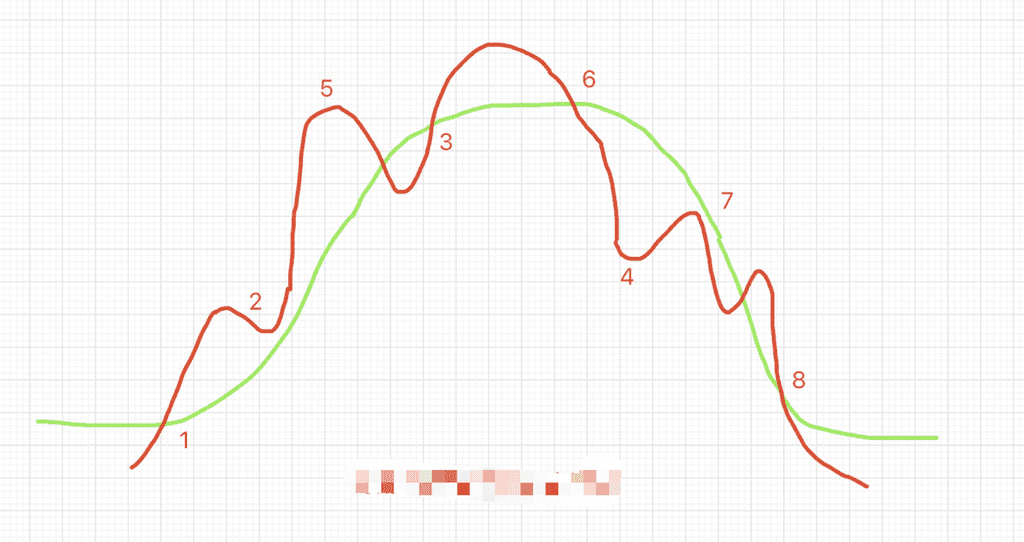
The Jogepsbganvle Eight Principles, proposed by American investment expert Jogepsbganvle, are based on the stock price cycle rules of Elliott Wave Theory. These principles were developed after his extensive observation of U.S. stock price movements. Essentially, these principles involve identifying trading opportunities by comparing the positions of stock prices relative to their 200-day moving average, and by observing the direction of the movement of the 200-day moving average. Below are the trading opportunities identified using these principles:
2. Eight Principles
Jogepsbganvle principles help identify buying or selling opportunities as follows:
①. When the moving average gradually flattens after a previous downward trend, and the coin price breaks above the moving average from below, it suggests a buying opportunity. This is marked as position 1 in the diagram above.
②. If the moving average is trending upwards, and the coin price, which has been above the moving average, drops but then pulls back before hitting the moving average, this indicates a buying opportunity, marked as position 2 in the diagram above.
③. When the coin price first runs above the moving average, then breaks below it, but quickly rebounds above it again, with the moving average remaining bullish, this suggests a buying opportunity, marked as position 3 in the diagram above.
④. If the moving average is trending downward, and the coin price, running below the moving average, suddenly plummets further away from it, a reversal to a rising trend can indicate a buying opportunity, marked as position 4 in the diagram above.
⑤. When the moving average is trending upwards and the coin price, already above the moving average, continues to rise rapidly, distancing itself further from the moving average, this may signal a selling opportunity due to potential profit-taking by buyers. This is marked as position 5 in the diagram above.
⑥. If the moving average gradually flattens following a bullish trend, and the coin price breaks below the moving average from above, it indicates accumulating selling pressure, suggesting a selling opportunity, marked as position 6 in the diagram above.
⑦. When the coin price fluctuates below the moving average, failing to surpass it, and the moving average is predominantly bearish or temporarily flattens only to turn downward again as the coin price falls, this indicates strong selling pressure. It suggests a selling opportunity, marked as position 7 in the diagram above.
⑧. If the coin price rebounds to surpass the moving average but then hovers above it while the moving average continues to decline, a break below the moving average signals a selling opportunity, as marked in position 8 in the diagram above.
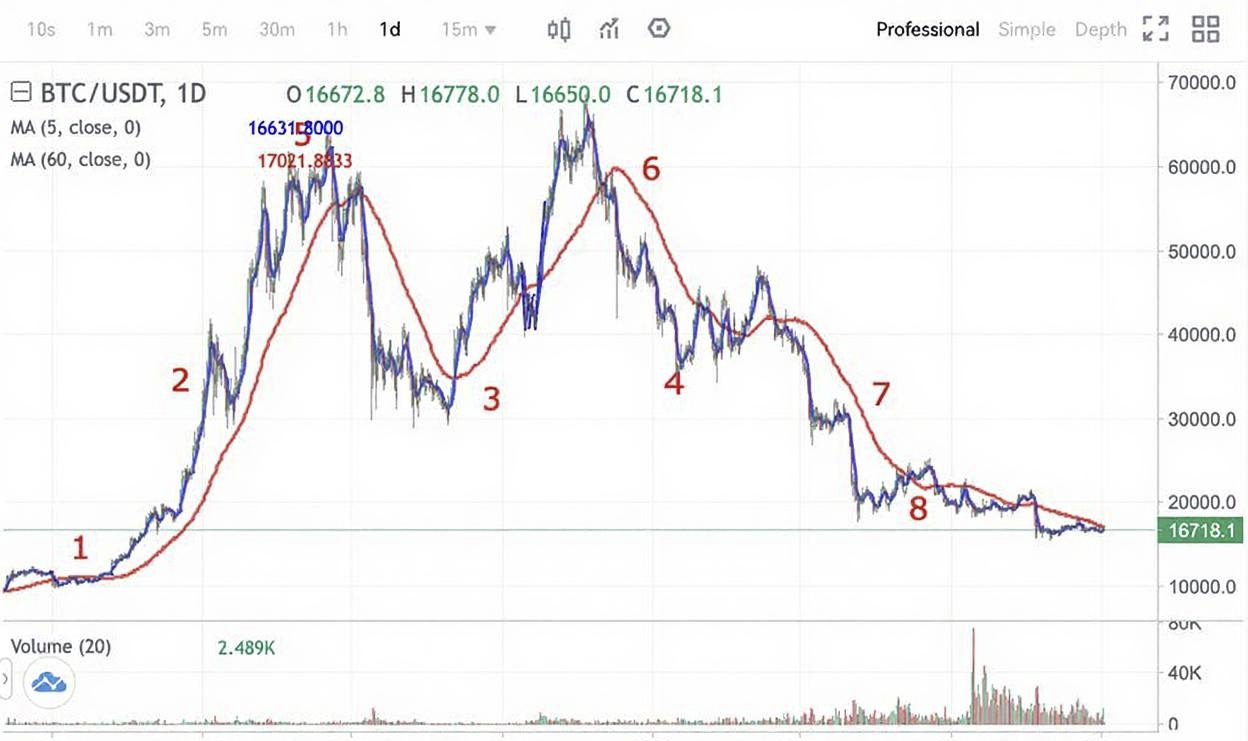
The diagram above is the daily chart of BTC futures on Gate. We mark 8 trading opportunities identified using the Jogepsbganvle Eight Principles.
3. Application
①. Points worth special attention:
A. The shorter the moving average period, the more trading signals it generates, but the reliability of these signals tends to be lower. Conversely, a longer moving average period typically yields fewer and less sensitive signals, but the reliability of these signals is significantly higher.
②. Key Principles:
A. When the moving average is rising and the coin price is generally above it, this indicates a bullish market cycle. In this scenario, according to the Jogepsbganvle Eight Principles, selling signals should prompt a reduction in positions, while buying signals suggest it's time to buy assets or increase positions.
B. If the moving average shifts from bullish to bearish and the coin price falls below it, it may signal a transition from a bull to a bear cycle. Should the moving average continue to decline with the coin price generally below it, this indicates a downtrend. In these cases, Jogepsbganvle sell signals imply that traders should close positions to exit the market, while the emergence of buy signals suggests it’s a good time to enter or buy at a low.
C. The fundamental principle of trend trading can be summarized in one sentence: Increase positions to full in a bull market, and close all positions in a non-bull market.
4. Summay
The Jogepsbganvle Eight Principles are a practical application of moving averages, the basic concepts of which have been elaborated in the previous section. As a classic tool for technical analysis based on moving averages, the Jogepsbganvle Eight Principles offer crucial guidance for traders in real-world trading scenarios. In subsequent courses, we will delve deeper into the application of this theory. It is our hope that traders will not only grasp the concept but also effectively apply these principles in their trading activities to pinpoint optimal opportunities. This understanding lays the groundwork for building a comprehensive analytical framework.
Start trading futures by registering on Gate Futures.

Disclaimer
This article is for informational purposes only and does not constitute investment advice. Gate is not responsible for any investment decisions you make. Content related to technical analysis, market assessments, trading skills, and traders' insights should not be considered a basis for investment. Investing carries potential risks and uncertainties. This article offers no guarantees or assurances of returns on any type of investment.
Disclaimer
The content provided herein is for reference and educational purposes only and does not constitute any financial, investment, trading, or legal advice, nor does it constitute an offer or solicitation to buy or sell any digital assets. Gate makes no express or implied representations or warranties regarding the accuracy, completeness, or timeliness of the information contained herein. Product features, interfaces, rules, and fee structures may be updated or adjusted at any time. Please refer to the latest announcements and the actual information displayed on the Gate platform for the most accurate details.
Digital asset investments involve significant risk, and prices may fluctuate substantially. You may lose the entire amount of your investment. Please make decisions cautiously based on your own financial situation and risk tolerance after fully understanding the associated risks. If necessary, you are advised to consult an independent professional financial or legal advisor.
For more information about potential risks, please refer to Gate's Risk Disclosure and User Agreement.
